
IC Ecosystem Show (ICES) 2026 to Drive Application-Led Innovation at CIIF in Shanghai
Source: PR Newswire
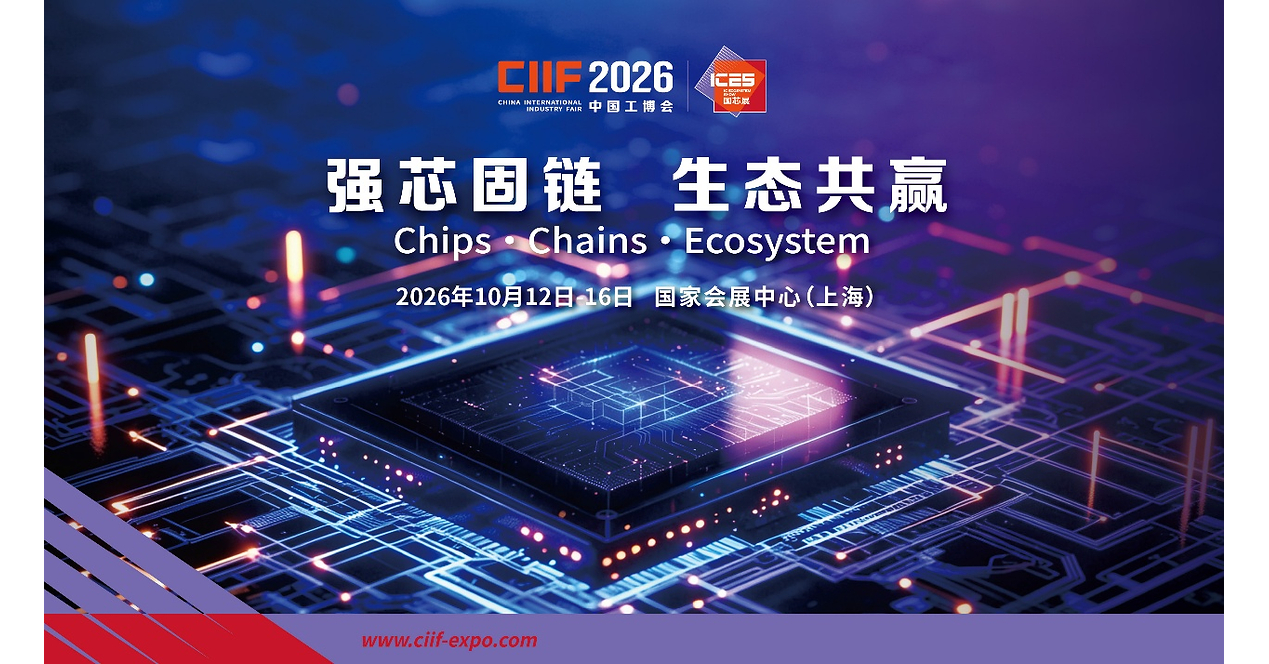
ICES 2026, a semiconductor-industry exhibition within Shanghai's 300,000-square-meter China International Industry Fair, will run October 12-16 and convene chip designers, manufacturers, equipment suppliers and industrial users. The event will feature five zones spanning IC design, wafer fabrication, packaging and testing, equipment and materials, and application integration, with emphasis on AI, embodied AI, automotive semiconductors and industrial robotics. More than 10 technical forums and an industry summit are planned, but the announcement is promotional event news with no disclosed financial metrics or immediate listed-company implications.
Analysis
This is a promotional event notice rather than independently verifiable evidence of orders, capex, policy support, or technology readiness; it should not move semiconductor estimates. The investable signal is only a calendar marker: October meetings may reveal Chinese design wins, domestic equipment qualification progress, or procurement intent in industrial automation and automotive chips. Until exhibitor lists, customer announcements, and contract values emerge, broad China semiconductor exposure remains a watch item rather than a catalyst.
The more relevant second-order question is whether localization shifts demand from imported mature-node analog, power, MCU, and industrial-control components toward domestic suppliers. That would pressure the China revenue mix of NXP (NXPI), Infineon (IFX.DE), STMicroelectronics (STM), Texas Instruments (TXN), and onshore equipment/material vendors outside China only if qualification converts into production volumes; automotive-grade validation typically requires 12-24 months, limiting near-term earnings impact.
A contrarian read is that an application-led exhibition may highlight a bottleneck, not demand acceleration: embodied AI and industrial robotics require reliable power management, sensors, real-time compute, packaging, and systems integration, where local substitution remains materially harder than design demonstrations. The key falsifiers are disclosed purchase orders, named OEM design wins, Chinese fab utilization improvement, and evidence that export-control constraints are being circumvented or relaxed. Absent these, the likely effect is narrative support rather than revenue realization over the next 1-3 months.
AllMind Terminal
AI-powered research, real-time alerts, and portfolio analytics for institutional investors.
Request TrialMarket Sentiment
Overall Sentiment
mildly positive
Sentiment Score
0.15
Key Decisions for Investors
- No directional trade on the event announcement; create an October 12-16 alert for named customer contracts, equipment orders, and domestic automotive-chip qualification announcements rather than treating product demonstrations as earnings catalysts.
- Monitor a China-localization basket against global analog/auto semis: watch SMIC (0981.HK), Hua Hong Semiconductor (1347.HK), and Shanghai Fudan Microelectronics (1385.HK) versus NXPI/STM/IFX.DE. Initiate only after verifiable design-win disclosures or two consecutive months of improving China fab utilization; auto qualification timing makes a 6-18 month horizon appropriate.
- For existing long positions in TXN, STM, NXPI, or IFX.DE, quantify China industrial and automotive revenue exposure ahead of the event. Reduce only if disclosed local sourcing commitments imply volume substitution, not merely partnership MOUs; a revision to China revenue guidance is the operational trigger.
- Watch ASE Technology (ASX) and Amkor (AMKR) for evidence that advanced packaging demand is translating into capacity bookings. A confirmed China-based customer ramp could be constructive for packaging demand, but announcements without utilization, pricing, or capex data should not justify multiple expansion.
More News
- What investors need to know about Alphabet's stock-busting earnings report
- Our next steps for Alphabet stock after earnings disappoint at nearly every turn
- Budget 2026 speech
- The UK cuts energy bills, taxes banks and boosts defense in high-stakes budget
- Microsoft's Big Bets on AI Start to Pay Off
- Asian shares fall as Alphabet earnings miss drags Wall St futures lower