
Dutch Bros: The Opportunity Is Getting More Interesting
Source: seekingalpha.com
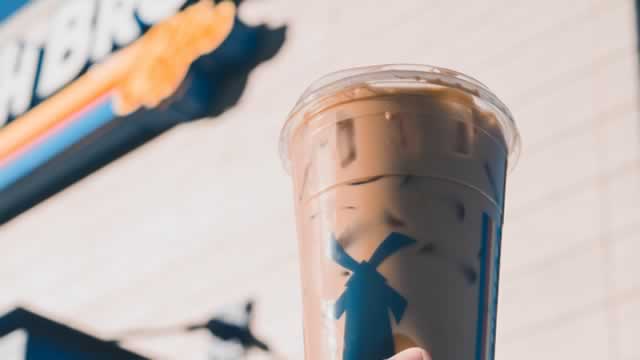
Dutch Bros raised 2026 guidance to $2.10-$2.13B in revenue and $385-$390M in adjusted EBITDA, while increasing planned CAPEX to $350-$370M. The company continues to target 2,029 shops by 2029, supported by aggressive unit expansion, menu innovation and long-term demand tailwinds. Near-term macroeconomic and competitive pressure could constrain comparable-sales growth and margin expansion, but the analyst maintains a Buy view on more compelling valuation.
Analysis
The investable debate is not topline growth but the duration of negative free-cash-flow conversion. BROS is effectively underwriting a multi-year buildout in which new-unit returns must remain above its rising cost of capital; a modest deterioration in opening volumes, labor productivity, or construction costs can matter more to equity value than a small same-store-sales miss. The market should therefore value incremental shop cohorts, payback periods, and four-wall margins more heavily than adjusted EBITDA growth.
Competitive pressure is asymmetric: SBUX has the loyalty base and balance sheet to defend morning beverage occasions through targeted promotions, while MCD and other drive-thru operators can use value messaging to protect lower-income traffic. Conversely, BROS's smaller format and high-throughput model could gain share if consumers trade down from premium coffee without reducing beverage frequency. Menu innovation is only equity-positive if attachment rates lift ticket without slowing service times or increasing waste; that is the key operating proof point over the next two quarters.
Near-term upside requires evidence that new stores are not cannibalizing nearby units and that same-store trends recover without elevated discounting. A durable re-rating over 6-18 months would follow from stable mature-store economics alongside declining capex per opening, which would pull forward the eventual free-cash-flow inflection. The contrarian risk is that investors capitalize the terminal footprint too aggressively: if unit maturity curves flatten, the multiple can compress even while reported revenue and EBITDA continue growing.
AllMind Terminal
AI-powered research, real-time alerts, and portfolio analytics for institutional investors.
Request TrialMarket Sentiment
Overall Sentiment
moderately positive
Sentiment Score
0.48
Ticker Sentiment
Key Decisions for Investors
- Maintain a modest long BROS only after the next earnings release confirms stable or improving new-shop payback and four-wall margin; target a 6-12 month holding period. Size conservatively because the primary downside is multiple compression from a delayed free-cash-flow inflection, not a single-quarter revenue miss.
- Use a relative-value expression: long BROS / short SBUX in equal dollar amounts only if BROS demonstrates traffic-led comparable-sales acceleration while SBUX continues to show U.S. transaction pressure. Reassess immediately if BROS requires heavier promotions to generate traffic, as the margin advantage in the pair would disappear.
- Set an earnings watch item for capex per net new shop, mature-unit sales, and management commentary on cannibalization. Do not add to exposure if capex intensity rises while unit-level returns or EBITDA margin stall; that combination falsifies the high-return expansion thesis within 1-3 quarters.
- For upside participation with defined risk, consider 6-9 month BROS call spreads after a post-earnings confirmation rather than buying shares ahead of results. The structure is appropriate only if implied volatility is below the stock's prior earnings-move range; otherwise wait for equity confirmation.
More News
- Bearista cups are returning at Starbucks. Can the viral sensation boost holiday sales again?
- What investors need to know about Alphabet's stock-busting earnings report
- Our next steps for Alphabet stock after earnings disappoint at nearly every turn
- Fortinet’s stock is taking a dive after earnings. Here’s why.
- Wendy's shares jump 15% as Nelson Peltz's Trian offers $1.4 billion to buy burger chain
- Microsoft's Big Bets on AI Start to Pay Off