
Hanwha Power Obtains ABS Approval in Principle for 22,000 CBM LNG Bunkering Vessel Concept Design
Source: PR Newswire
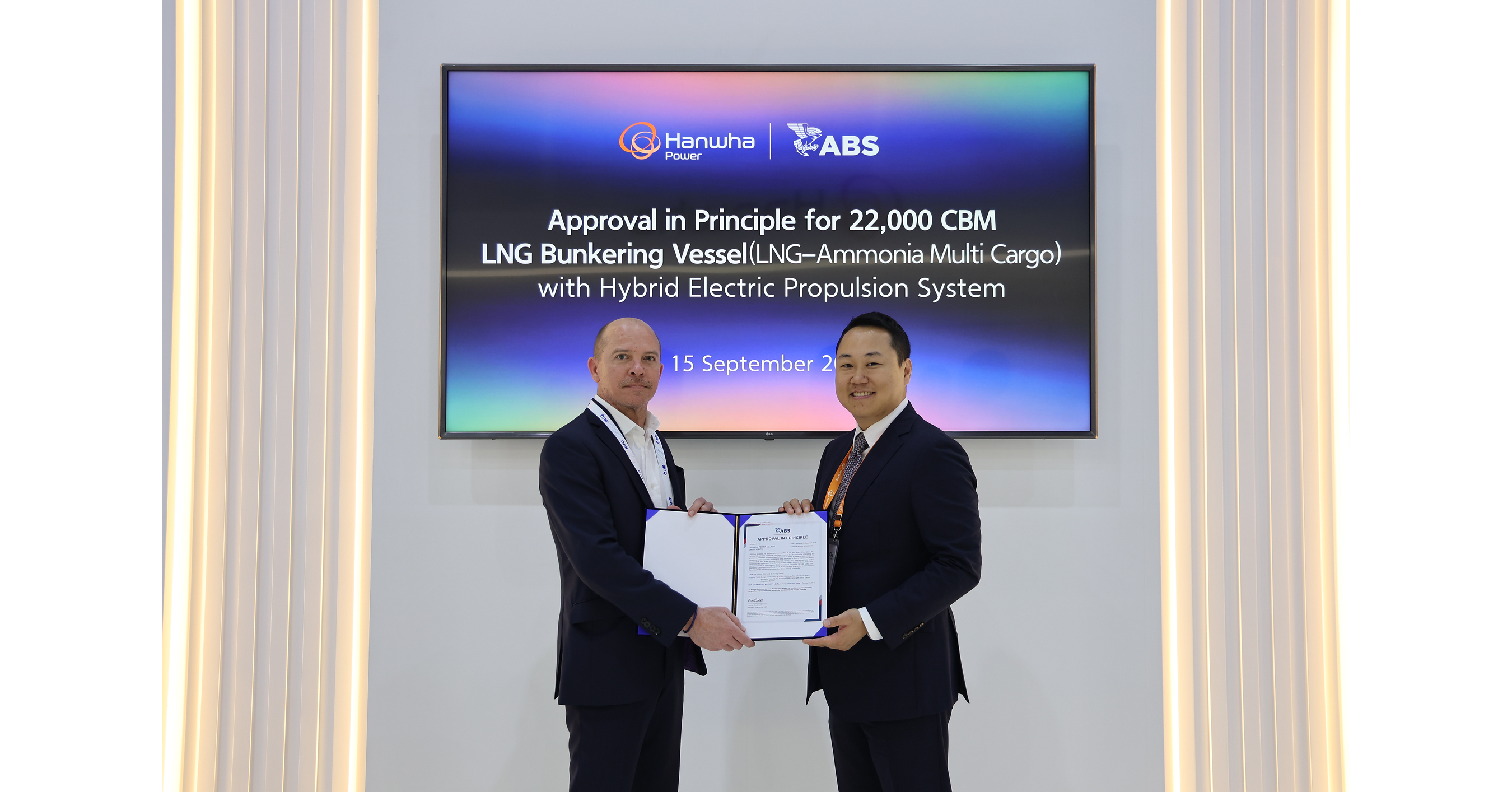
Hanwha Power received ABS Approval in Principle for a 22,000-cbm LNG bunkering vessel concept, completing its 7,500-22,000 cbm medium- and large-scale bunkering-vessel lineup. The design can carry both LNG and ammonia and combines high-manganese steel containment with hybrid electric propulsion, onshore power supply and energy storage to reduce coastal emissions and improve operating economics. Hanwha is positioning the vessel alongside its group-wide engineering and procurement package for the global eco-friendly marine-transition market.
Analysis
This is not yet an order catalyst: class Approval in Principle de-risks technical marketability but does not establish backlog, pricing, or margin. The relevant equity read-through is strongest for Hanwha Ocean (042660 KS) if the group can convert an integrated fuel-system package into higher equipment content per vessel rather than selling shipyard capacity alone; that would support mix and aftermarket economics over 6-18 months. Hanwha Engine (082740 KS) is a secondary beneficiary through dual-fuel propulsion content, while independent component suppliers face greater risk of procurement share loss if Hanwha successfully bundles cargo handling, electrical systems and automation.
The non-obvious constraint is fuel optionality. LNG bunkering demand can support nearer-term utilization, but the ammonia option carries value only if port infrastructure, safety protocols, fuel availability and charterer willingness converge; those are likely multi-year rather than 1-3 month catalysts. Integrated designs may also raise working-capital and execution risk if fixed-price EPC-style contracts precede proven standardized production. The market should not capitalize this as ammonia revenue until disclosed vessel orders, contract values, delivery schedules and equipment-margin data validate commercial conversion.
Near-term upside would come from an announced bunker-vessel order tied to a major port or energy supplier, particularly if it includes group equipment content. Falsification is straightforward: no conversion to orders over the next 12 months, order economics that require discounting to win, or a slowdown in LNG-fueled vessel deliveries would reduce the strategic value of the platform. Consensus may overvalue the certification signal while undervaluing the longer-run competitive benefit if Hanwha can make its containment and power-management systems a repeatable proprietary standard across multiple alternative-fuel vessel classes.
AllMind Terminal
AI-powered research, real-time alerts, and portfolio analytics for institutional investors.
Request TrialMarket Sentiment
Overall Sentiment
moderately positive
Sentiment Score
0.48
Key Decisions for Investors
- No immediate directional trade on the certification alone; treat Hanwha Ocean (042660 KS) as a 3-12 month order-conversion watch item. Upgrade only after disclosure of signed vessel backlog, contract value and expected group equipment attach rate.
- Monitor a relative-value long Hanwha Ocean (042660 KS) / short a broad Korean shipbuilding proxy or lower-content peer after a commercially funded order, not before. The thesis requires evidence that integrated systems lift margin or backlog quality rather than merely add design complexity.
- Place an alert on Hanwha Engine (082740 KS) for dual-fuel engine order intake and backlog guidance over the next two earnings cycles. A sustained acceleration in marine engine orders would be a cleaner, independently measurable confirmation than the AiP.
- Avoid assigning meaningful ammonia-fuel optionality to valuation until port-side ammonia bunkering commitments and class/safety operating standards are established. Any trade predicated on ammonia adoption should use a 2-5 year horizon and assume substantial policy and infrastructure execution risk.
More News
- Japan’s corporate leaders sound alarm over weak yen — even dollar-earners are voicing concerns
- US official says upcoming spectrum auctions could generate more than $100 billion
- 'Science fiction': Transport companies — the backbone of economy — are sounding alarm on fuel prices
- Investors react to Fed hike and market sell-off: Brace for 'higher for longer' rates
- Oil Extends Slump as Saudi Arabia Moves to Restore Key Pipeline
- AI Buildout Hits Inflation as Fed Hikes Rates