
Will Data Center Growth Remain Sandisk's Biggest Opportunity?
Source: zacks.com
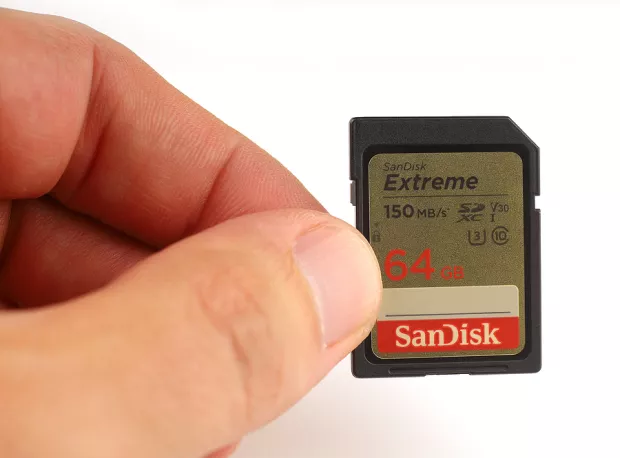
Sandisk’s fiscal 2026 data center revenue surged 437% year over year to $5.15 billion, representing 38% of its bit portfolio; Q4 revenue reached $2.98 billion, up 103% sequentially. Its eight customer agreements, each averaging more than four years, are expected to cover over 50% of bits in fiscal 2027 and about two-thirds in fiscal 2028, while the company ships QLC Stargate and develops High Bandwidth Flash for AI workloads. Shares are up 491.8% year to date, and fiscal 2027 consensus earnings are $215.04 per share, up 0.8% in seven days; competition from Micron and SK hynix and a 3.88x forward price/sales valuation versus the industry’s 2.51x are notable counterpoints.
Analysis
SNDK’s growth is increasingly a NAND-cycle trade wrapped in an AI narrative. The key variable is not just AI storage demand, but whether enterprise SSD mix and customer commitments preserve pricing as suppliers add capacity. QLC can expand addressable capacity for data lakes, while inference-oriented flash may improve performance-tier demand; neither proves durable pricing power against HDD alternatives for colder data or competing NAND supply. The disclosed bit coverage improves planning visibility, but without take-or-pay terms, price floors, or shipment schedules it should not be treated as guaranteed revenue or margin protection.
Near term, the sharp share-price rerating leaves SNDK vulnerable to any deceleration in NAND ASPs, bits shipped, or estimate revisions. Over the next 1–3 months, track contract economics, enterprise SSD mix, and supplier commentary on capacity. Over 6–18 months, a supply response could turn today’s tight market into a pricing and inventory cycle; customer concentration also means a few deployment delays could impair utilization. MU and SK hynix benefit from the same demand, but MU’s DRAM/HBM exposure may make it a less direct proxy for NAND price downside; do not assume their earnings sensitivities are interchangeable.
Contrarian read: the market may be pricing AI demand as structurally durable while underweighting the possibility that customer commitments secure volume, not attractive returns. SNDK’s cited forward sales multiple is above the industry comparator, so execution has less room for error. Falsifiers for a cautious SNDK view: sustained enterprise SSD mix gains alongside stable or rising NAND ASPs and upward guidance revisions; a reversal trigger is falling ASPs or shipment/utilization guidance despite ongoing AI capex.
AllMind Terminal
AI-powered research, real-time alerts, and portfolio analytics for institutional investors.
Request TrialMarket Sentiment
Overall Sentiment
moderately positive
Sentiment Score
0.55
Ticker Sentiment
Key Decisions for Investors
- Avoid chasing SNDK after the outsized rerating; consider taking partial profits or waiting for the next guidance update to confirm that committed bits are translating into profitable shipments.
- For a relative-value expression, consider a modest short SNDK / long MU pair rather than an outright NAND short, sized to limit broad AI-memory exposure. This is a valuation-and-cyclicality hedge, not a claim that MU is cheap; reassess if MU’s earnings outlook weakens or SNDK delivers sustained ASP and mix gains.
- Monitor NAND ASPs, enterprise SSD mix, bit shipments, customer-contract pricing and cancellation terms, and capex/supply plans. The missing contract economics are material; treat the coverage figures as visibility, not a floor under revenue.
- Falsify the cautious stance if SNDK raises forward guidance on stronger pricing and mix while NAND supply remains disciplined; add caution if ASPs roll over or shipment guidance disappoints despite resilient AI infrastructure spending.
More News
- Asia stocks tumble as AI spending concerns deepen; BOJ holds rates
- PC chip plunge wipes out a quarter of Intel’s value
- Intel plunges on a major guidance miss. What went wrong — and how to proceed
- Canaccord says Sandisk stock data center surge drives results
- AI’s insatiable appetite for chips helps Samsung rake in a record $80.5 billion in quarterly profit
- Bank of America Names Top Stock Pick in Memory Sector