
Emergency Seawalls Are Making Beaches Disappear -- and 90% of Coastal States Aren't Stopping Them
Source: PR Newswire
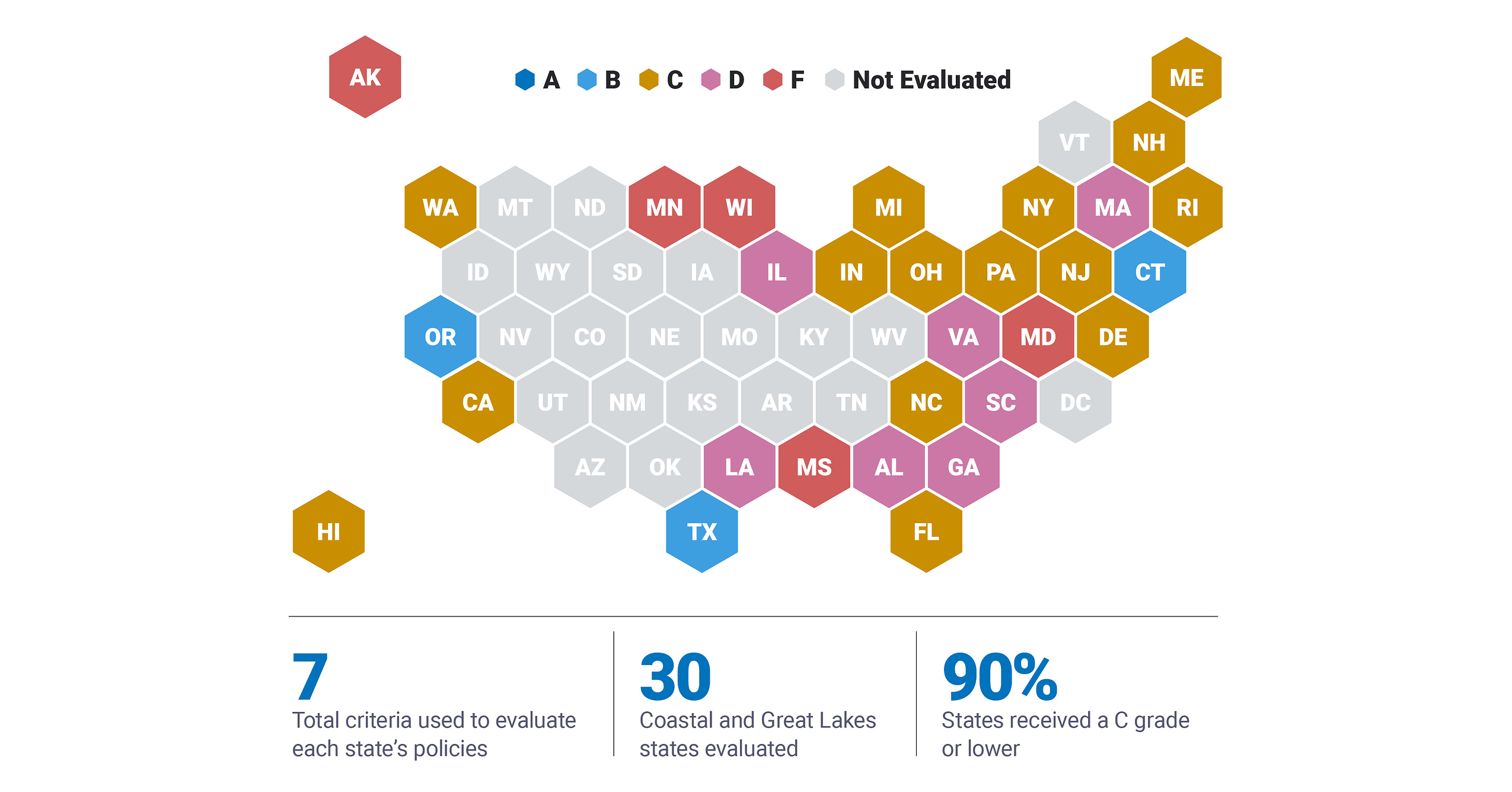
Surfrider Foundation’s 2026 State of the Beach Report found that 27 of 30 coastal and Great Lakes states earned a C or lower for safeguards against emergency seawalls becoming permanent; five states received an F, and none earned an A. The report says hard armoring can accelerate beach loss and urges states to narrow emergency definitions, require advance authorization, remove temporary structures within two years, and pursue long-term adaptation. Florida enacted a coastal resiliency law in 2026, while Hawaiʻi signaled a shift and Oregon is updating its rules.
Analysis
The investable signal is not the state scorecard itself; it is the potential shift from reactive shoreline hardening to planned adaptation spending. The transition would redistribute contracts toward dune restoration, beach nourishment, living shorelines, and coastal engineering, while making repeat emergency-armoring work less durable. But the report measures laws, not enforcement, and its advocacy source makes legislative follow-through—not the grades—the key underwriting variable.
Second-order exposure is concentrated locally: hard structures can preserve an individual asset while worsening adjacent erosion and weakening beach access, potentially pressuring tourism receipts, nearby property values, and municipal tax bases. Insurers and lenders may care more about repeated loss experience, coverage availability, and collateral risk than about the policy debate itself. Conversely, restrictions on armoring could increase near-term protection costs for exposed owners even as they reduce long-run externalities.
Over days, this is not a broad coastal-equity catalyst. Over 1–3 months, monitor winter storm losses, state rulemaking, and agency enforcement; over 6–18 months, actual procurement and permit changes could redirect adaptation budgets. The contrarian point: weak rules do not automatically mean weak enforcement everywhere, and three comparatively better-scored states still show beach loss. Treat the report as a diligence prompt, not a nationwide revenue forecast. The thesis weakens if proposed rule changes stall, emergency structures continue to receive extensions, or coastal insurance and property-risk indicators remain stable despite storm losses.
AllMind Terminal
AI-powered research, real-time alerts, and portfolio analytics for institutional investors.
Request TrialMarket Sentiment
Overall Sentiment
moderately negative
Sentiment Score
-0.55
Key Decisions for Investors
- No immediate broad trade: the article supplies no company-level revenue exposure or evidence of enacted, funded policy changes. Avoid treating the state grades as a near-term earnings catalyst.
- Build a watchlist of publicly traded coastal-engineering and infrastructure contractors, but only consider a relative long versus conventional hard-armoring exposure after verifying backlog, contract mix, and state-level procurement. A rise in nature-based project awards without corresponding rule changes would falsify the policy-led version of the thesis.
- Track coastal property and insurance risk at the exposed-market level rather than shorting property or insurers indiscriminately. Alert triggers: insurer coverage pullbacks or rate filings, worsening renewal terms, and repeated storm-loss revisions; stable availability and pricing would argue against near-term repricing.
- Monitor Florida implementation, Hawaiʻi permit decisions, and Oregon rulemaking as 1–3 month catalysts. Verify final rules, enforcement resources, and removal deadlines; announcements without funded enforcement or observable permit changes are not a trade signal.
More News
- Jio’s Record $3.2 Billion IPO Puts India’s Market Muscle to the Test
- Australian data center operator NextDC's shares plunge 40% after it slashes earnings forecast
- France to deploy troops, admits to failures over weekend unrest
- UnitedHealthcare and Humana are ending Medicare Advantage plans for nearly 1 million people
- Apple adds U.S. titanium supplier for iPhone Duo as supply stays tight
- 'Cannot play hide and seek': Singapore minister's warning over haze sends agricultural stocks lower