
Nvidia Fiscal Q2: The AI Giant Answers To Losing Market Share
Source: seekingalpha.com
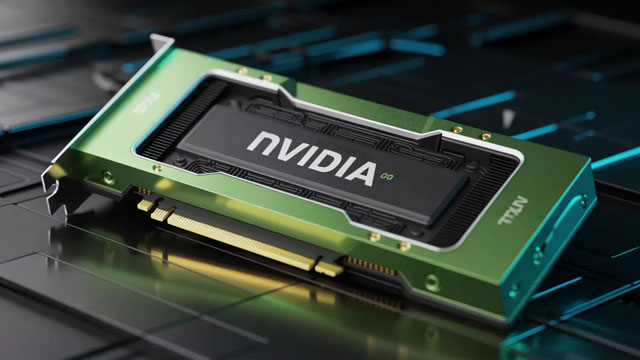
The article highlights Nvidia’s resilience narrative, arguing the company can still grow if Big Tech reallocates more AI CapEx toward custom silicon. It also points to a less-noticed earnings-call detail: Nvidia’s expected revenue generation per gigawatt of deployed AI infrastructure. Overall, the piece is mildly positive on Nvidia’s growth durability, though it provides no specific revenue or guidance figures.
Analysis
The market is still modeling Nvidia as a one-product cycle story, but the better lens is AI infrastructure toll collector. If hyperscalers shift some budget into custom silicon, that is not automatically a zero-sum loss for NVDA because the company still monetizes the expanding cluster footprint through interconnect, systems, and the highest-value compute layers; the key second-order effect is that custom silicon can lower unit cost and actually enlarge total deployed capacity. That makes the debate less about lost GPU units and more about whether Nvidia’s dollar capture per deployed gigawatt stays high enough to defend premium multiples.
The immediate risk is valuation, not demand collapse. Over the next 1-3 months, any sign that revenue per unit of AI capacity is flattening or that cloud capex is rotating faster than expected could compress the multiple even if top-line growth remains strong. The falsifier is simple: if hyperscaler commentary shows custom silicon taking meaningful share without a corresponding increase in total AI spend, NVDA’s growth durability thesis weakens and the stock can underperform high-quality semis on relative basis.
Contrarian view: consensus may be underestimating how much custom silicon broadens the market for adjacent picks-and-shovels. AVGO, MRVL, ANET, and optical suppliers can gain even if Nvidia remains the profit pool, because every extra rack still needs networking, power, and integration. The best long-term risk/reward is not chasing a straight-line upside move, but owning NVDA on pullbacks while hedging against a short-term multiple reset if the Street extrapolates too much from one earnings call.
AllMind Terminal
AI-powered research, real-time alerts, and portfolio analytics for institutional investors.
Request TrialMarket Sentiment
Overall Sentiment
mildly positive
Sentiment Score
0.15
Ticker Sentiment
Key Decisions for Investors
- Buy NVDA on any 3-5% post-event pullback; use a 4-8 week horizon. Risk/reward is favorable if the market is only repricing mix, not absolute demand.
- Pair trade: long NVDA / short AMD for the next 1-3 months. Thesis: NVDA has better pricing power and system-level monetization, while AMD is more exposed to substitution from custom silicon and competitive pricing pressure.
- Set an alert on hyperscaler capex commentary over the next earnings cycle. If multiple large cloud vendors signal faster custom-silicon adoption without raising overall AI spend, reduce NVDA exposure; that would be the cleanest falsifier.
- If looking for a second-order beneficiary basket, favor ANET and AVGO on pullbacks over the next 6-12 months. They should capture more of the infrastructure dollar if AI buildouts keep growing even as compute mix shifts.
More News
- Why did CoreWeave stock get crushed this week? Look to this corner of the debt market for clues
- We're downgrading this retail stock after a big comeback. Plus, AI names slide again
- I watched Nvidia's Jensen Huang work the room in London. He brought big checks — and a blunt message
- Crude Oil Jumps 3%; Citizens Financial Earnings Top Views
- Benchmarked: Nvidia's RTX Spark notebook delivers serious local AI compute, at a price
- A week with RTX Spark: everything we’ve learned using Nvidia’s new laptops
From AllMind Research
- Anthropic IPO Preview: Valuation, Timing, and What to Watch
- Shein After the IPO: Venue, Valuation, and What Must Be Proved
- What AI Research Tools Should a Small Hedge Fund Buy First?
- Weekly Update: Advanced Search Filters, Redesigned Ticker Dashboard, and Improved Search Experience
- How to Build an Automated Research Process for a Fund