
Leekr Technology Accelerates the Global Deployment of System-Level Intelligent Chassis Solutions, Driving the Next Generation of Smart Mobility
Source: PR Newswire
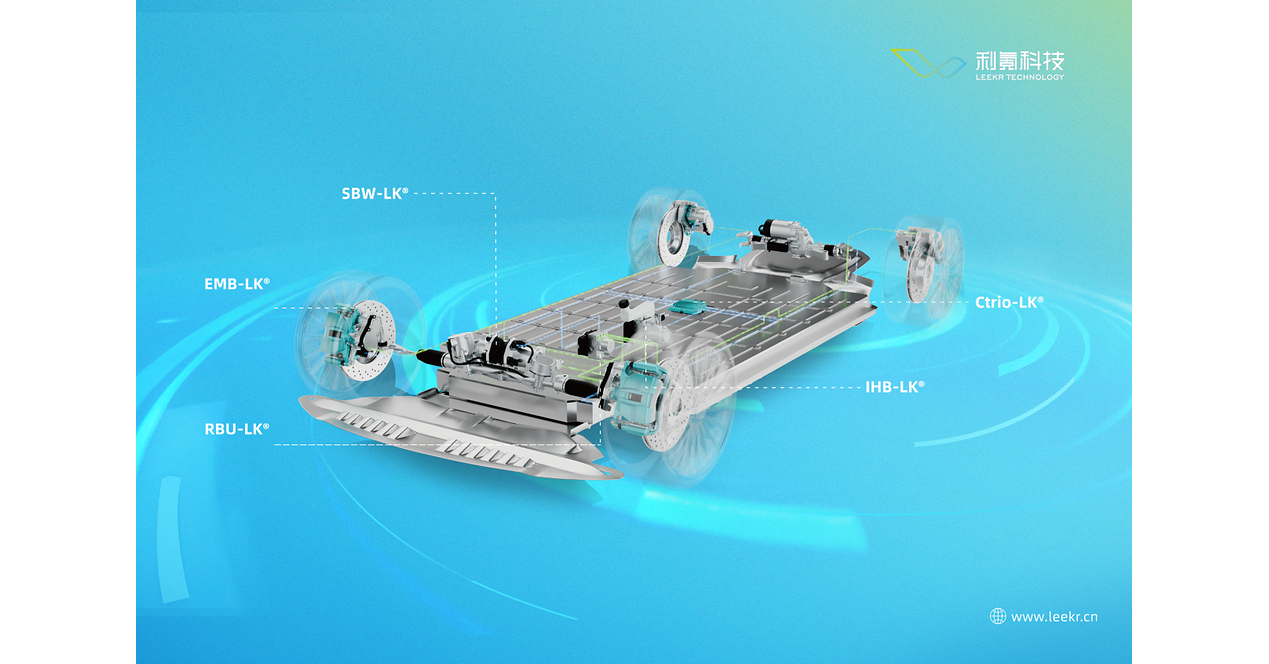
Leekr Technology is accelerating international deployment of its system-level intelligent chassis platform, spanning brake-by-wire, intelligent steering and cross-domain vehicle-motion control. Its products have completed more than 4.5 billion km of road validation, won nominations for over 60 vehicle programs, and serve more than 16 global automakers. The company is expanding into the US, South Africa, Türkiye and Southeast Asia, targeting autonomous-mobility applications including robotaxis, delivery and logistics vehicles.
Analysis
This is a supplier marketing release rather than a disclosed contract, revenue, or capacity event; it is not independently investable without customer nominations, SOP dates, content-per-vehicle, and warranty economics. The relevant market mechanism is nonetheless real: brake-by-wire, steer-by-wire and chassis-domain controllers shift value from mechanical hardware toward safety-certified electronics, software integration and redundant architectures. That raises switching costs for qualified suppliers but also creates elevated recall, product-liability and launch-risk exposure.
Near term, there is no clear listed-equity catalyst. Over 1-3 months, monitor Chinese EV OEM launch calendars and supplier-teardown evidence for adoption of integrated braking/steering architectures; increased penetration would be incrementally positive for global motion-control incumbents Aptiv (APTV), ZF-linked private operations, and Nidec (6594 JP), while challenging lower-content conventional component suppliers. The more immediate public-market beneficiary remains Mobileye (MBLY) only if OEMs pair higher-level ADAS deployments with redundant actuation systems; chassis availability alone does not create autonomous-driving revenue.
The consensus risk is treating system-level chassis content as a pure EV/robotaxi growth proxy. OEMs remain highly cost-sensitive, and centralized vehicle architectures can consolidate ECU count and intensify price negotiations, limiting supplier margin capture even as content grows. The structural upside is 6-18 months out, contingent on production-grade steer-by-wire adoption and safety-regulatory acceptance; a slowdown in China EV volumes, a safety incident, or OEM vertical integration would impair the thesis quickly.
AllMind Terminal
AI-powered research, real-time alerts, and portfolio analytics for institutional investors.
Request TrialMarket Sentiment
Overall Sentiment
moderately positive
Sentiment Score
0.48
Key Decisions for Investors
- No immediate position based on this release; set an alert for named OEM design wins, start-of-production timing, annualized unit volumes, and disclosed content-per-vehicle before underwriting supplier revenue.
- Watch APTV versus BorgWarner (BWA) over the next 1-3 months as a listed proxy pair: favor APTV only if ADAS/chassis-domain order intake improves while BWA's legacy powertrain exposure remains under pressure. Falsify on APTV guidance showing continued margin dilution or order-book deterioration.
- Monitor MBLY for a 6-18 month second-order catalyst, not a direct chassis trade: consider exposure only after OEM production programs confirm Level 2+/Level 3 launches with redundant braking and steering. Avoid chasing on robotaxi rhetoric absent volume commitments.
- For China EV exposure, treat integrated chassis penetration as a margin-risk screen for OEMs rather than a blanket long signal: higher electronics content can pressure gross margin unless vehicle ASPs or software monetization offset BOM inflation. Track quarterly gross-margin guidance from BYD (1211 HK) and Li Auto (LI) for confirmation.
More News
- US launches task force to disrupt Iran’s land-based supply routes
- Cathie Wood 'always feels better when the market is worried' — here's why
- Asia Markets Brace for More AI Volatility
- As AI data centres guzzle energy, can we harness their wasted heat?
- S&P 500 Price Forecast: Strong Jobs Data Tests Rebound After AI Rout
- The battle for megawatts: why restricting data centers is a strategic mistake