
SOUTHWEST AIRLINES INVITES BUSY AMERICANS TO ENTER AIRPLANE MODE AND RECLAIM THEIR TIME
Source: PR Newswire
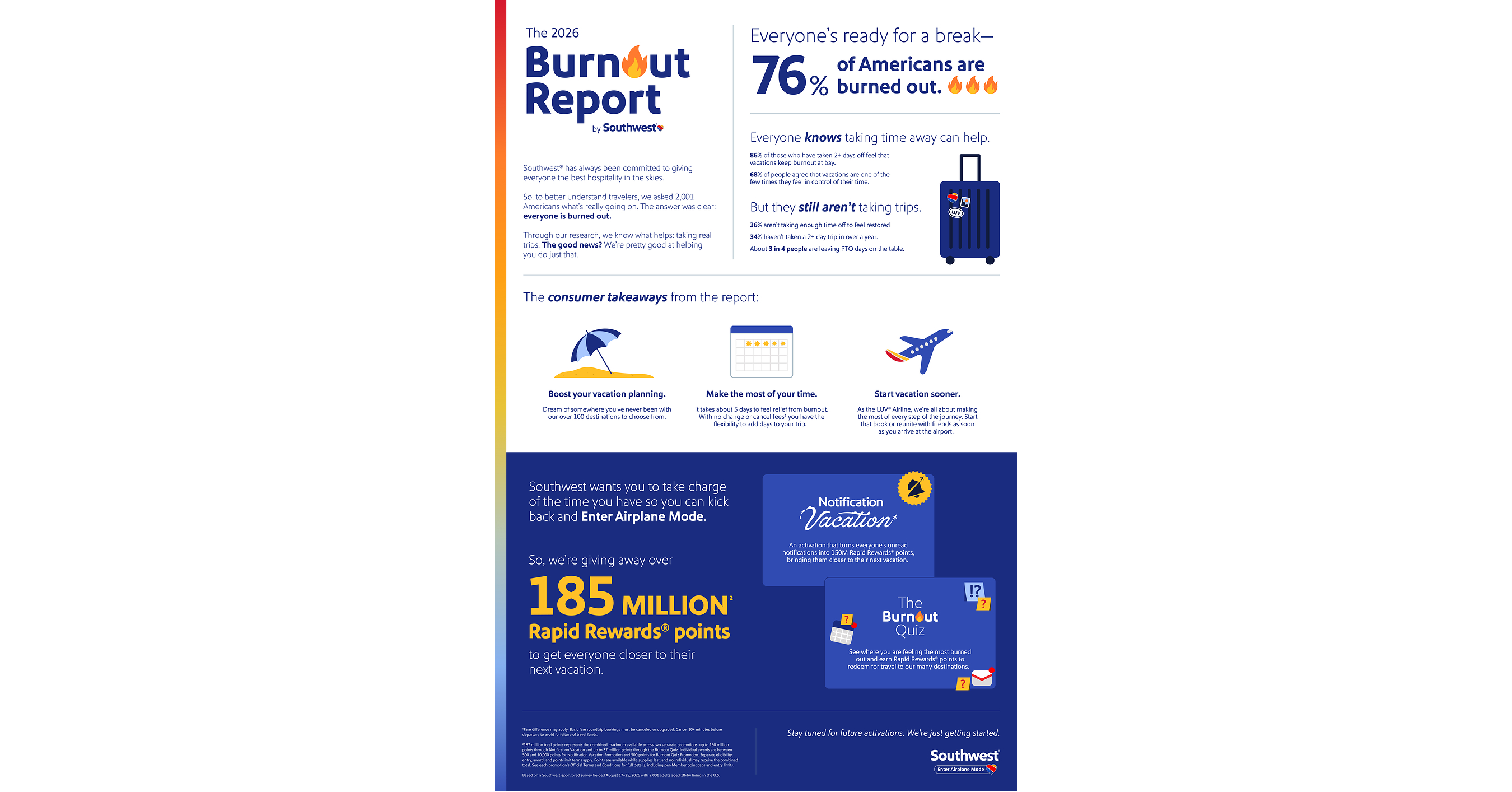
Southwest launched its “Enter Airplane Mode” campaign, including Notification Vacation and a Burnout Quiz, offering up to 187 million Rapid Rewards points combined across two promotions. The campaign aims to encourage travel bookings and highlights customer-facing updates including assigned seating and WiFi for Rapid Rewards Members on designated aircraft. The announcement provides no financial guidance or evidence of a market-moving change.
Analysis
This is a brand-and-loyalty activation, not evidence of a near-term change in Southwest’s demand, yields, or unit economics. The key market question is whether the promotion converts attention into incremental bookings rather than rewarding customers who would have traveled anyway. The point cap limits the campaign’s scale, but the economic cost depends on redemption behavior and accounting treatment; neither is supplied. Verify points issued, redemption expense, campaign-attributed bookings, and booking contribution before treating this as an earnings catalyst.
For LUV, the campaign may reinforce loyalty as the airline adjusts its product and positioning, but it also raises the bar for measurable execution: marketing can support consideration, not offset weaker schedule reliability, pricing, or customer response to product changes. Competitors such as Delta Air Lines, United Airlines, and American Airlines can match promotional messaging, so durable advantage would require improved retention or incremental share, not awareness alone. TMUS’s mention is limited to the existing WiFi benefit; the article provides no evidence of a new commercial arrangement or material revenue effect.
Near term, sentiment may be modestly supportive for LUV but is unlikely to change valuation absent booking data. Over 1–3 months, watch campaign-linked bookings, Rapid Rewards engagement, and management commentary on demand and loyalty economics. Over 6–18 months, the more consequential test is whether Southwest’s broader product changes improve customer retention without weakening its value proposition. The contrarian point: headline reach and maximum points available can overstate economic scale; the promotion may mostly subsidize existing loyal customers. Thesis improves with demonstrable incremental bookings and stable unit revenue; it weakens if loyalty expense rises without better retention or revenue metrics.
AllMind Terminal
AI-powered research, real-time alerts, and portfolio analytics for institutional investors.
Request TrialMarket Sentiment
Overall Sentiment
mildly positive
Sentiment Score
0.15
Ticker Sentiment
Key Decisions for Investors
- No standalone trade on this campaign: the signal is promotional, and the article supplies no verified booking lift, cost, or earnings impact.
- Keep LUV on watch rather than adding on the announcement. Reassess after Southwest reports campaign-attributed bookings, Rapid Rewards engagement, and loyalty-related expense alongside unit-revenue trends.
- Do not infer a material catalyst for TMUS from the WiFi reference; monitor only for separately disclosed changes to the Southwest relationship or quantified economics.
- Falsifier for a positive LUV read-through: loyalty costs or promotional intensity rise while customer retention, booking conversion, or unit revenue fail to improve.
More News
- William Blair cuts AST Spacemobile revenue estimate on launch delays
- StoneX reiterates T-Mobile stock rating on AI implementation potential
- OKX debuts a platform that turns 50 currencies into digital dollars, betting emerging market investors want stablecoins
- Wells Fargo gets a bold upgrade ahead of earnings. Why the stock can play catch-up
- Nike’s China troubles: What are the implications for other sportswear brands?
- Cocoa prices are climbing again. Here’s why this time is different