
Tilray Just Posted Record Quarterly Revenue of $257 Million. So Why Did Its Cannabis Sales Shrink?
Source: fool.com
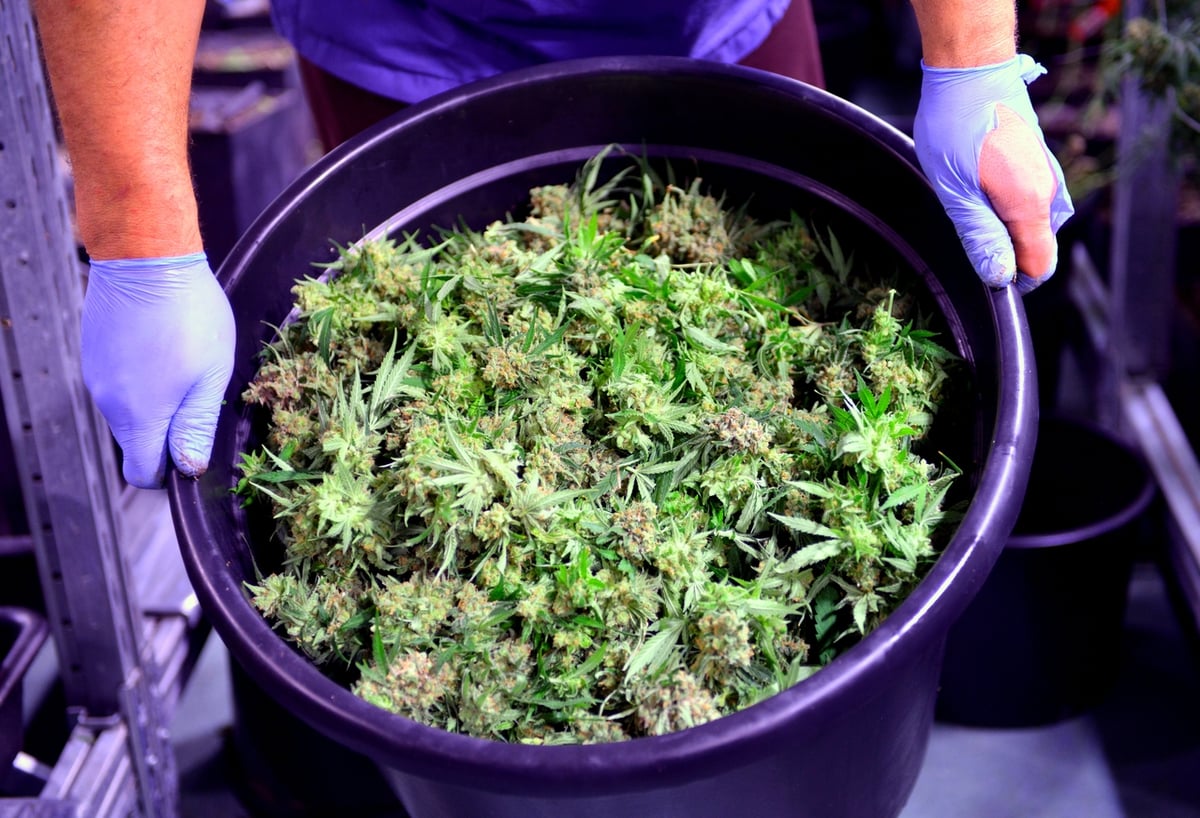
Tilray reported record fiscal Q1 2027 revenue of $257.1 million, up 23% year over year, and gross margin rose 3 percentage points to 30%, led by beverage revenue growth of 82% to $101.5 million. Cannabis revenue fell 13% to $56.1 million, adjusted EBITDA declined from $10.2 million to $9.2 million, and the company recorded an approximately $40 million net loss and $27.4 million of negative free cash flow. Tilray reaffirmed fiscal 2027 adjusted EBITDA guidance of $68 million to $75 million and reduced debt by $42 million during the fiscal year.
Analysis
The key issue is earnings quality, not the revenue headline: acquired beverage scale is lifting reported growth, while weaker cannabis sales and lower adjusted EBITDA show that growth has not yet translated into better operating leverage or cash conversion. The acquisition’s contribution should be separated from organic beverage growth before assigning a durable growth multiple; verify organic sales, integration costs, and working-capital movements in the next filing.
Guidance now requires a meaningful acceleration: after Q1 adjusted EBITDA of $9.2 million, the $68–$75 million full-year range implies roughly $19.6–$21.9 million per quarter over the remaining three quarters, absent seasonality or adjustments. That is the near-term credibility test. Negative free cash flow makes execution more consequential even with liquidity and debt reduction; persistent burn could constrain investment or increase financing risk.
Over 1–3 months, watch the next quarter’s EBITDA cadence, cash flow, and any guidance change. Over 6–18 months, the strategic question is whether Tilray can become a consistently cash-generative beverage/distribution business while stabilizing cannabis, rather than merely replacing cannabis exposure with acquired revenue. International cannabis growth offers upside optionality, but does not yet offset Canadian weakness. Contrarian point: cannabis exposure may now be less central to the equity than the market’s cannabis narrative implies; conversely, record sales alone do not establish a profitable consumer-products platform.
AllMind Terminal
AI-powered research, real-time alerts, and portfolio analytics for institutional investors.
Request TrialMarket Sentiment
Overall Sentiment
mixed
Sentiment Score
-0.15
Ticker Sentiment
Key Decisions for Investors
- Avoid adding on revenue growth alone; treat TLRY as an execution watch until reported EBITDA and free cash flow validate the new mix.
- For the next earnings catalyst, track whether quarterly adjusted EBITDA moves toward the roughly $20 million pace implied by guidance, and whether cash burn narrows. A miss or guidance cut would weaken the diversification thesis; sustained progress would reduce downside risk.
- Before underwriting beverage growth, verify organic sales excluding BrewDog, acquisition-related costs, and working-capital effects. If growth is largely acquired and cash conversion remains weak, consider reducing exposure rather than paying for a scaled-platform narrative.
- Falsification signals: improving Canadian cannabis revenue alongside sustained EBITDA acceleration and narrowing negative free cash flow would challenge the cautious view; another EBITDA shortfall, worsening cash burn, or a guidance reduction would strengthen it.
More News
- Why Wendy’s is losing the burger wars—and is now a takeover target for Nelson Peltz
- Companies promised AI gains— here's how the payoff showed up in earnings
- FBI blames North Korea for record $6.3bn crypto heist
- Binance to resume crypto withdrawals in phases after record $6 billion hack
- AWS grows 39% and Amazon will spend even more on AI in 2027
- SpaceX loses bid to toss NAACP lawsuit over Memphis data center air pollution