
Micron, SK Hynix Provide Surprise Twist to US Chips Acts Debate
Source: Bloomberg
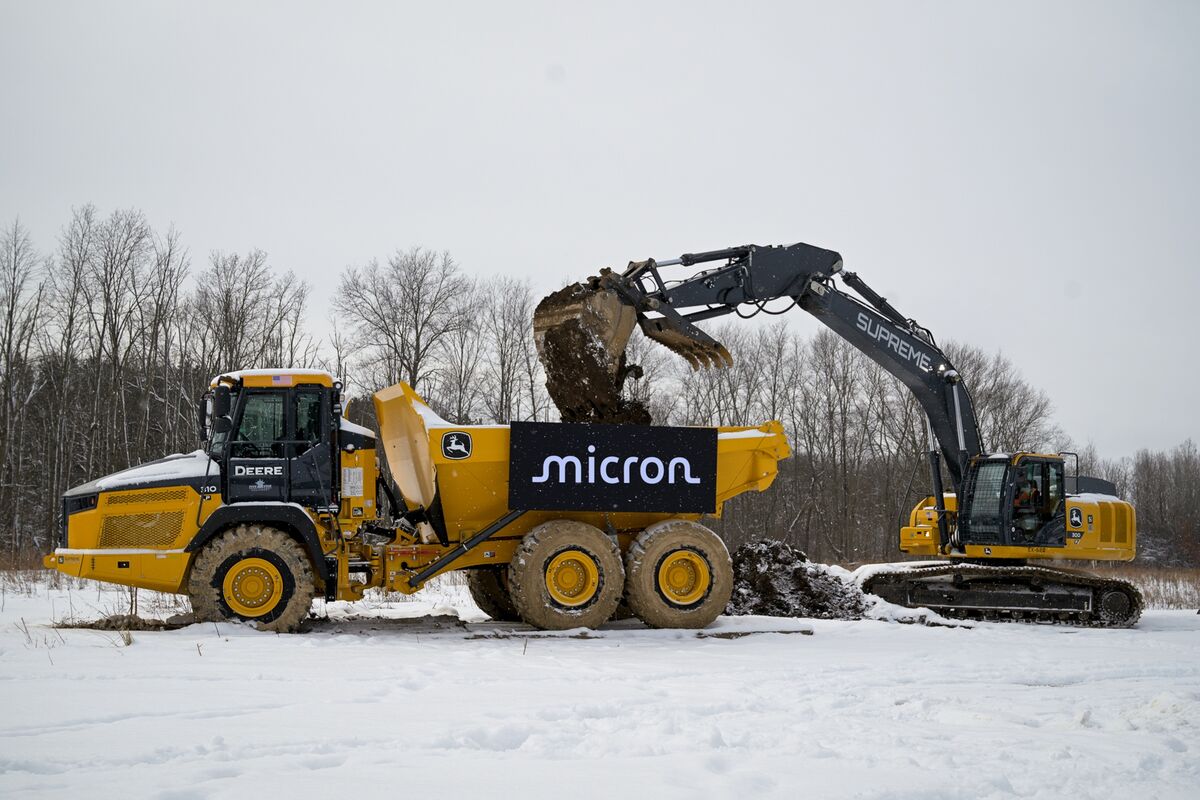
The article highlights that US Chips Act funds for memory-chip makers (Micron and SK Hynix) became a low priority during efforts to revive domestic manufacturing, underscoring shifting policy emphasis. Separately, Anthropic released an updated version of its Fable AI model, citing improvements driven by customer feedback, aimed at better coding and science task performance.
Analysis
The market implication is that AI is converting memory from a commoditized, cyclical afterthought into a strategic bottleneck. If HBM and high-density DRAM remain the gating factor for accelerator shipments, pricing power shifts from logic foundries to the memory duopoly, and the margin inflection can persist longer than the typical 12-18 month memory cycle because capacity additions are constrained by yield, packaging, and advanced substrate availability.
That creates a second-order winner set beyond MU and SK Hynix: AI server ODMs and GPU vendors face a cost stack that is increasingly memory-bound, which can cap gross-margin upside even if unit demand stays strong. Conversely, integrated PC/phone OEMs are late-cycle losers if memory allocation tightens; they lack pricing power and will absorb the first squeeze when suppliers prioritize AI contracts. The subsidy debate matters less than capital intensity discipline: if policy incentives accelerate new fabs, the eventual oversupply risk becomes a 2026-2027 problem, not an immediate one.
Near term, the main catalyst is not legislation but quarterly commentary on HBM mix, lead times, and capex cadence. The thesis breaks if contract pricing rolls over or if a competitor meaningfully expands HBM supply faster than expected; watch for any sign that AI demand is being satisfied by inventory rather than fresh wafer starts. The contrarian view is that the market may be underpricing the duration of this upcycle, but overpricing the durability: memory leadership tends to look structural right before it turns cyclical again.
AllMind Terminal
AI-powered research, real-time alerts, and portfolio analytics for institutional investors.
Request TrialMarket Sentiment
Overall Sentiment
neutral
Sentiment Score
0.05
Key Decisions for Investors
- Long MU vs SOXX for 1-3 months: express the view that AI memory scarcity can outperform the broader semi complex even if the index is held back by cyclical names; target 10-15% relative outperformance, stop if MU guides down HBM pricing or lead times.
- Long MU call spreads into next earnings/capex update: best risk/reward if management confirms mix shift toward HBM and tighter supply; invalidated by any sign of accelerating memory supply or weaker contract pricing.
- Pair long MU / short consumer-exposed hardware names (e.g., HPQ or Dell) over 3-6 months: memory cost inflation should compress downstream margins before end-demand fully shows it; this works best if channel inventories are not bloated.
- Watch SKHYV only as a confirmation indicator, not as the primary trade: liquidity is limited, but a sustained bid there would validate that the trade is broader than Micron and not just company-specific.
More News
- As Trump and Xi meet, investors play both sides of AI divide
- AMD joins the $1 trillion club as chip rally surges - our AI Strategy saw it early
- AMD joins $1 trillion market cap club on AI computing bets
- Why is SK Hynix stock rallying today?
- AMD Just Joined the $1 Trillion Club. Here's Why Investors Are Betting Big on the Chipmaker.
- Not Nvidia. Not Micron. Meet the AI Infrastructure Stock That Could Triple in Just 3 Years