
Europe Needs More Long-Term LNG to Avoid Energy Shocks, MET Says
Source: Bloomberg
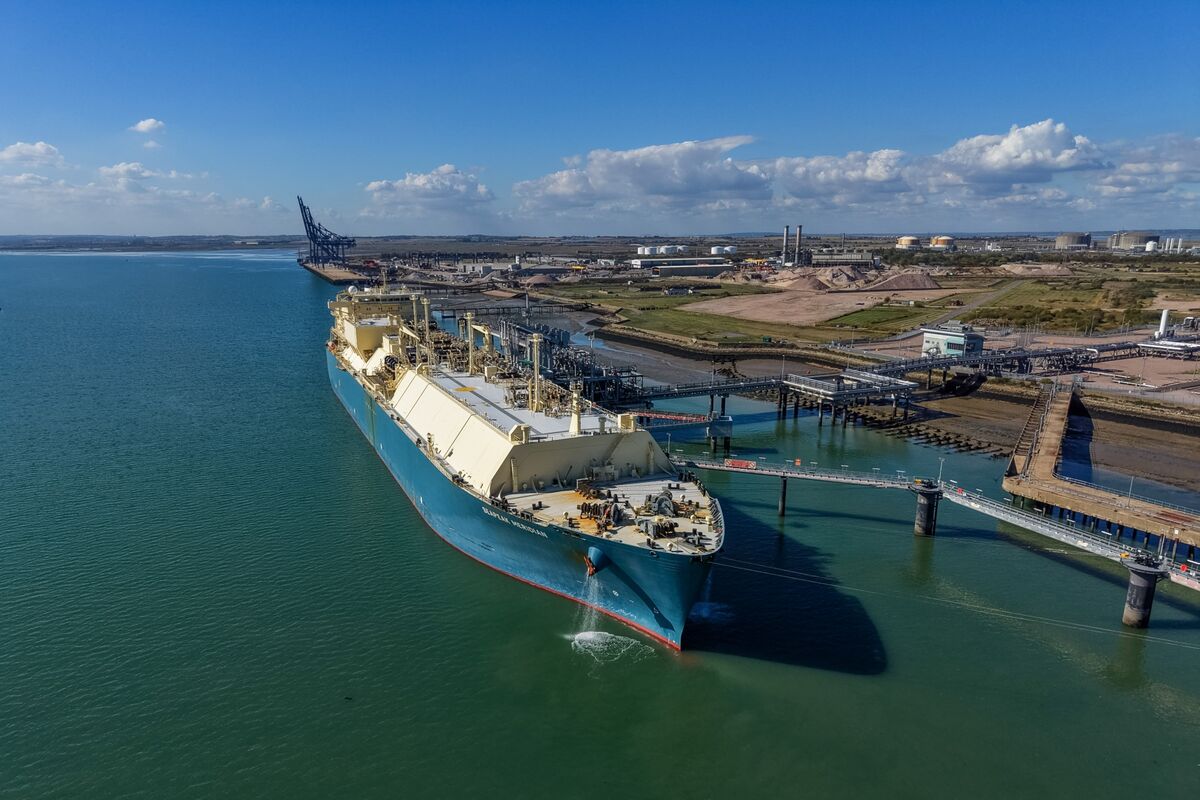
European gas prices have more than doubled this year after the Middle East war effectively disrupted about 20% of global LNG flows. MET Group says Europe needs more long-term seaborne gas contracts to reduce exposure to volatile spot markets, as Asian demand for flexible cargoes intensifies ahead of winter. The supply disruption and regional competition raise the risk of renewed European energy-price shocks.
Analysis
Europe’s vulnerability is less a headline gas-price beta than a procurement-duration problem: utilities relying on spot LNG face convex margin and collateral pressure when Asian bidding raises the delivered European clearing price. The likely near-term beneficiaries are contracted LNG exporters and portfolio players—Cheniere (LNG), Venture Global’s VG, Shell (SHEL), TotalEnergies (TTE) and Golar LNG (GLNG)—because destination flexibility and uncontracted volumes acquire scarcity value. European retail utilities with regulated or lagged tariff recovery, notably Uniper (UN01.DE), RWE (RWE.DE) and E.ON (EOAN.DE), are more exposed to working-capital strain than their headline generation hedges imply.
Over the next 1-3 months, winter-storage withdrawals, Asian spot tenders and shipping availability matter more than nominal European storage levels. A sustained rise in the Asian LNG premium versus TTF would pull marginal Atlantic Basin cargoes east, while a wider JKM-TTF spread also benefits fleet owners with spot exposure, including Flex LNG (FLNG) and Cool Company (CLCO). The non-obvious loser is European industrial demand—chemicals, fertilizers, glass and metals—where another gas spike could revive curtailments and worsen competitiveness versus US producers; BASF (BASFY) and Yara (YARIY) are useful liquid proxies.
Consensus may overpay for a repeat of the 2022 utility crisis: storage, demand destruction capacity and greater import infrastructure limit the probability of outright physical shortage. The more investable outcome is elevated volatility rather than permanently high benchmarks, favoring LNG value-chain operators over outright long European gas. This thesis is falsified if a durable ceasefire restores regional shipping/transit confidence, Asian demand weakens materially, or TTF winter-calendar spreads narrow despite active spot competition.
Structural contract tightening over 6-18 months supports US liquefaction developers and sellers, but Europe’s demand for long-term deals will increasingly collide with decarbonization policy and buyer reluctance to lock 15-20 year volumes. That creates a premium for shorter-duration, destination-flexible supply rather than indiscriminate long exposure to LNG infrastructure.
AllMind Terminal
AI-powered research, real-time alerts, and portfolio analytics for institutional investors.
Request TrialMarket Sentiment
Overall Sentiment
moderately negative
Sentiment Score
-0.45
Key Decisions for Investors
- Initiate a 1-3 month pair: long LNG or VG / short BASFY, sized beta-neutral. Exporters monetize scarce flexible supply while European chemical margins retain direct fuel-cost exposure; target 10-15% relative return, stop if TTF front-month falls below its 100-day moving average and Asian-European LNG arbitrage closes.
- Buy FLNG or CLCO on weakness for a winter-duration trade, preferably paired against broad energy exposure (short XLE) to isolate shipping-tightness beta. Risk/reward is attractive only if forward charter rates remain firm; avoid entry if vessel availability improves or spot charter rates decline for two consecutive weeks.
- Maintain an alert—not a position—on the JKM-TTF spread and European winter gas calendar spreads. A sustained Asian premium sufficient to redirect Atlantic cargoes is the confirmation signal for adding LNG, VG and FLNG; absent that evidence, the news alone does not justify chasing gas-linked equities.
- Avoid unhedged longs in European utility equities until tariff-recovery, collateral and procurement disclosures clarify sensitivity to higher spot purchases. A widening of utility credit spreads or increased margin-posting commentary would be a more actionable short catalyst than gas-price direction alone.
More News
- Treasury yields continue to rise after 10-year hit 19-year high as investors ramp-up rate hike bets
- US, China Extend Trade Truce as Trump Welcomes Xi
- Tehran takes aim at Canada for not condemning Trump's threat to destroy Iran
- Trump-Xi summit: Here’s what’s on the agenda, and why it matters
- Xi Jinping has made China’s hard-tech rise core to his policy—and U.S. containment is only fueling those plans
- China vs US: Who is winning the AI race, in four charts