
In HelloNation, Plumbing Expert Erin Goettsche Explains What to Do When a Sump Pump Fails
Source: PR Newswire
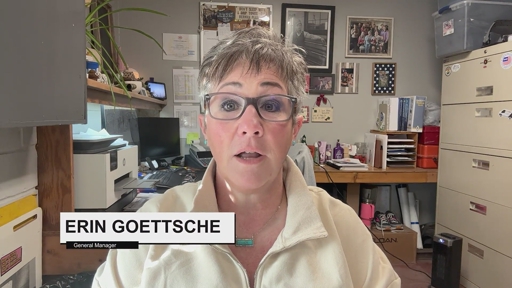
The article provides non-financial, homeowner safety guidance on what to do when a sump pump fails during a storm, including unplugging the pump, performing a breaker check, clearing debris, using temporary water removal methods (wet vacuums/portable pumps/buckets), and considering backup battery-powered pumps and alarms. It also emphasizes annual sump pump maintenance (float switch, cleaning, discharge line checks) and complementary flood-protection steps like inspecting grading, gutters, and downspouts. No financial figures or market-moving events are discussed.
Analysis
This is not a tradable company-specific catalyst; it reads like consumer education that may marginally support category awareness, but not demand elasticity in a way the market will price. The only economic read-through is to storm-recovery and home-maintenance spend: emergency plumbing, wet/dry vacs, dehumidifiers, backup power, and insurance claims activity. If there is any winner, it is the broad home-improvement complex (HD, LOW) and select disaster-mitigation suppliers, but the uplift would be too small and too weather-dependent to matter unless the region is hit by repeated flooding.
The second-order risk is actually to insurers and local contractors if the broader storm season is severe enough to create claims inflation, not from this article itself. In that case the trade is about catastrophe frequency, not the educational content; the relevant horizon is months, not days. A reversal would be lower-than-expected rainfall or evidence that consumers are already saturated with replacement/maintenance purchases, which would cap any incremental spend.
Contrarian view: the market should ignore this kind of content unless it coincides with a measurable weather event or with a broader spike in regional home-repair activity. For the named tickers, there is no identifiable earnings sensitivity here and I would not expect flow-through to CRMT, HSHL, or UNTC absent a separate operational announcement. Best use of this piece is as a watch item for storm-driven maintenance demand, not as a catalyst to trade.
AllMind Terminal
AI-powered research, real-time alerts, and portfolio analytics for institutional investors.
Request TrialMarket Sentiment
Overall Sentiment
neutral
Sentiment Score
0.00
Key Decisions for Investors
- No direct position in CRMT/HSHL/UNTC; treat as non-catalyst noise unless paired with a company filing or weather-driven sales data.
- Watch HD and LOW for a seasonal maintenance uptick only if regional storm claims data accelerates over the next 1-3 months; otherwise no trade.
- Set an alert on catastrophe-loss estimates for property insurers (PGR, ALL, TRV) if the local storm pattern broadens into a multi-state event; this is the real monetizable angle.
- If looking for a thematic basket, use only a small tactical long in home-improvement retailers on confirmed storm-activity data, with a tight stop if the weather catalyst fades.
More News
- Nvidia GPUs are everywhere. Here are the ways companies are accessing them
- Bank of America is bullish on these top stocks ahead of earnings
- As companies pour billions into Earth-based AI infrastructure, Google is taking the data center race off-planet
- AI's Supercharging a Scam Economy Bigger Than the Cocaine Trade
- How U.S. know-how is fracking Australia into a gas boom, from Texas oilmen to Trump’s energy secretary
- The world needs Ukraine’s grain. Its farmers are running out of reasons to plant
From AllMind Research
- Anthropic IPO Preview: Valuation, Timing, and What to Watch
- Shein After the IPO: Venue, Valuation, and What Must Be Proved
- What AI Research Tools Should a Small Hedge Fund Buy First?
- AI Portfolio Monitoring: Build an Alert Policy Analysts Can Audit
- The Great Divergence: North American Banking at the Crossroads of Monetary Policy and Agentic AI (Q4 2025 Bank Earnings)