
AlphaESS désignée comme fabricant de stockage d'énergie de niveau 1 par BloombergNEF pour le cinquième trimestre consécutif au quatrième trimestre 2026
Source: PR Newswire
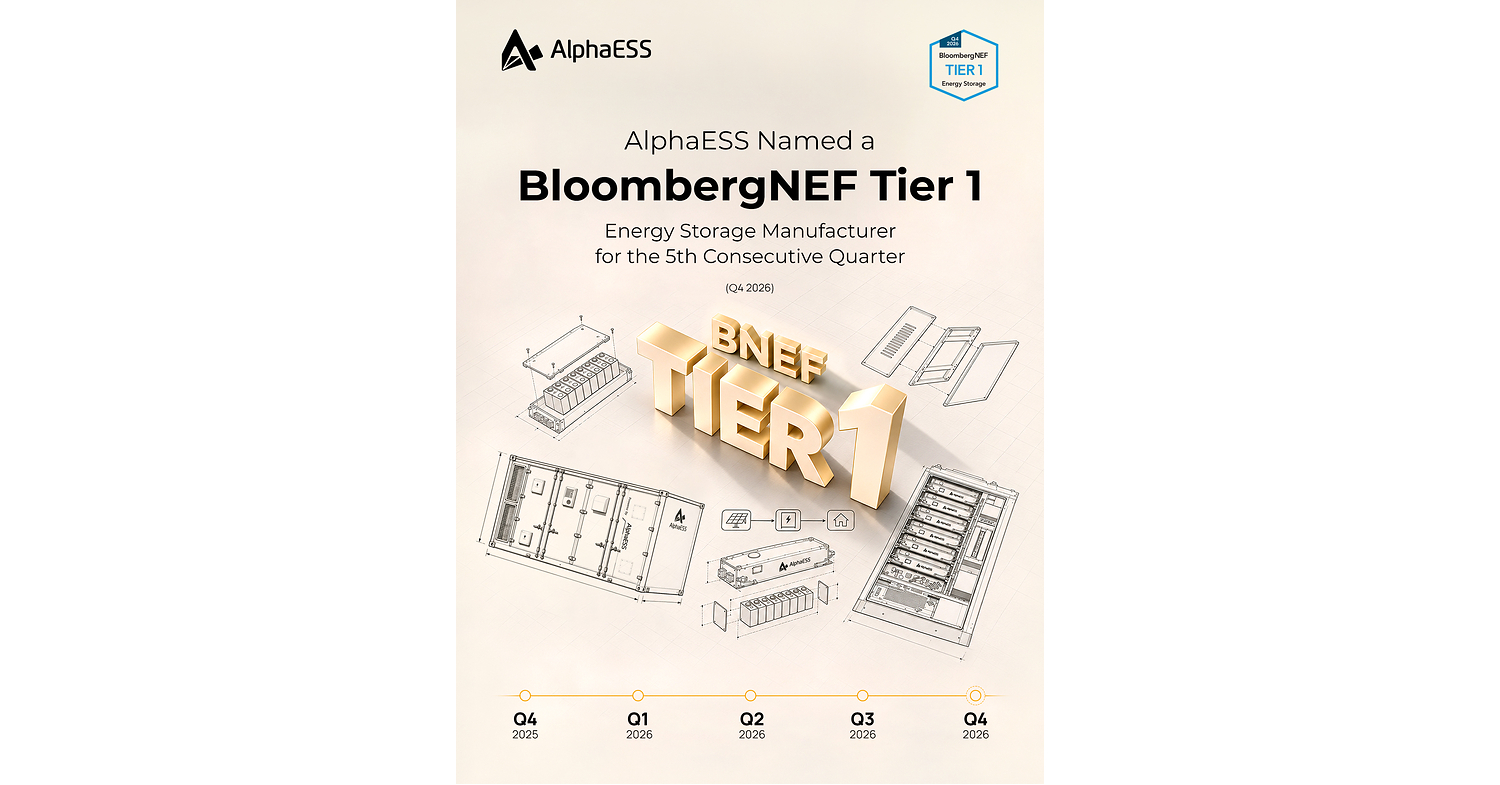
AlphaESS was named a BloombergNEF Tier 1 energy-storage manufacturer for the fifth consecutive quarter in Q4 2026, under stricter bankability criteria requiring eligible project experience backed by non-recourse financing from at least two commercial banks. The company cited 200 MWh of recent projects across Lithuania, Austria and Germany; its 120 MWh Lithuanian project passed factory acceptance testing, while a 40 MWh grid-services section in Austria entered service in September 2026. The announcement highlights continued project development and product capability but provides no financial results or share-price reaction.
Analysis
The investable signal is not the Tier 1 label itself, but whether stricter bankability screens lower financing friction for repeat suppliers and shift procurement toward vendors with independently verifiable operating records. That could favor established storage integrators and cell suppliers such as Fluence, Wärtsilä, Sungrow and CATL if European developers increasingly prioritize lender acceptance over lowest bid. The counter-effect is tougher qualification that raises compliance costs and consolidates share among larger vendors, squeezing smaller system integrators and EPCs.
The disclosed European projects are evidence of execution, not yet evidence of material earnings: one is at factory acceptance, another has a section operating, and the German project targets 2027 commissioning. The release provides no contract value, margin, ownership economics or confirmation that the designation changes order conversion. AlphaESS has no supplied ticker identity, so there is no direct listed-equity expression.
Near term, expect limited fundamental repricing from a company press release. Over 1–3 months, watch for independently confirmed awards, financing closes, shipments and commissioning; the 6–18 month question is whether repeat orders establish bankable scale or whether price competition absorbs value. Risks include project delays, falling system prices, execution/safety issues and financing conditions. The contrarian point: a stricter list may sound like a moat, but vendor qualification is not the same as durable pricing power; conversely, the market may underweight the value of lenders accepting a supplier. Thesis weakens if projects slip or the company fails to convert pipeline into financed, operating assets.
AllMind Terminal
AI-powered research, real-time alerts, and portfolio analytics for institutional investors.
Request TrialMarket Sentiment
Overall Sentiment
mildly positive
Sentiment Score
0.35
Key Decisions for Investors
- No trade on the designation alone; AlphaESS is not linked to a supplied public ticker, and the release lacks financial terms needed to estimate earnings impact.
- Set a 1–3 month alert for independently verified European orders and non-recourse financing, including project value, AlphaESS scope and customer identity; treat those as conversion evidence, not headline MWh alone.
- For listed storage exposure, keep Fluence, Wärtsilä, Sungrow and CATL on a relative-strength/watch list rather than initiating a peer trade from this item. Reassess only if procurement data show share gains or pricing/margin changes attributable to bankability criteria.
- Falsification/watch items: delayed shipment or commissioning, safety or warranty issues, failure to secure repeat financed projects, or evidence that lower system pricing is offsetting any volume gains.
More News
- Tech stocks are suffering their biggest selloff since Covid, as investors see premature end to AI datacenter boom
- Wall Street’s best post-midterm rally in 44 years lasted just one day—then $3 trillion vanished as chip stocks plunged over AI fears
- How Wall Street's postelection rally got obliterated — and what's next
- Elon Musk's Tesla and SpaceX lose over $420 billion in combined market cap after midterms
- Iran says tankers struck in Hormuz amid fears of new US attack
- The Iran war has cost U.S. households nearly $2,000 each. New strikes could keep the bill climbing