
Gaming the Fed Odds for a Rate Hike Wednesday
Source: zacks.com
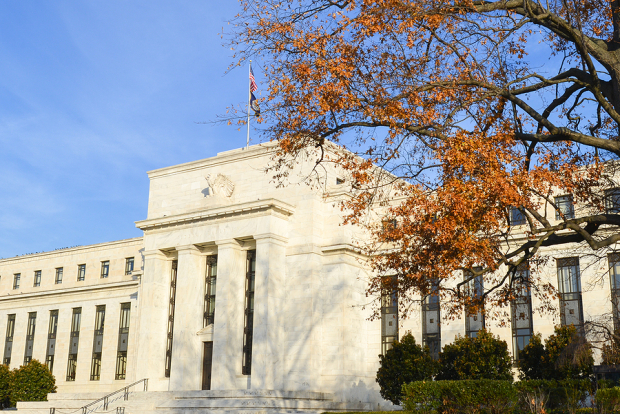
Markets assign a 90% probability that the FOMC will raise the fed funds target range by 25bps to 3.75%-4.00% at Wednesday's decision, the first rate move since December. Elevated inflation tied to tariff policy and oil-price effects from the Iran war has pushed 10-year and 30-year Treasury yields above 5%, while the 2-year yield is 4.65%, 90bps above the current policy-rate ceiling. Because a hike is largely priced in, the principal market risk is an unexpected hold, dissent pattern, or a shift in Chair Kevin Warsh's messaging.
Analysis
The actionable event is not the expected policy move but the distribution of terminal-rate and inflation-risk repricing after the statement. With the front end already above the policy band and long yields elevated, a hike accompanied by an unchanged or higher projected path would reinforce a bear-flattening impulse initially, then risk bear steepening if investors conclude inflation credibility is being impaired by fiscal, tariff, and energy shocks. Rate-sensitive equity duration—unprofitable software, small-cap refinancers, REITs, and leveraged consumer discretionary—has materially worse downside convexity than broad indices over the next 1-3 months.
The underappreciated transmission channel is credit, not headline equity multiples. Higher risk-free rates combined with tariff/oil-driven margin pressure widen interest-coverage dispersion: high-quality cash-rich mega-cap technology can absorb the shock, while CCC/B-rated issuers, commercial real estate borrowers, and private-credit-dependent sponsors face refinancing risk into 2027. Banks are mixed: larger deposit franchises benefit from reinvestment yields, but regional banks remain exposed if long-end yields rise faster than deposit costs and unrealized securities losses re-expand.
Consensus appears positioned for a routine hike; the larger surprise is either a pause or a dissent-heavy decision that politicizes the reaction function. A pause could trigger a sharp duration-led relief rally, but absent softer inflation data it would likely steepen inflation breakevens and cap gains within weeks. Falsify the defensive thesis if the press conference credibly signals the hike is a one-and-done move and 2-year yields decline below the pre-meeting range while high-yield spreads remain contained.
AllMind Terminal
AI-powered research, real-time alerts, and portfolio analytics for institutional investors.
Request TrialMarket Sentiment
Overall Sentiment
mildly negative
Sentiment Score
-0.15
Key Decisions for Investors
- For the 1-5 trading-day event window, own downside convexity through a modest SPY put spread or QQQ put spread expiring 4-8 weeks out; finance only partially, as a dovish hold remains a meaningful tail. Target roughly 2:1 payoff if QQQ falls 5-7%; exit if the 2-year Treasury yield drops materially post-meeting and the Chair signals no further tightening.
- Initiate a 1-3 month quality-duration pair: long MSFT or GOOGL versus short IWM. The thesis is refinancing and margin stress at smaller, lower-quality companies rather than a broad earnings collapse; stop out if IWM outperforms by 5% following a dovish policy-path repricing.
- Maintain/establish long KRE puts or a KRE/XLF relative short for 1-3 months rather than shorting money-center banks outright. Regional-bank balance sheets are more vulnerable to renewed long-end yield increases and CRE-credit concerns; invalidate if the 10-year yield falls below 4.75% and regional-bank deposit/beta commentary improves.
- Add a tactical long TLT only after a hawkish initial selloff pushes the 10-year yield higher, not ahead of the decision. Risk/reward improves if markets price a sustained tightening cycle despite restrictive real rates; take profits on a 20-30 bp yield decline and cut if inflation expectations, rather than real yields, drive the selloff.
More News
- BOJ expected to hike rates by 25 basis points to fresh three-decade high: CNBC survey
- Saudi coalition says Houthi drone destroyed near Mecca
- BOJ set to raise interest rates to 31-year high as inflation risks loom
- Asian markets make nervous start ahead of Fed decision
- Iran war increasing inflation, straining US munitions: congressional report
- China's AI leaders keep quiet despite U.S. 'publicity' on tech risks
From AllMind Research
- Anthropic IPO Preview: Valuation, Timing, and What to Watch
- Shein After the IPO: Venue, Valuation, and What Must Be Proved
- What AI Research Tools Should a Small Hedge Fund Buy First?
- AI Tools for CFA Charterholders: An Evidence Standard
- Weekly Update: Unstructured Data Search, Ask AI, and Advanced Futures Data