
HelloNation Explores Quality Care in Senior Living With Insights From Senior Living Expert Sarah Duggan of Manhattan, Kansas
Source: PR Newswire
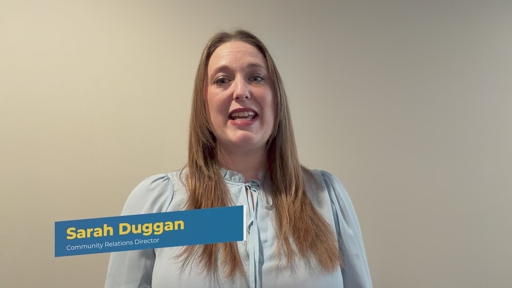
This PRNewswire/HelloNation piece provides guidance for families evaluating senior living communities, emphasizing quality care indicators such as consistent caregivers, visible leadership involvement, and regular family communication. It argues that stable staffing improves continuity of routines and enables earlier detection of subtle health changes, while frequent reliance on temporary rotating staff can disrupt care. Overall, it is consumer-oriented content with no direct company financials or policy developments.
Analysis
This is not a direct catalyst for public equities, but it is a useful framing device for where senior housing economics actually move: labor stability, resident retention, and legal/reputational risk. Operators with low turnover and disciplined leadership tend to convert the same occupancy base into better margins because they rely less on agency labor, have fewer incident-driven losses, and get more family referrals. The competitive gap widens over time: a well-run community compounds trust, while a churn-heavy operator quietly bleeds EBITDA through staffing inefficiency.
The market usually prices senior housing on occupancy and rate, but the hidden variable is staff continuity. That matters most for private-pay operators and REITs with meaningful senior living exposure such as WELL, VTR, and SNR, where better operating culture can support same-store NOI and lower bad-news volatility. The losers are thinly staffed communities, smaller regional operators, and any platform leaning on temporary labor; those models look fine until occupancy rises and service failures show up in move-outs and complaints.
Time horizon matters: there is no immediate trading signal here, but over 1-3 months the key read-through is next-quarter commentary on turnover, agency spend, and customer complaints. Over 6-18 months, stronger staffing can lift valuation multiples by making earnings more durable and reducing tail-risk discounts. The contrarian point is that this is not just a qualitative 'nice to have'—it is a margin and liability variable, and consensus often understates how quickly poor culture becomes a financial problem.
AllMind Terminal
AI-powered research, real-time alerts, and portfolio analytics for institutional investors.
Request TrialMarket Sentiment
Overall Sentiment
neutral
Sentiment Score
0.00
Key Decisions for Investors
- No standalone trade on this article; treat it as a diligence screen and wait for company-specific operating metrics before adding senior housing exposure.
- Watch WELL and VTR into next earnings for turnover, agency labor, and same-store occupancy trends; buy only if management shows sequential improvement in staffing-related costs and resident retention.
- Relative-value idea: long WELL / short SNR if upcoming reports confirm better labor stability at the higher-quality operator; thesis fails if both report similar agency-labor normalization.
- Avoid shorting the sector purely on staffing headlines; the first beneficiaries of better care quality are the best-run operators, not the broad asset class.
- Trigger for action: if agency labor or employee turnover does not improve over the next 1-2 quarters, fade any re-rating attempt in senior housing REITs.
More News
- Nvidia GPUs are everywhere. Here are the ways companies are accessing them
- Why is US turning to Russia for diesel despite sanctions?
- India unveils tough curbs on dollar demand to defend rupee
- Bank of America is bullish on these top stocks ahead of earnings
- Trump's Russian Diesel Deal Draws Ukraine Criticism
- Stocks were up this week. Here are the names that are now overbought
From AllMind Research
- Anthropic IPO Preview: Valuation, Timing, and What to Watch
- Shein After the IPO: Venue, Valuation, and What Must Be Proved
- What AI Research Tools Should a Small Hedge Fund Buy First?
- AI Tools for CFA Charterholders: An Evidence Standard
- Weekly Update: Unstructured Data Search, Ask AI, and Advanced Futures Data