
Meshy Debuts New In-House AI Model with Meshy Edit, Letting Users Change Selected Parts of a 3D Model with One Prompt
Source: PR Newswire
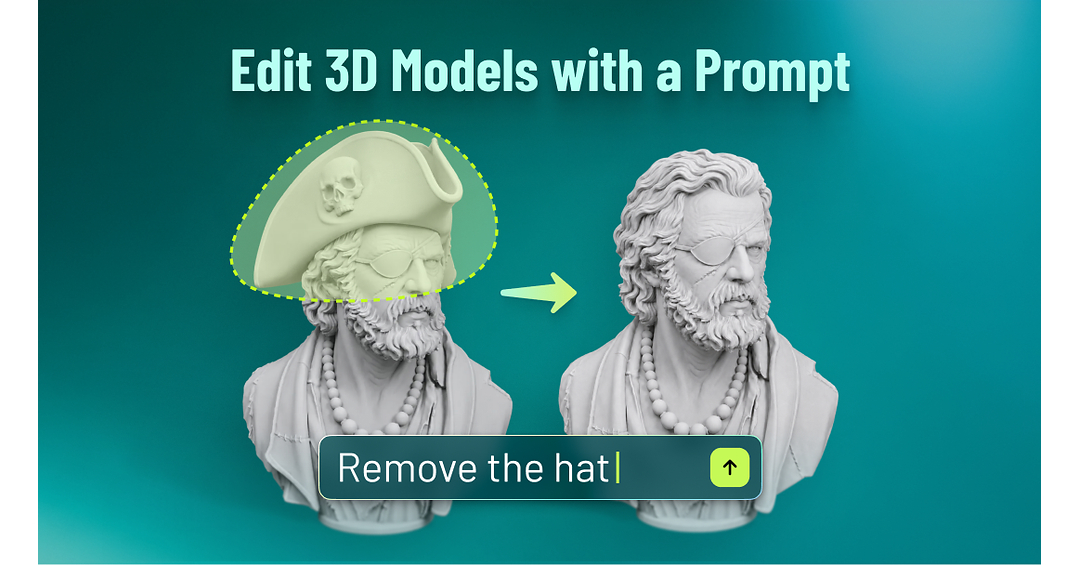
Meshy launched Meshy Edit, an in-house AI feature that lets registered users modify selected parts of supported 3D models with a text prompt, typically in about one minute; each edit costs 20 credits. The tool supports high-poly models generated with Meshy 6 and Meshy 7.1, with edited models available for download or transfer to slicer software. The article also reports Meshy ranked 31st in a16z’s U.S. consumer AI app revenue ranking and says the company surpassed $100 million in ARR in September 2026.
Analysis
The investable signal is a possible shift in AI 3D from one-shot generation toward iterative workflow utility. If selective edits reliably preserve unaffected geometry, they could increase repeat usage and paid-credit consumption per creator; the key economic variable is incremental retention and revenue per active payer, not launch-day attention. Meshy’s 20-credit price is not enough to infer monetization without credit-pack economics, edit frequency, and inference cost.
The competitive pressure is most plausible at the entry level: prompt-based changes may displace some simple Blender work and make Meshy more useful for rapid concepting and printable collectibles. It is not yet evidence of displacement in professional pipelines, where topology, texturing, compatibility, and artist control matter. Autodesk, Adobe, Unity, and other 3D workflow providers are potential ecosystem exposures, but the feature alone is too narrow to support a bearish view on them. Meshy’s support limits—native high-poly models only, with uploaded and low-poly assets excluded—constrain near-term substitution.
Near term, expect limited public-market read-through: Meshy is private and there is no mapped ticker. Over 1–3 months, verify whether edit usage lifts paid conversion, repeat credits, and retention, while tracking output quality and support expansion. Over 6–18 months, reliable editing could deepen workflow lock-in; conversely, falling model costs or competing tools could commoditize the feature. Treat company-reported revenue and ARR claims as unverified absent independent corroboration. Contrarian view: a practical pain point is addressed, but a product launch and consumer-spend ranking do not establish durable margins or a moat.
AllMind Terminal
AI-powered research, real-time alerts, and portfolio analytics for institutional investors.
Request TrialMarket Sentiment
Overall Sentiment
mildly positive
Sentiment Score
0.35
Key Decisions for Investors
- No immediate public-equity trade: Meshy is private, and the launch does not justify shorting Autodesk (ADSK), Adobe (ADBE), or Unity (U) absent evidence of customer or revenue displacement.
- Set a 1–3 month watch item for independent indicators of paid-user retention, edits per payer, credit repurchase, and inference cost. Upgrade the thesis only if usage converts into improving unit economics rather than free-user activity.
- Track support for uploaded, low-poly, and textured assets, plus export quality and successful print outcomes. Broader compatibility would strengthen the workflow-substitution thesis; persistent limits would falsify a near-term professional-software threat.
- Do not underwrite Meshy’s reported ARR or private valuation as independently verified. Reassess only with corroborated financials, evidence of repeat monetization, or a material competitive response.
More News
- Why did CoreWeave stock get crushed this week? Look to this corner of the debt market for clues
- AI stock sell-off ramps up over debt-fueled data center spending fears: ‘Full-blown crisis of confidence'
- Dow falls 189 points as AI stocks slide and oil prices surge
- Wall Street Anxiety Spreads as AI Rout Meets $110 Oil Shock
- Wall Street's fear gauge is ripping. Traders see it going even higher
- All the news about the iPhone Duo