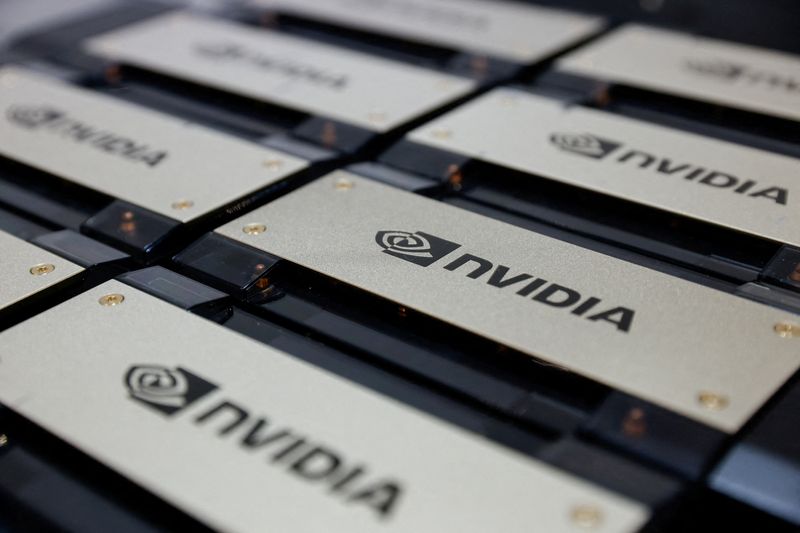
Asia stocks fell as KOSPI was hit by AI-related losses, while broader risk sentiment was pressured by rising Iran-related geopolitical escalation. Offsetting the weaker market tone, Nvidia announced partnerships with SK Hynix, SK Telecom, Naver, Doosan, and LG to expand AI data centers, memory supply, and robotics applications. The SK Hynix deal is a multi-year technology partnership, and SK Telecom plans a gigawatt-scale AI cloud with its first data center targeted for 2027.
The near-term read-through is less about Nvidia’s own demand and more about who gets quasi-annuity-like leverage to the AI buildout without depending on consumer upgrade cycles. The clearest structural beneficiaries are advanced memory suppliers and power/thermal infrastructure providers: once the market internalizes that AI data centers are becoming multi-year utility projects, pricing power shifts from chip design toward memory bandwidth, packaging, cooling, and grid-adjacent equipment. That favors Korean memory and industrial conglomerates with embedded capacity, but also raises the risk that marginal AI capex gets reallocated away from pure software narratives into the physical layer of the stack.
The second-order loser is likely the “AI beta” trade in the broader equity market. If sovereign escalation keeps risk sentiment fragile, any AI-positive headline can fail to translate into sustained multiple expansion because investors will demand proof of monetization rather than just partnership flow; that dynamic is especially punitive for high-duration names with crowded positioning. In that regime, NVDA can remain fundamentally strong while the stock underperforms on de-risking, because the market is already discounting supply/security of demand but not enough geopolitical friction.
The contrarian angle is that the market may be underestimating how these partnerships actually tighten supply discipline rather than loosen it. By anchoring future capacity to a handful of strategic customers, Nvidia is effectively reducing the odds of a 2026–27 glut in memory and AI infrastructure; that is bullish for upstream pricing but potentially caps upside for second-tier AI hardware vendors that were counting on a broad capex boom. The main reversal catalyst is a risk-off macro tape or any sign that hyperscaler capex pauses, which would hit the whole AI chain faster than these industrial partnerships can cushion it.
AI-powered research, real-time alerts, and portfolio analytics for institutional investors.
Request TrialOverall Sentiment
mildly negative
Sentiment Score
-0.20
Ticker Sentiment
