
New Index Engines Research Finds Ransomware Variants Built to Evade Detection and Undermine Recovery
Source: PR Newswire
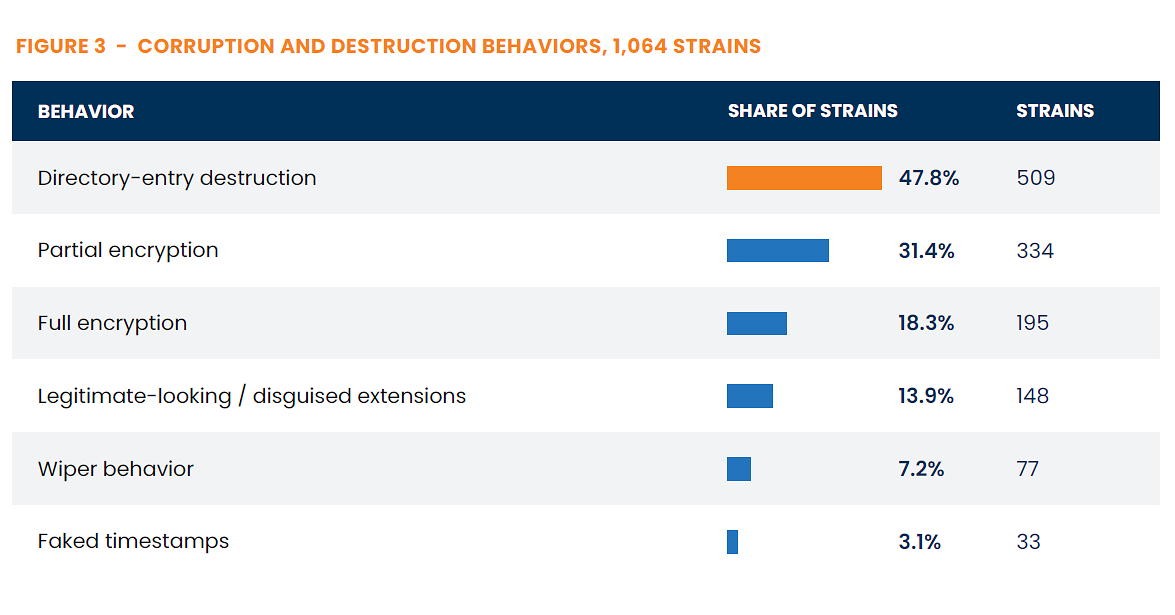
Index Engines' CyberSense Research Lab found that 47.8% of 1,064 ransomware strains analyzed in H1 2026 used directory-entry destruction, more than double the 18.3% using full encryption. Attacks corrupted a median 97,321 files per hour, reaching 10,000 files in roughly six minutes, while 64.7% of samples used polymorphism to evade signature-based detection. The findings point to rising recovery risk as attackers preserve normal-looking filenames, timestamps and entropy levels, making forensic data-integrity validation increasingly important.
Analysis
The investable implication is a budget shift from prevention/detection toward recoverability verification: enterprises will increasingly require proof that backup copies are usable, not merely immutable. That favors pure-play cyber-resilience platforms such as RBRK and CVLT, where integrity scanning, clean-room recovery, and orchestration can become attach-rate drivers; the benefit should emerge over 1-3 quarters as renewal and disaster-recovery architecture decisions are made, rather than in near-term security spend.
PANW is not a clean beneficiary. Its Cortex/XSIAM stack can gain from demand for faster behavioral detection and automated containment, but stealthier payloads raise the value of telemetry quality rather than simply expanding endpoint seats. The risk is that security buyers classify this as a backup and recovery-control problem, diverting incremental dollars toward RBRK, CVLT, and private Veeam/Cohesity rather than PANW's broad platform.
The company-sponsored dataset is not evidence of incident prevalence or incremental customer spend, and its claimed detection performance is not independently comparable with competitors. Consensus may overread ransomware headlines as uniformly bullish for cybersecurity; the more differentiated outcome is multiple support for vendors with verified recovery workflows, while broad security vendors need to demonstrate that detection-to-recovery integrations lift net retention. A sustained rise in disclosed recovery incidents, cyber-insurance requirements for integrity validation, or RBRK/CVLT commentary on recovery-module attach rates would validate the thesis over 6-18 months.
AllMind Terminal
AI-powered research, real-time alerts, and portfolio analytics for institutional investors.
Request TrialMarket Sentiment
Overall Sentiment
mildly negative
Sentiment Score
-0.32
Key Decisions for Investors
- No directional PANW trade on this release alone. Maintain neutral exposure until the next earnings call clarifies whether Cortex/XSIAM bookings or platform attach rates are benefiting from recovery-oriented demand; a material upward revision to next-12-month billings guidance would falsify the relative-underweight view.
- Build a 1-3 month watchlist long RBRK versus short PANW in equal dollar beta-adjusted sizing, but enter only if RBRK reports accelerating subscription ARR/net retention tied to cyber-recovery or if PANW's platform-growth guidance remains unchanged. Target 10-15% relative upside; exit on PANW raising Cortex/XSIAM growth guidance materially or RBRK showing elevated sales-and-marketing spend without ARR acceleration.
- Favor CVLT as the lower-volatility recovery-exposure proxy ahead of its next earnings update, contingent on evidence that metallic/recovery offerings are expanding ARR or gross margin. Use a 7-10% downside stop from entry because the primary risk is that enterprises treat integrity scanning as a feature bundled into existing backup contracts rather than a new spend category.
- Monitor cyber-insurance underwriting language and large-enterprise RFPs over the next 6 months for explicit clean-recovery validation requirements. If such requirements remain absent, avoid extrapolating laboratory attack techniques into a sector-level revenue catalyst.
More News
- Nasdaq Index: PCE Rally Meets Yield Wall as Micron Earnings Loom
- Palo Alto Networks’ Nikesh Arora is building a defense against the dark side of AI
- Factory CEO just accused his VC board advisor of spying for Cognition
- South Korea’s exports hit record high on AI boom
- Asian stocks dip, bonds in focus after torrid September
- RAM supply set to worsen, says Micron, as CEO celebrates ‘much higher’ prices
From AllMind Research
- Anthropic IPO Preview: Valuation, Timing, and What to Watch
- Shein After the IPO: Venue, Valuation, and What Must Be Proved
- What AI Research Tools Should a Small Hedge Fund Buy First?
- Weekly Update: New Reporting Features, UI Improvements, and Chat Optimizations
- Selecting an AI Research Platform for Institutional Investors