
Citadel Securities’ Rubner Says Retail Traders Return to AI Bets
Source: Bloomberg
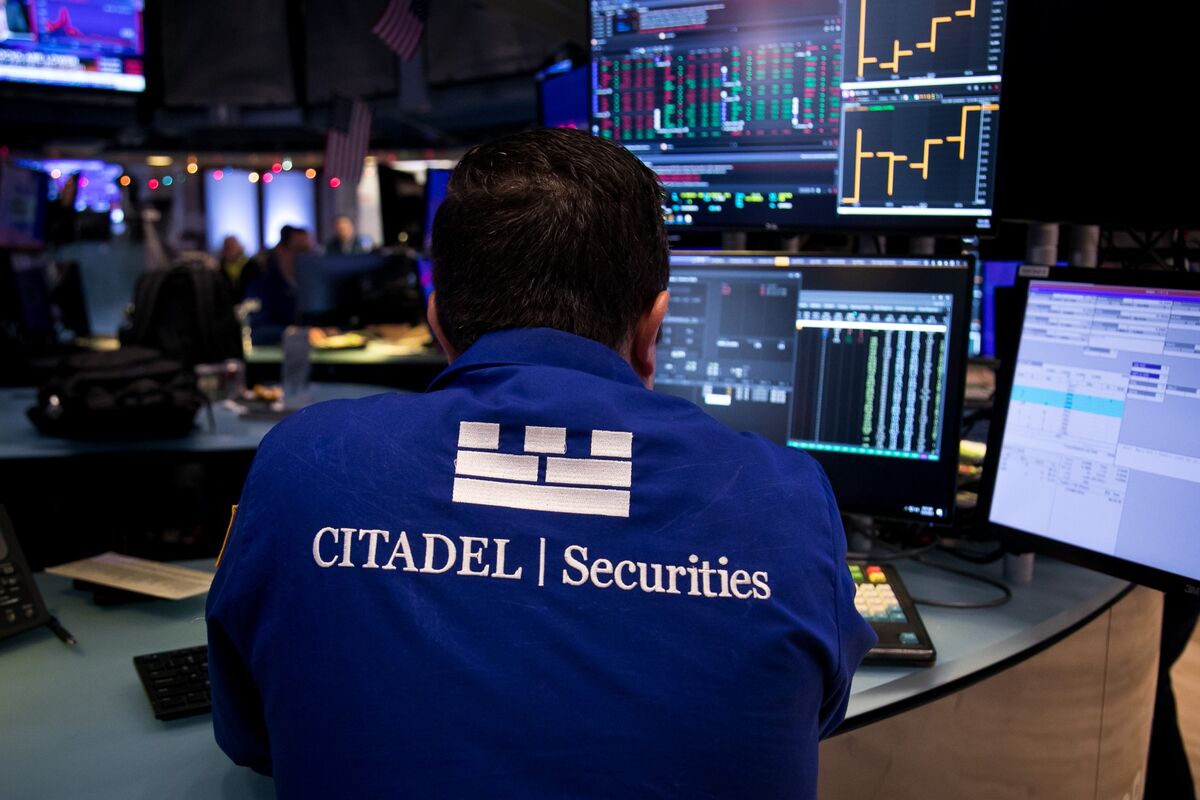
Retail traders net bought $9.1 billion of US equities on Citadel Securities’ platform last week, with buying concentrated in AI-linked stocks and ETFs. Citadel’s Scott Rubner said it was the largest week of net buying in 15 [period not specified], although overall trading activity remained below average.
Analysis
The useful signal is not that retail has turned broadly risk-on; it is that a marginal buyer may be concentrating in the same AI leaders already driving index performance. That can support near-term dips in crowded AI exposure while worsening market breadth and increasing the downside convexity of the trade if flows reverse. The reported activity is one platform’s single-week estimate, not a market-wide positioning measure, and below-average overall activity limits its evidentiary weight.
Over days, treat the flow as a technical tailwind—not a reason to pay up for AI beta. Over 1–3 months, the test is whether earnings revisions and company capex guidance validate the buying; follow retail-flow persistence, market breadth, and leadership concentration. Over 6–18 months, durable returns depend on monetization and returns on AI investment, not continued thematic inflows. A rise in rates, weaker AI spending commentary, or a sharp deterioration in breadth could expose crowded positioning. The contrarian risk is that the flow is a late-cycle chase; the counterpoint is that a small, concentrated bid can still extend leaders before fundamentals turn.
AllMind Terminal
AI-powered research, real-time alerts, and portfolio analytics for institutional investors.
Request TrialMarket Sentiment
Overall Sentiment
mildly positive
Sentiment Score
0.20
Key Decisions for Investors
- Do not add broad AI exposure solely on this flow report. Keep any near-term AI risk tactical and sized for a fast reversal.
- Prefer a relative-value posture: favor established AI infrastructure and platform leaders such as Nvidia and Microsoft over less-proven thematic exposure, but require earnings revisions or guidance to confirm before adding.
- For the next 1–3 months, monitor retail-flow persistence alongside index breadth and AI-related earnings/capex commentary. If flows continue while breadth narrows and revisions weaken, reduce crowded AI exposure rather than treating inflows as confirmation.
- Falsify the near-term bullish read if retail buying fades and AI leaders lose relative strength, or if major-company guidance signals weaker AI demand or investment returns. No standalone trade is warranted from one week of platform-specific flow data.
More News
- Speculation Over STT Cut Lifts Sentiment for Indian Stocks
- Applied Materials’ $5 billion AI lab aims to cut chip development time in half—and restore Silicon Valley’s edge
- China's exports likely grew by double-digits in September
- Meta’s Muse models reach the AI frontier—and kill any hopes to ‘pace’ it
- Singapore third-quarter GDP growth softens from four-year high but beats estimates
- FBI arrests OpenAI employee accused of planting secret recording device in conference room
From AllMind Research
- Anthropic IPO Preview: Valuation, Timing, and What to Watch
- Shein After the IPO: Venue, Valuation, and What Must Be Proved
- What AI Research Tools Should a Small Hedge Fund Buy First?
- AI for Sell-Side Models, Estimates, and Internal Data
- How to Write an Investment Memo with AI: A Decision-Record Template