
Pusan National University Develops Smart Nanoparticles That Deliver Antibiotics Directly to H. pylori
Source: PR Newswire
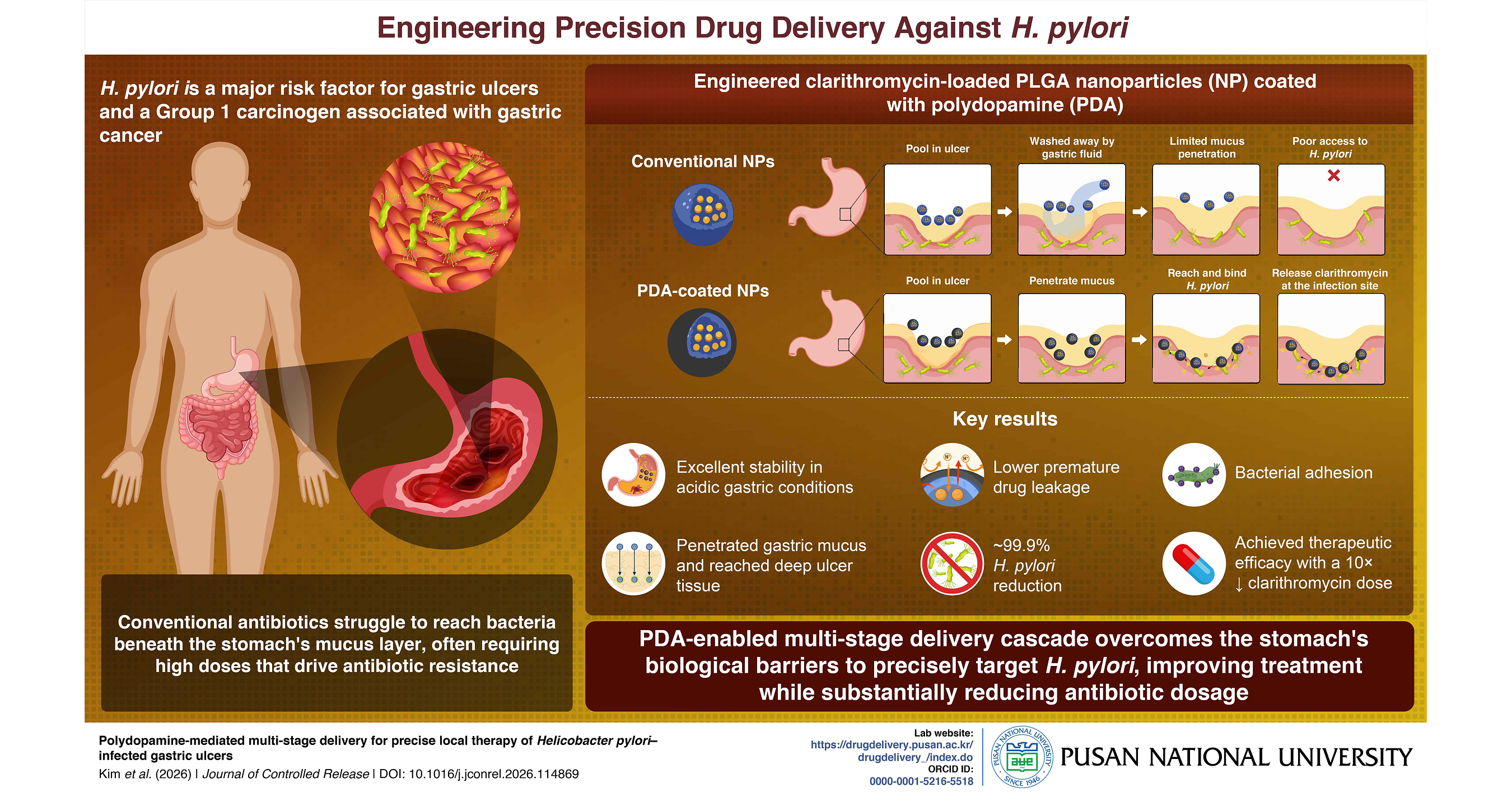
Pusan National University reported that its polydopamine-functionalized, clarithromycin-loaded nanoparticles reduced H. pylori bacteria by approximately 99.9% in preclinical gastric-ulcer studies while using a 10-fold lower antibiotic dose than conventional systemic therapy. The platform penetrated gastric mucus, reached roughly 400 μm into ulcer tissue, prolonged gastric retention, and accelerated ulcer healing in mouse models. The findings are promising for targeted antibiotic delivery and resistance reduction, but remain preclinical and are unlikely to have near-term broad market impact.
Analysis
This is pre-commercial academic evidence rather than a near-term revenue event. The investable read-through is not to broad pharma, but to oral drug-delivery specialists whose valuation could rerate if targeted gastric retention becomes clinically reproducible; the principal bottleneck is translation from a controlled mouse-ulcer model into human gastric physiology, scalable CMC manufacturing, and a regulatory path that must demonstrate superiority versus inexpensive multidrug generic regimens.
A successful platform would create value primarily by lowering treatment failure and resistance-related retreatment, not by displacing clarithromycin economics. That favors developers able to pair formulation IP with a proprietary anti-infective or diagnostic-guided treatment pathway; generic-drug manufacturers have limited upside because lower unit doses can reduce volume unless protected by a branded delivery system. Contract manufacturers with nanoparticle formulation capabilities could see longer-dated demand, but no named public company has an identifiable license, sponsored program, or commercial right based on the available information.
Over the next 1-3 months, this has no credible listed-equity catalyst absent licensing, IND-enabling toxicology, or human pharmacokinetic data. Over 6-18 months, watch for a university spinout, patent assignment, industry partnership, and evidence that local delivery works against clarithromycin-resistant strains; resistance performance is the key commercial differentiator, since efficacy against susceptible organisms alone is unlikely to justify premium reimbursement. The contrarian view is that highly localized delivery may complicate combination therapy, which remains necessary in many treatment protocols, limiting adherence and economic advantages claimed by a single-agent formulation.
AllMind Terminal
AI-powered research, real-time alerts, and portfolio analytics for institutional investors.
Request TrialMarket Sentiment
Overall Sentiment
moderately positive
Sentiment Score
0.62
Key Decisions for Investors
- No immediate position: do not buy broad healthcare or antibiotic equities on this publication; impact is too early-stage and no public-company exposure is established.
- Create a 6-12 month event watchlist for licensing or spinout disclosures involving oral nanoparticle-delivery developers and CDMOs with PLGA/nanoparticle capabilities; upgrade only after human PK/safety data and a named commercial counterparty emerge.
- For any future public vehicle, require evidence of efficacy in clarithromycin-resistant H. pylori and repeat-dose toxicology before underwriting value; failure to show resistance benefit or inability to manufacture reproducibly at commercial scale would invalidate the premium-formulation thesis.
- Monitor treatment-guideline and reimbursement developments rather than antibiotic-volume trends: a branded localized therapy needs demonstrably lower retreatment, adverse events, or resistance-related costs to offset generic combination-therapy pricing.
More News
- China's AI leaders keep quiet despite U.S. 'publicity' on tech risks
- Karin Rådström is steering Daimler Truck in a new direction as the world’s biggest truckmaker faces a growing challenge from China
- AWS says it can't restore service to Bahrain, UAE facilities 6 months after Iran strikes
- Factbox-How AI leaders and world governments react to ’AI doom’ fears
- Chinese investors rush into US stocks as Beijing opens wider path overseas
- ‘The end of the keyboard is near’: Christian Klein predicts voice translation will be the next workplace advantage