
Huawei представляет новую вычислительную архитектуру UnifiedBus для SuperPoD и кластеров
Source: PR Newswire
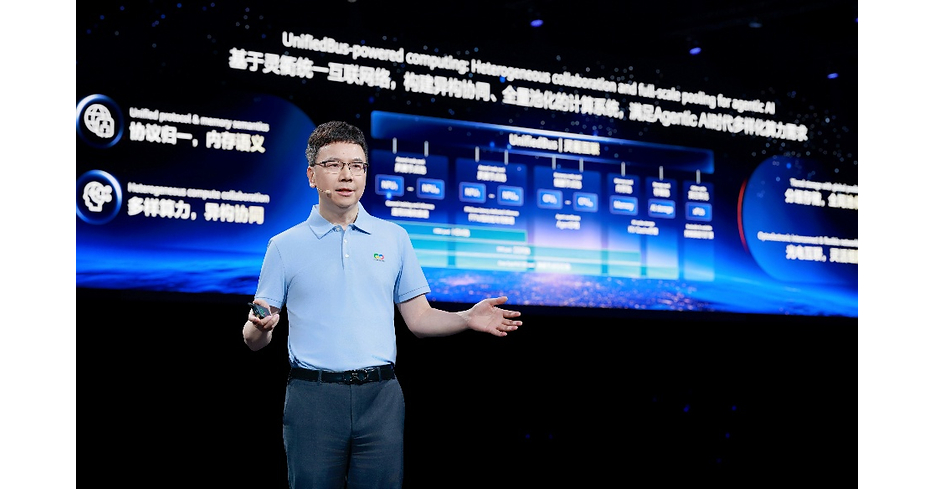
Huawei представила архитектуру межсоединений UnifiedBus и AI SuperCluster, ориентированные на масштабирование вычислений от одного шкафа до кластеров с 1 млн NPU. Компания заявляет, что UnifiedBus повышает пропускную способность межсоединений со 100 ГБ/с до уровня ТБ/с и сокращает RTT с 7 до 2 микросекунд; LinkDevice обеспечивает 176 портов по 1,6 Тбит/с и до 280 Тбит/с полностью оптической коммутации. Новая линейка TaiShan, Atlas, OceanStor и Xinghe UBG нацелена на обучение и запуск моделей с десятками триллионов параметров, включая локальные развертывания для малого и среднего бизнеса.
Analysis
The investable implication is not a near-term revenue event for Huawei—an unlisted vendor—but a potential acceleration of China’s vertically integrated AI-infrastructure stack. If the architecture delivers materially better cluster utilization in customer deployments, it reduces the effective compute penalty of using domestic accelerators versus NVIDIA systems, strengthening demand pull for Chinese foundry capacity (SMIC, 0981.HK), networking silicon, optical components and enterprise storage rather than merely for standalone NPU shipments.
The most exposed incumbents are NVIDIA’s China-addressable networking and accelerator ecosystem, plus foreign high-end optical and memory suppliers whose products can be substituted at the system-design level. The second-order effect is potentially negative for HBM content per accelerator: memory pooling and offload can shift value toward DDR, CXL-like interconnect, SSD and optical fabric. That does not necessarily reduce total memory demand, but it can compress the premium-content mix if Chinese customers prioritize scalable domestic systems over maximum per-chip performance.
Treat performance claims as promotional until independent benchmarks show model-training throughput, failure-domain behavior, software compatibility and total cost per useful token. The near-term catalyst path is customer design wins and component orders over 1-3 months; the 6-18 month question is whether developers port production workloads without material framework friction. The contrarian view is that the market may over-credit hardware specifications while underestimating software-tooling maturity, supply availability and field-service complexity—areas where deployment economics, not headline bandwidth, determine adoption.
AllMind Terminal
AI-powered research, real-time alerts, and portfolio analytics for institutional investors.
Request TrialMarket Sentiment
Overall Sentiment
strongly positive
Sentiment Score
0.58
Key Decisions for Investors
- Establish a 1-3 month watchlist, not a position, on SMIC (0981.HK/688981.SS), Accelink (002281.SZ) and Innolight (300308.SZ). Upgrade only if disclosed Ascend/cluster orders translate into backlog, utilization or revenue-guidance revisions; product-launch rhetoric alone is insufficient.
- Use NVIDIA (NVDA) as a relative-value hedge rather than a directional short: consider long a diversified China AI-infrastructure basket versus a small NVDA short only if evidence emerges that domestic clusters are winning incremental Chinese deployments. This is a 6-18 month substitution thesis, not a near-term earnings risk to NVDA; cover if China revenue commentary stabilizes or domestic deployment benchmarks fail to validate.
- Monitor memory-mix indicators at SK Hynix (000660.KS), Samsung Electronics (005930.KS) and Micron (MU): a sustained shift toward pooled DDR/SSD architectures would be modestly negative for premium HBM mix assumptions, but do not trade it absent procurement data. Falsification is continued HBM-content growth per deployed domestic AI system.
- Set an event alert for independently audited training/inference benchmarks and named enterprise or sovereign-cloud customers. A demonstrated cost-per-token advantage of at least 20% versus alternative domestically available systems would justify adding Chinese optical/networking exposure; weaker gains would favor software and integration bottlenecks over hardware suppliers.
More News
- Wall Street’s Nasdaq hits all-time high as AI frenzy gathers pace
- Data-Center Bet Makes ESDS One of India’s Best New Listings
- Asia stocks ride tech wave higher, oil stays subdued
- South Korean solar stocks jump as curbs on Chinese sector expected to remain in place
- ‘I have a big decision to make’: Trump had a ‘good meeting’ with Iranian officials warning he may ‘annihilate the Islamic Republic’
- Trump Says US Team Met With Iranians at UNGA