
Allegion Redefines Commercial Access Control with the Schlage XE360™ Series featuring RealSync™ Persistent Wi-Fi Technology
Source: PR Newswire
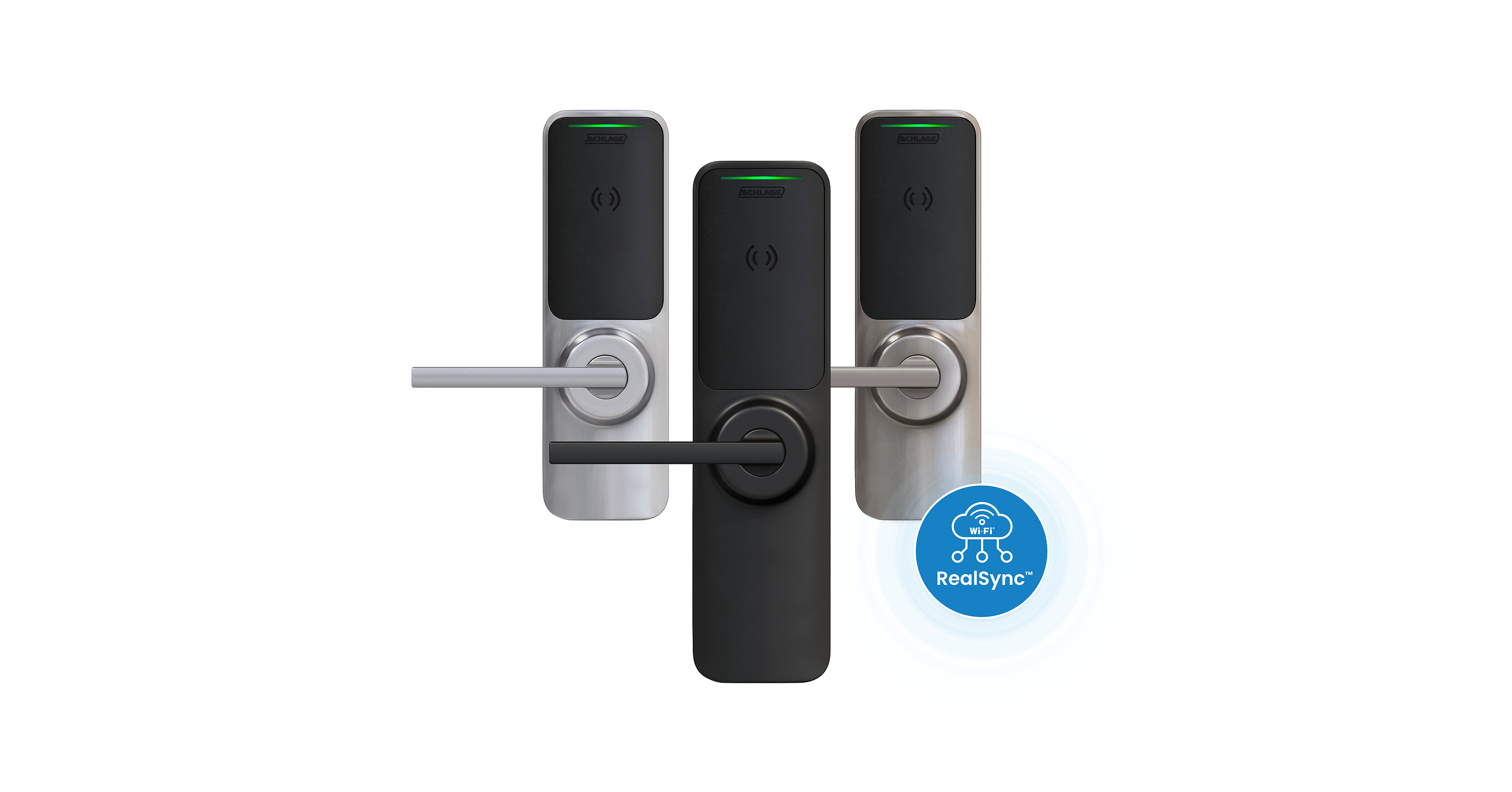
Allegion (NYSE: ALLE) announced the expanded Schlage XE360 Series with RealSync, positioning it as a “seismic shift” to commercial access control via persistent, real-time Wi‑Fi connectivity. The upgrade eliminates gateways/panels/wiring, supports over-the-air firmware updates, and targets over one-year battery life using four AA batteries (vs. a cited ~6-month baseline), aiming to cut installation and maintenance costs. Allegion also cites early PACS partner integration (including Brivo first) and expects improved operations and Net Operating Income (NOI) from real-time monitoring, instant remote lock/unlock, and on-demand credential management.
Analysis
This is strategically positive for ALLE only if it converts a hardware sale into a higher-attach lifecycle relationship. The real margin lever is not the lock itself; it is whether the module, software integration, and remote management create recurring revenue and make the installed base harder to displace over the next 6-18 months. If that happens, the market may eventually rerate ALLE as a more software-enabled security platform rather than a low-growth hardware supplier.
The first-order winner outside ALLE is the PACS/channel ecosystem that can monetize larger deployments without subsidizing gateways and on-site labor. The losers are incumbent access-control vendors whose value proposition depends on proprietary controllers, panel sales, and installation complexity; if Wi-Fi-native deployments become credible, the competitive moat shifts from infrastructure to user experience and integrations. The second-order effect is pricing pressure: simplification often expands TAM but can also compress hardware margins as procurement becomes easier to benchmark.
Near term, I would treat this as an execution test rather than a thesis change. The key falsifiers over 1-3 months are channel feedback on real install friction, failure rates on persistent Wi-Fi in dense buildings, and whether management can quantify incremental revenue rather than just pipeline. Over 6-18 months, the question is whether ALLE earns a higher multiple from software/recurring mix or whether this remains an incremental SKU launch with limited P&L impact.
AllMind Terminal
AI-powered research, real-time alerts, and portfolio analytics for institutional investors.
Request TrialMarket Sentiment
Overall Sentiment
mildly positive
Sentiment Score
0.25
Ticker Sentiment
Key Decisions for Investors
- Stay neutral ALLE into the launch; do not chase on press-release enthusiasm. Use the next 1-2 quarters to verify attach rate, partner-sourced bookings, and whether management can show any incremental margin mix benefit before underwriting a rerating.
- Build a watchlist alert for ALLE: if commercial/electronic segment growth accelerates by >200 bps or software/service mix starts contributing meaningfully, consider a tactical long for a 3-6 month re-rating trade. Falsify if the product remains anecdotal and does not move bookings or guidance.
- Relative-value idea: long ALLE / short a traditional access-control incumbent or diversified building-products name with heavier legacy hardware exposure if channel checks confirm real retrofit pull-through. Time horizon: 6-12 months; risk is that incumbents respond quickly and neutralize pricing power.
- For a higher-conviction entry, wait for evidence that the battery-life claim holds in field deployments and that Brivo-style integrations drive actual spec wins. If those checks pass, a call spread in ALLE for the next earnings cycle is the cleanest way to express upside with capped downside.
More News
- Delta Air Lines cuts 2026 forecast on fuel surge, but CEO says demand is still strong
- Is AI the new China Shock?
- Why is T-Mobile stock tumbling today?
- This exchange stock is a buy on renewed options deal, Morgan Stanley says
- India calls JD Vance's comments about immigrants 'deeply offensive'
- The AI race may be decided by financing—not just better chips
From AllMind Research
- Anthropic IPO Preview: Valuation, Timing, and What to Watch
- Shein After the IPO: Venue, Valuation, and What Must Be Proved
- What AI Research Tools Should a Small Hedge Fund Buy First?
- AI Tools for CFA Charterholders: An Evidence Standard
- Weekly Update: Unstructured Data Search, Ask AI, and Advanced Futures Data