
Na targach IBC 2026 SDMC prezentuje rozwiązania z zakresu zastosowań sztucznej inteligencji w gospodarstwie domowym
Source: PR Newswire
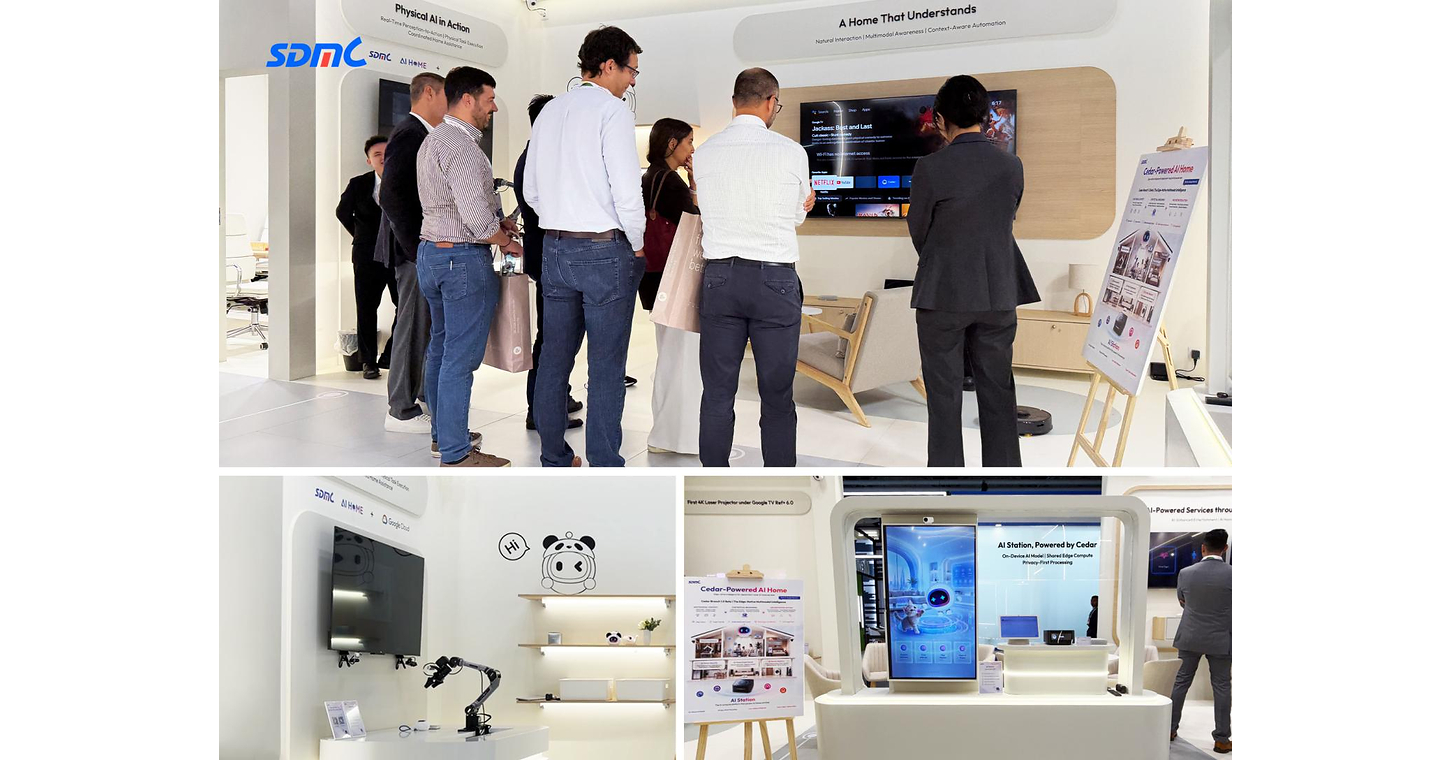
SDMC showcased its AI Home architecture at IBC 2026, combining cloud AI, edge computing and physical-AI applications through its Cedar and AI Station platforms. The company highlighted collaboration with Google Cloud, use of Google's Gemma and Gemini models, and NVIDIA Jetson T5000-powered shared edge compute for home AI services. SDMC also introduced AI-enabled home display, streaming-box, network gateway and operations solutions, with planned customer validation and pilot deployments; the announcement provides no financial guidance or quantified commercial impact.
Analysis
This is strategically more useful to GOOG than financially material in the near term: each operator-deployed edge endpoint can extend Gemini/Gemma distribution into a historically fragmented home-device base, creating telemetry, developer and cloud-inference attach opportunities. The bottleneck is not model capability but operator willingness to subsidize hardware and support costs; pilots are unlikely to affect Alphabet revenue over the next 1-3 quarters, but successful deployments would validate a lower-cost route to ambient AI versus fully cloud-dependent consumer assistants.
NVDA's exposure is real but modest unless shared edge-compute architectures become standardized across operator fleets. A centralized in-home compute node could increase silicon content per household while displacing lower-end, single-purpose processors; however, it also concentrates bill-of-materials risk and invites substitution from Qualcomm, MediaTek, Amlogic and custom ASICs. The claim of reducing specialized hardware at endpoints is therefore a mixed signal for aggregate semiconductor unit demand: fewer chips per home, but potentially materially higher value per installed hub.
The press-release framing should not be treated as evidence of commercial orders, recurring revenue, or an exclusive Google/NVIDIA relationship. Near-term share-price sensitivity for GOOG and NVDA should be negligible; the investable catalyst is evidence of carrier contracts, unit volumes, cloud consumption commitments, or disclosed AI-service ARPU. Over 6-18 months, privacy regulation and consumer resistance to always-on home sensing could favor local inference, but could also cap data monetization and make the economics less attractive to operators.
Consensus may overstate the immediate "physical AI" monetization path. Consumer smart-home categories have repeatedly suffered from weak willingness to pay and expensive customer support; the more credible first monetization is B2B operator network diagnostics and churn reduction, not premium household AI subscriptions. A broad edge-AI adoption signal would be more bullish for networking/software vendors with carrier distribution than for the hyperscaler or GPU supplier alone.
AllMind Terminal
AI-powered research, real-time alerts, and portfolio analytics for institutional investors.
Request TrialMarket Sentiment
Overall Sentiment
mildly positive
Sentiment Score
0.38
Ticker Sentiment
Key Decisions for Investors
- No directional trade in GOOG or NVDA solely on this announcement; treat any abnormal same-day move as fadeable absent disclosed carrier purchase orders, deployment volumes, or contracted cloud spend.
- Maintain a 6-12 month watch on GOOG: upgrade the distribution thesis only if management or carrier partners disclose Gemini/Gemma home-device deployments tied to measurable cloud-inference usage or AI-service ARPU. Falsifier: pilots remain demonstrations without commercial conversion through the next two reporting cycles.
- For NVDA, do not extrapolate a consumer-edge demand inflection from a single Jetson design win. Consider adding only after evidence of repeat operator fleet orders; monitor gross-margin commentary and competing edge-AI design wins from QCOM, MediaTek and Amlogic as substitution risk.
- If multiple European broadband operators announce paid AI network-operations deployments over the next 3-6 months, investigate a basket long in carrier-network automation beneficiaries versus a short consumer smart-home hardware basket; the likely early profit pool is opex reduction, not household device sell-through.
More News
- Crusoe raises $3.9B to build massive data centers and small modular “AI factories”
- Jensen Huang says Nvidia will sell twice as many chips next year
- Warsh says AI’s hyperscalers are part of why your borrowing costs are rising: ‘The competition for capital is real’
- AI coding agents' 0-click RCE flaw could hand attackers keys to the kingdom
- What an Oscar-winning movie can teach us about investing through the AI slowdown debate
- Waymo to bring autonomous ride-hailing to Singapore in 2028
From AllMind Research
- Anthropic IPO Preview: Valuation, Timing, and What to Watch
- Shein After the IPO: Venue, Valuation, and What Must Be Proved
- What AI Research Tools Should a Small Hedge Fund Buy First?
- AllMind's Data Standardization Methodology: Our Approach to Fundamentals
- What Makes Financial Data Ready for AI Research?