
CRFB Report: China-Owned Smithfield and Syngenta Spent $26 Million-Plus on Lobbying and Political Donations
Source: PR Newswire
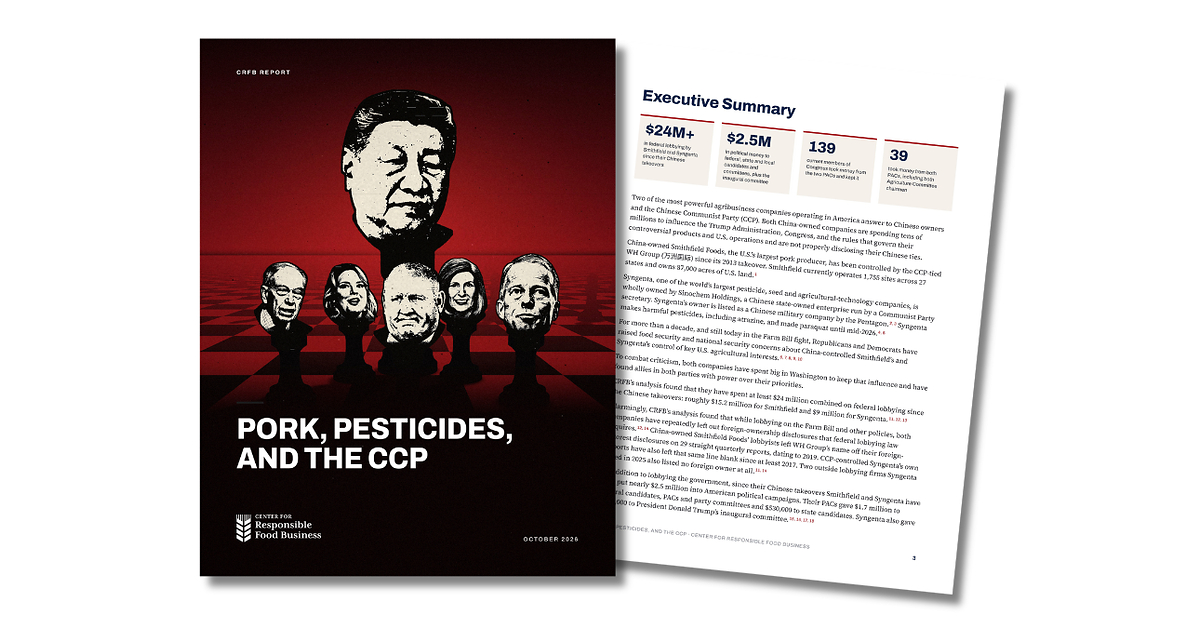
The Center for Responsible Food Business says Syngenta and Smithfield spent more than $24 million lobbying Washington since their Chinese takeovers, while their filings repeatedly omitted or left blank foreign-interest disclosures. The group also reports that their PACs gave $1.7 million to federal candidates and committees and $530,000 to state candidates, and says 139 sitting lawmakers received contributions. CRFB is calling for lawmakers to return or donate the money and for congressional officials to refer the lobbyists' filings to the Justice Department; these are the organization's findings and demands.
Analysis
The investable risk is political and reputational optionality, not an established near-term earnings shock for Smithfield Foods (SFD). The article’s source is an advocacy group; alleged reporting omissions and calls for referral do not establish a legal violation, and a referral would still be several steps from enforcement. Near term, the issue could raise scrutiny of SFD’s lobbying disclosures and foreign ownership, but the financial effect depends on whether regulators, lawmakers, or customers take concrete action.
Over 1–3 months, watch for congressional or agency inquiries and any response from major retailers or food-service customers. Those could create disclosure costs or procurement friction before any change in law. A Farm Bill effort to preempt state animal-welfare rules could reduce compliance fragmentation if enacted, but could also intensify consumer and retailer pressure; passage is not unambiguously positive for SFD. Over 6–18 months, a genuine USDA review of foreign-owned farmland or tighter disclosure/enforcement rules would matter more, though the article reports no follow-through to date. Syngenta’s pesticide-related exposure is separate and should not be attributed to SFD.
Contrarian read: campaign contributions and lobbying spend alone are weak predictors of policy outcomes. The story may be politically salient without changing SFD’s cash flows. Conversely, a seemingly small disclosure controversy could become material if it prompts customer action or an ownership-related regulatory process. No valuation or operating data here supports a price target or an outright short.
AllMind Terminal
AI-powered research, real-time alerts, and portfolio analytics for institutional investors.
Request TrialMarket Sentiment
Overall Sentiment
mildly negative
Sentiment Score
-0.30
Ticker Sentiment
Key Decisions for Investors
- No trade on the article alone. Keep SFD on a headline watchlist and avoid treating the advocacy group’s allegations as established liability.
- Set an escalation trigger: a formal DOJ, congressional, or USDA action, or a named major customer reviewing sourcing, would justify reassessing SFD exposure; absent such evidence, the risk remains primarily reputational and political.
- Track Farm Bill text and state-level animal-welfare developments. Federal preemption could lower operating complexity, while retailer or consumer backlash could offset that benefit; do not assume either outcome before bill language and customer responses are clear.
- If a position is required, consider only a small, event-driven SFD underweight after confirmation of concrete customer or regulatory consequences. Falsify that thesis if the issue produces no formal action or customer response and SFD maintains guidance through the next relevant reporting cycle.
More News
- ‘They are trying to intimidate us’: Indonesia’s Prabowo remains defiant in the face of an MSCI double downgrade
- Ready for a French test?: Five questions for the ECB
- SK Hynix shares slide after chipmaker scraps Solidigm IPO plans
- Apple’s iPhone Duo Hits Stores in Face of Short Supply and High Demand
- OpenAI nears up to $30 billion funding round at $1.25 trillion valuation led by UAE investors
- Moderna and Merck say their mRNA cancer vaccine cut death, recurrence by 42%
From AllMind Research
- Anthropic IPO Preview: Valuation, Timing, and What to Watch
- Shein After the IPO: Venue, Valuation, and What Must Be Proved
- What AI Research Tools Should a Small Hedge Fund Buy First?
- AI Software for Buy-Side Teams: Build the Research Stack
- Augmented Intelligence: AllMind, Elevate Human Judgement With an Accessible, Powerful, Data-Driven Financial AI Toolkit