
HSS Medical Supply Announces Distributor Agreement for Abbott's ID NOW Rapid Molecular Testing Platform
Source: PR Newswire
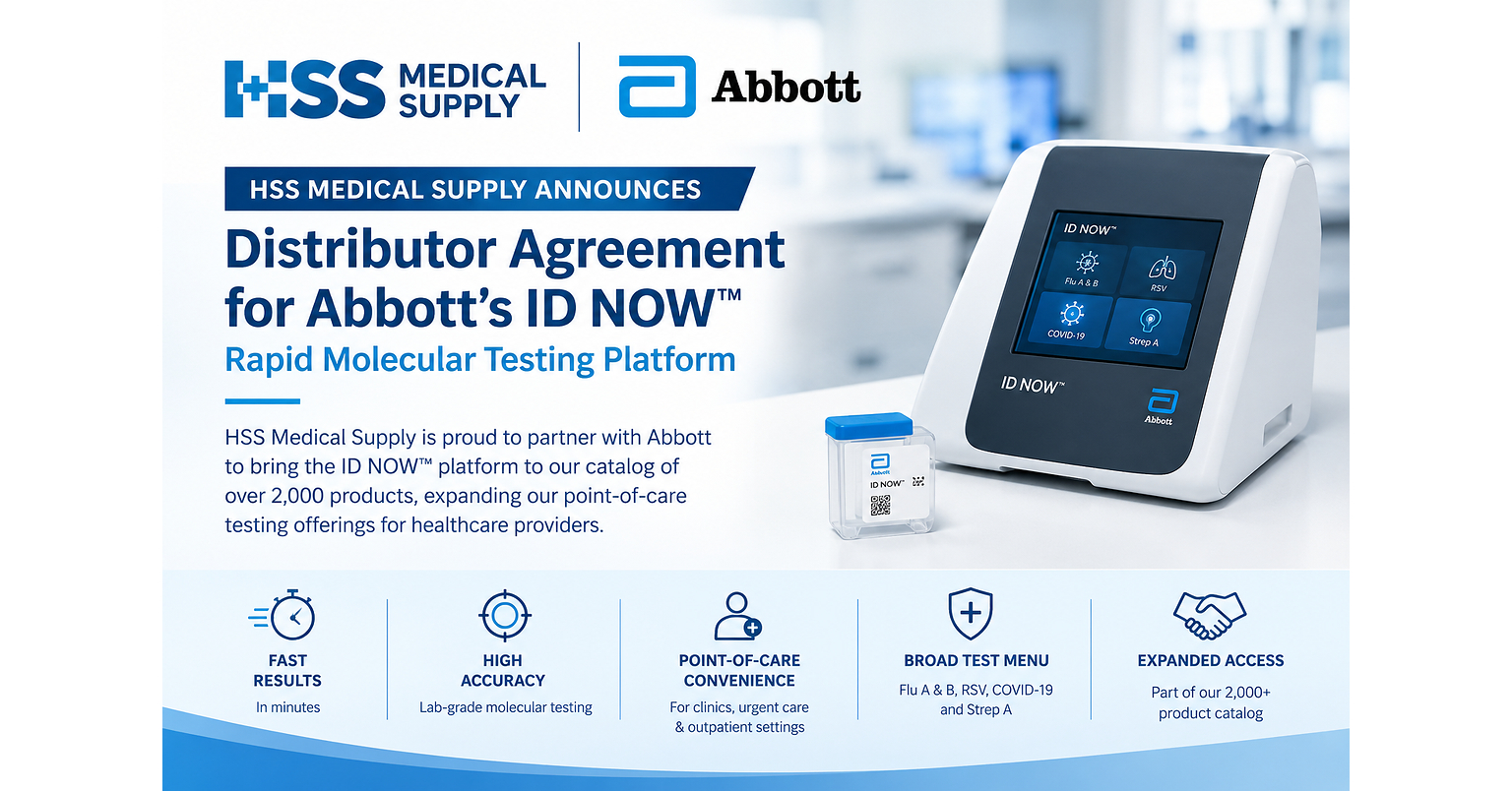
HSS Medical Supply announced a vendor agreement to add Abbott’s ID NOW rapid molecular testing platform to its catalog of more than 2,000 products, expanding its point-of-care offerings. The platform provides results in 13 minutes or less for Flu A & B, RSV and COVID-19, and under 6 minutes for Strep A; the article cites flu diagnostic accuracy above 96%. The announcement includes no sales, financial terms or market reaction.
Analysis
The key investment question is not whether another catalog carries ID NOW, but whether this channel generates incremental instrument placements and recurring test volume. A distributor agreement alone does not establish either; HSS’s regional reach and limited operating history make this a weak standalone read-through to Abbott revenue. The more material mechanism is clinic-level substitution: if rapid molecular testing reduces callbacks and confirmatory workflows, clinics may accept higher per-test costs where reimbursement and staffing savings reliably offset them. That could pressure antigen-test suppliers and favor molecular platforms, but only if payer rules and real-world throughput support the claimed economics. The reimbursement advantage in the release is a company-supplied claim to verify, not an underwritten margin uplift.
Near term, respiratory-season demand could help adoption, but this announcement is unlikely to move Abbott fundamentals without order, placement, or utilization evidence. Over 1–3 months, watch for broader distributor additions, clinic conversions, and evidence of repeat consumables demand. Over 6–18 months, sustained molecular substitution could change the mix of point-of-care testing; it would also invite competitive responses from Roche, QuidelOrtho, and other diagnostics providers. The contrarian point: technical accuracy is not enough—instrument availability, test economics, reimbursement coverage, and workflow fit determine adoption. Thesis weakens if clinics do not convert, reimbursement proves less favorable than claimed, or Abbott reports no discernible ID NOW demand or placement momentum.
AllMind Terminal
AI-powered research, real-time alerts, and portfolio analytics for institutional investors.
Request TrialMarket Sentiment
Overall Sentiment
mildly positive
Sentiment Score
0.25
Key Decisions for Investors
- No trade on this announcement alone: treat it as a low-materiality distribution signal, not evidence of incremental Abbott earnings.
- Set an adoption watch item for Abbott: seek independent evidence of instrument placements, recurring test volumes, and clinic conversions before underwriting revenue impact.
- Monitor payer coverage and realized reimbursement versus test and workflow costs; weaker economics would undermine the molecular-substitution thesis and leave antigen testing more resilient.
- For diagnostics competitors including Roche and QuidelOrtho, monitor whether clinic procurement shifts toward rapid molecular platforms; do not position against them until adoption data, rather than product claims, confirms share loss.
More News
- Marvell to buy Lumentum in $115 billion deal in AI data-center bet
- Marvell, Lumentum tout historic $115B deal to create ‘category leader' in AI connectivity
- The AI boom is facing another supply crunch. This time it’s the amount of capital available to feed Silicon Valley’s endless need for cash
- Oil Prices Retreat, Apple Results on Deck
- New Apple CEO John Ternus chalks up some early wins, but the honeymoon is over
- Apple's quarter is not perfect. But with enough to like, we raised our price target