
Navitas Semiconductor seen benefiting from 800V AI data center power redesign
Source: proactiveinvestors.com
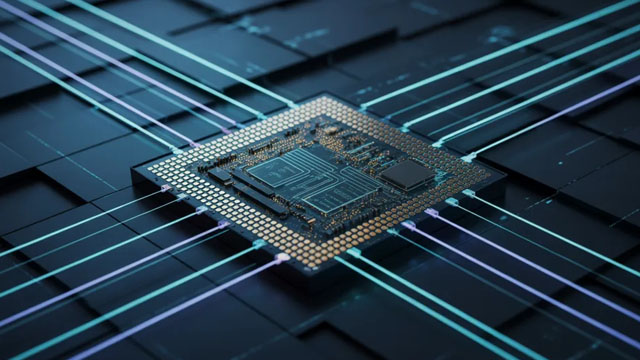
Baird reiterated its outperform rating on Navitas Semiconductor, citing its Nvidia collaboration and potential role in AI data-center power-system redesigns. Navitas announced a 24-kilowatt power delivery board that converts 800 volts DC to 12 volts and targets 97% efficiency at full load.
Analysis
The investment question is whether this becomes a qualified, volume-bearing design win—not whether the announced board can meet a target on paper. A 97% efficiency claim is not evidence of production qualification, reliability at data-center duty cycles, or attractive supplier economics. Until Navitas discloses customer validation, production timing, and a credible revenue contribution, the collaboration should be treated as an option on adoption rather than a change to earnings power.
If high-voltage DC distribution gains traction, conversion-stage redesign could broaden demand for power semiconductors and related protection, thermal-management, and power-conversion equipment. But the value may accrue to established power-electronics suppliers as readily as to Navitas; NVIDIA’s ecosystem influence does not guarantee Navitas exclusivity or pricing power. Near term, the main risk is that investors capitalize a technology narrative before commercial evidence. Over 1–3 months, watch for architecture specifications, qualification milestones, and customer or production disclosures. Over 6–18 months, deployment pace and Navitas’s reported design-win conversion matter more than the efficiency target. The bullish case is falsified by delayed qualification, no identifiable production path, or limited company-level revenue impact.
AllMind Terminal
AI-powered research, real-time alerts, and portfolio analytics for institutional investors.
Request TrialMarket Sentiment
Overall Sentiment
mildly positive
Sentiment Score
0.35
Ticker Sentiment
Key Decisions for Investors
- Do not chase NVTS solely on the reiterated analyst rating or board specification. Treat it as a watchlist catalyst until qualification, production timing, and expected revenue contribution are verifiable.
- For an existing NVTS position, size exposure as high-uncertainty adoption optionality rather than established AI infrastructure earnings; reassess on company disclosures about customer validation and design-win conversion.
- Monitor competing power-semiconductor and data-center power-conversion suppliers for evidence that the architecture is broadening beyond a single ecosystem. A wider adoption signal could support the sector while weakening the case that Navitas captures disproportionate economics.
- Key downside triggers: qualification delays, failure to meet efficiency or reliability requirements in deployment, or subsequent disclosures showing no material commercial contribution. A concrete production award with timing and scale would improve the risk/reward.
More News
- Meta’s Muse models reach the AI frontier—and kill any hopes to ‘pace’ it
- We're upgrading our Goldman Sachs rating after a strong quarter bodes well for the future
- Iran threatens Gulf data centres: How exposed is the region’s internet?
- Apple unveils new smart home products, showcasing updated Siri AI
- Goldman Sachs quarterly profit rises on equities strength
- The AI trade is cracking. Here's how to profit