
Pudu Robotics baut nach der IFA 2026 seine Präsenz in Europa aus und treibt eine Strategie für skaliertes und lokalisiertes Wachstum voran
Source: PR Newswire
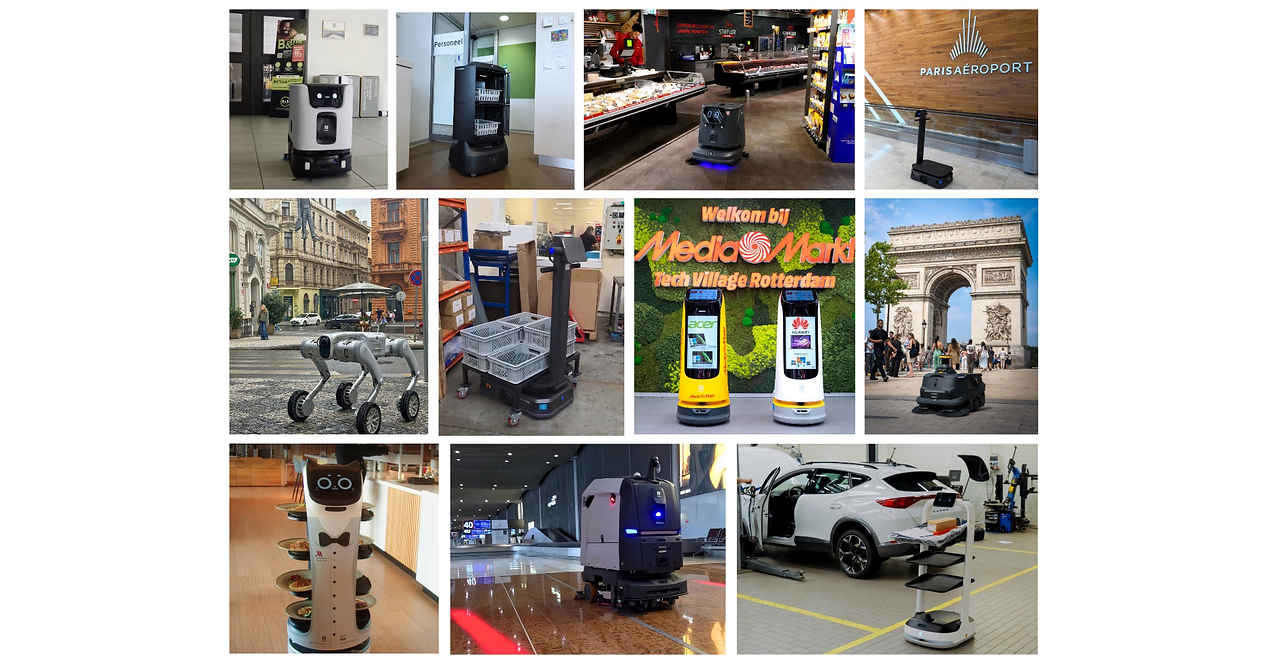
Pudu Robotics is accelerating its European expansion after IFA Berlin 2026, launching the PUDU D7 in Europe and planning a new regional headquarters in Germany. The company has delivered more than 130,000 robots globally, operates in over 85 countries, and now serves more than 20 European markets; its deployments include 200 CC1 cleaning robots at Swiss retailer Denner. Expanded local offices, warehousing, service capacity and partner networks are intended to scale commercial robotics deployments across retail, hospitality, healthcare and industrial logistics.
Analysis
The investable read-through is not MAR-specific revenue upside; it is a gradual reduction in labor-intensity at the property level. For asset-light hotel brands, robotics adoption can support franchisee unit economics and renovation-cycle differentiation, but only indirectly improves MAR’s fee base. The nearer beneficiary is likely hotel owners/operators facing European wage inflation, while branded chains gain only if automation demonstrably lifts guest satisfaction rather than merely shifting labor costs to maintenance and service contracts.
The more consequential competitive pressure falls on European cleaning and intralogistics incumbents—Kärcher, Nilfisk (NILF), Jungheinrich (JUN3), KION (KGX), and warehouse-automation vendors—where low-cost Chinese deployments can reset customer ROI expectations. A localized repair, spare-parts, and integration network is strategically more important than hardware shipment volume: it lowers buyer switching costs and can turn a hardware vendor into a recurring-service competitor. This is a 6-18 month risk to pricing and tender win rates, not an immediate earnings event for listed peers.
Consensus may overstate the disruption to hotel labor costs. In hospitality and healthcare, robots address repetitive transport and cleaning tasks, but European works councils, data/privacy reviews, building-layout constraints, and uptime requirements slow fleet-scale adoption. The key proof point over the next 1-3 months is independently disclosed utilization, service-cost burden, and payback—not additional pilot announcements. For MAR, a meaningful thesis requires evidence that franchisees adopt automation at scale and recycle savings into property upgrades or new openings.
There is no clean listed Pudu proxy, and the cited customer references are not sufficient to alter MAR estimates. Treat this as a watch item for European automation price competition; avoid chasing broad AI/robotics exposure on a vendor press release.
AllMind Terminal
AI-powered research, real-time alerts, and portfolio analytics for institutional investors.
Request TrialMarket Sentiment
Overall Sentiment
strongly positive
Sentiment Score
0.58
Ticker Sentiment
Key Decisions for Investors
- No standalone MAR trade from this development. Maintain neutral MAR versus the lodging group; revisit only if upcoming franchisee commentary identifies measurable labor-cost savings, higher renovation spend, or accelerated openings attributable to automation.
- Place a 6-12 month watch on NILF, JUN3 and KGX for tender commentary, European order pricing, and service-margin trends. A disclosed deterioration in cleaning/intralogistics gross margin or order conversion would support a relative short basket versus a diversified industrial ETF such as EXH1.
- For hotel exposure, prefer a 6-18 month relative-value screen of asset-heavy European operators versus asset-light brands: automation savings should accrue first to the property P&L. Do not initiate until labor-cost disclosures and fleet payback data establish that savings exceed implementation and maintenance costs.
- Thesis falsifier for the disruption view: evidence that robotic fleets require high on-site intervention, produce sub-24-month utilization churn, or fail to reduce contracted labor hours would preserve incumbent pricing power and remove the basis for a short automation-equipment basket.
More News
- Organto Foods at Planet MicroCap Showcase: Toronto 2026: growth, margins
- What investors need to know about Alphabet's stock-busting earnings report
- Our next steps for Alphabet stock after earnings disappoint at nearly every turn
- Budget 2026 speech
- Wendy's shares jump 15% as Nelson Peltz's Trian offers $1.4 billion to buy burger chain
- Fortinet’s stock is taking a dive after earnings. Here’s why.