
The Social Security Administration wants more babies signed up for ‘Trump accounts.’ But there’s still a catch.
Source: MarketWatch
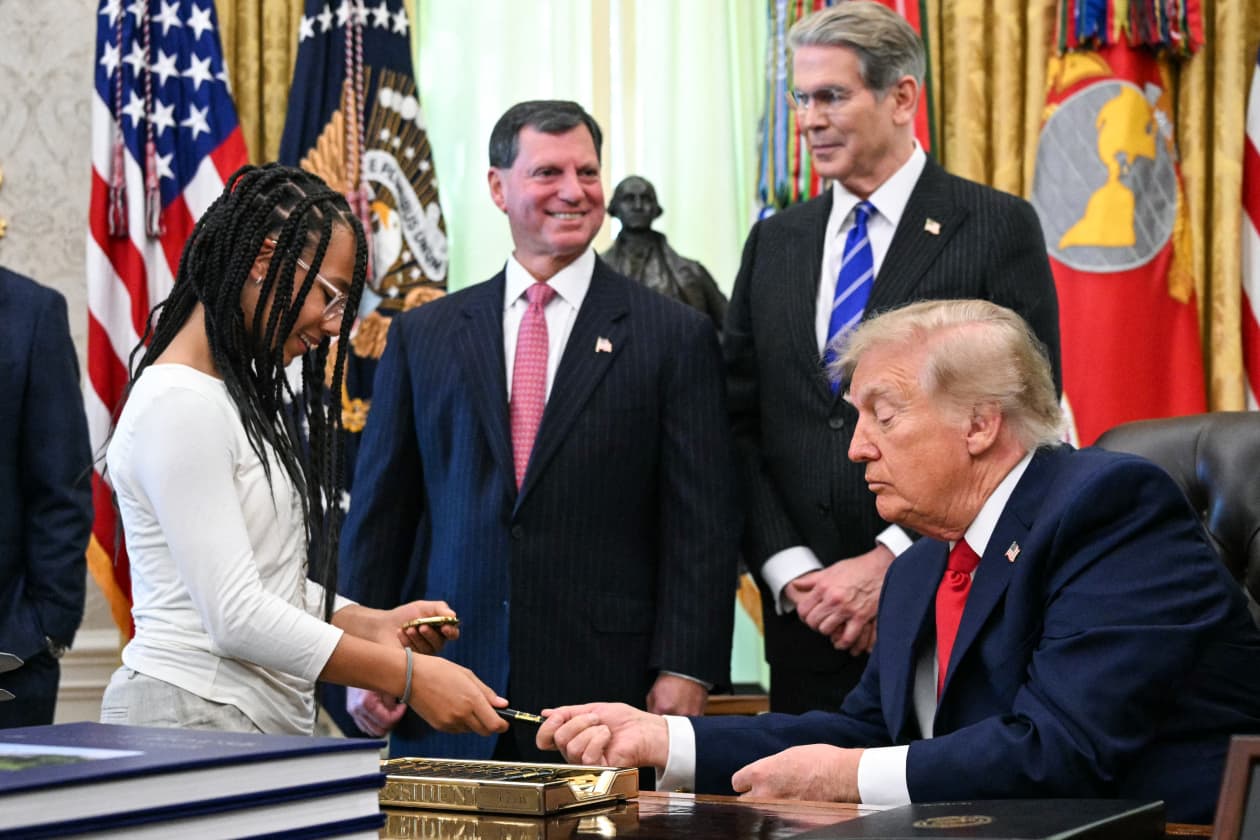
The Social Security Administration will include Trump account sign-up information with Social Security cards issued to newborns through its enumeration-at-birth program, but stopped short of automatic enrollment. Children born from 2025 through 2028 are eligible for $1,000 in seed funding from the U.S. Treasury; the change is intended to address initially slow uptake.
Analysis
The key economic variable is conversion, not eligibility. An information insert may reduce awareness friction, but it leaves parents to complete a separate claim; absent evidence of funded-account uptake, the policy is unlikely to move near-term revenue for asset managers, custodians, or banks. Even successful enrollment could mostly redirect money from existing child savings vehicles rather than create equivalent net-new household saving, limiting the sector-wide benefit.
The second-order exposure is operational: a larger program could create account-servicing and compliance demand, but the beneficiary is unknowable until the custodian, investment menu, fee structure, and servicing model are disclosed. The seed contribution is also a fiscal-policy commitment exposed to future budget and legislative changes. Over 6–18 months, administrative execution and any expansion toward automatic enrollment matter more than the initial distribution step.
Contrarian read: the slow start may reflect opt-in friction rather than weak underlying demand, so uptake could improve with simpler enrollment. But treating this as a broad financial-sector catalyst now would get ahead of the evidence. No clean trade is justified without account-opening and funding data.
AllMind Terminal
AI-powered research, real-time alerts, and portfolio analytics for institutional investors.
Request TrialMarket Sentiment
Overall Sentiment
mixed
Sentiment Score
0.00
Key Decisions for Investors
- No immediate sector trade: do not price a meaningful earnings catalyst into asset managers, banks, or custodians until a provider and fee economics are identified.
- Track claim-to-funded-account conversion, account balances, and opt-out or abandonment rates; reassess only if enrollment becomes material relative to existing child-savings products.
- Watch for legislation or rule changes that enable automatic enrollment, and for budget or implementation setbacks that could constrain seed funding or delay account operations.
- Falsify the low-impact thesis if published take-up data show substantial net-new funded assets or if a named provider reports material program-related revenue; absent those signals, treat the development as policy optionality, not an investment catalyst.
More News
- New Mexico took on Meta alone and won a $25 billion judgment over Facebook’s privacy violations
- Meta ordered to pay $25 billion in case related to Cambridge Analytica scandal
- Judge orders Meta to pay $25bn in fines for Facebook privacy violations
- Meta ordered to pay $25 billion penalty in New Mexico Cambridge Analytica case
- Meta ordered to pay $25 billion in penalties over the Cambridge Analytica scandal
- Meta ordered to pay $25 billion penalty over the Cambridge Analytica case