
Can Ralph Lauren's Marketing Strategy Fuel Long-Term Growth?
Source: zacks.com
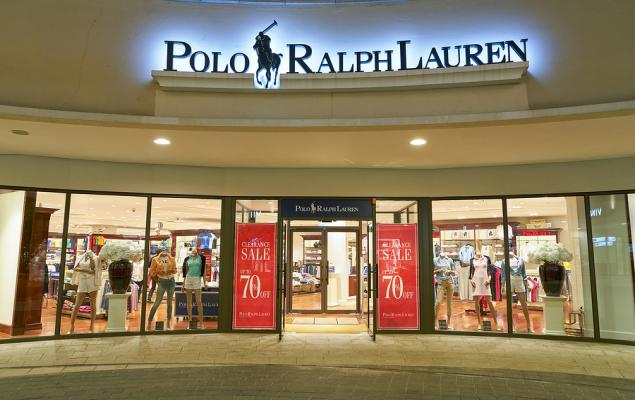
Ralph Lauren increased marketing investment to 8.2% of fiscal 2027 first-quarter sales from 7.5% a year earlier and reaffirmed an approximately 8% of sales marketing-spend guide for the full year. Management cites strong ROI from campaigns, fashion shows and Wimbledon activations, and expects further brand investment as operating margins expand. The longer-term growth narrative is constructive, although RL shares have fallen 16% over the past three months versus a 3% industry decline and trade at 17.33x forward earnings versus 14.55x for the industry.
Analysis
RL's incremental brand spend is not independently sufficient to underwrite a rerating: the key question is whether customer-acquisition and full-price sell-through gains exceed the expense step-up without requiring incremental promotions. With earnings already expected to compound at a low-teens rate, the equity needs evidence of accelerating revenue per customer or gross-margin resilience to justify maintaining a premium apparel multiple. The next earnings release is the relevant 1-3 month catalyst; management commentary on new-customer cohorts, digital conversion, AUR and markdown rates matters more than campaign visibility.
The second-order read is competitive rather than a broad retail signal. RL can use a global heritage/luxury positioning to concentrate spend around scarce cultural events, while more wholesale-dependent brands such as KTB have less ability to translate brand advertising into direct-to-consumer margin expansion. Conversely, if RL's spending merely protects traffic in a softer discretionary environment, it becomes fixed-cost deleverage and could expose the fragility of consensus operating-margin assumptions.
The contrarian opportunity is that the recent relative underperformance may have already discounted modest near-term margin dilution, but the valuation leaves little room for a miss. Do not treat management's asserted marketing ROI as verified until disclosures show repeat purchase, DTC mix and inventory quality improving together. A sustained deterioration in gross margin, rising inventories relative to sales, or a cut to full-year operating-margin guidance would falsify the constructive case quickly.
AllMind Terminal
AI-powered research, real-time alerts, and portfolio analytics for institutional investors.
Request TrialMarket Sentiment
Overall Sentiment
mildly positive
Sentiment Score
0.18
Ticker Sentiment
Key Decisions for Investors
- Maintain RL as a watch-list long rather than initiate on this article alone; add only after the next print confirms DTC/full-price growth and operating-margin guidance is maintained or raised. Target a 3-6 month rerating from validated margin durability; exit if guidance is cut or inventory growth materially exceeds sales growth.
- Structure a 3-6 month relative-value trade only on confirmation: long RL / short KTB, sized beta-neutral. RL has greater potential to monetize brand investment through direct channels, while KTB's earnings sensitivity remains more exposed to wholesale demand; close if RL's gross-margin trend underperforms KTB by two consecutive quarters.
- Avoid chasing RL calls ahead of earnings: the central debate is execution evidence, not a discrete catalyst. If shares decline further without an earnings-estimate cut, consider defined-risk call spreads after results rather than outright equity, with the thesis invalidated by lower operating-margin or full-price-sales guidance.
- Monitor RL's customer metrics, DTC mix, average unit retail and markdown commentary at each quarterly release; absent these data, treat the claimed return on marketing as qualitative management framing rather than an investable earnings revision catalyst.
More News
- Nasdaq Nears Correction as Amazon, Alphabet, Intel Disappoint Wall Street
- Wall Street Punishes Tech Stocks on Earnings Misses
- Reddit stock plunges 30% after weak outlook, heads for worst day ever
- Binance’s $6.3 Billion Cyber Heist Shows Crypto Vulnerabilities
- Intel’s stock crashes, knocking $12B from government’s stake
- Intel plunged 28.6% for its worst drop since 1974 — and the AI sell-off gave the S&P 500 its worst day since June