
NX3 Commercial Group Brokers $23.5M Sale of Publix-Anchored SweetBay Town Center
Source: Newswire
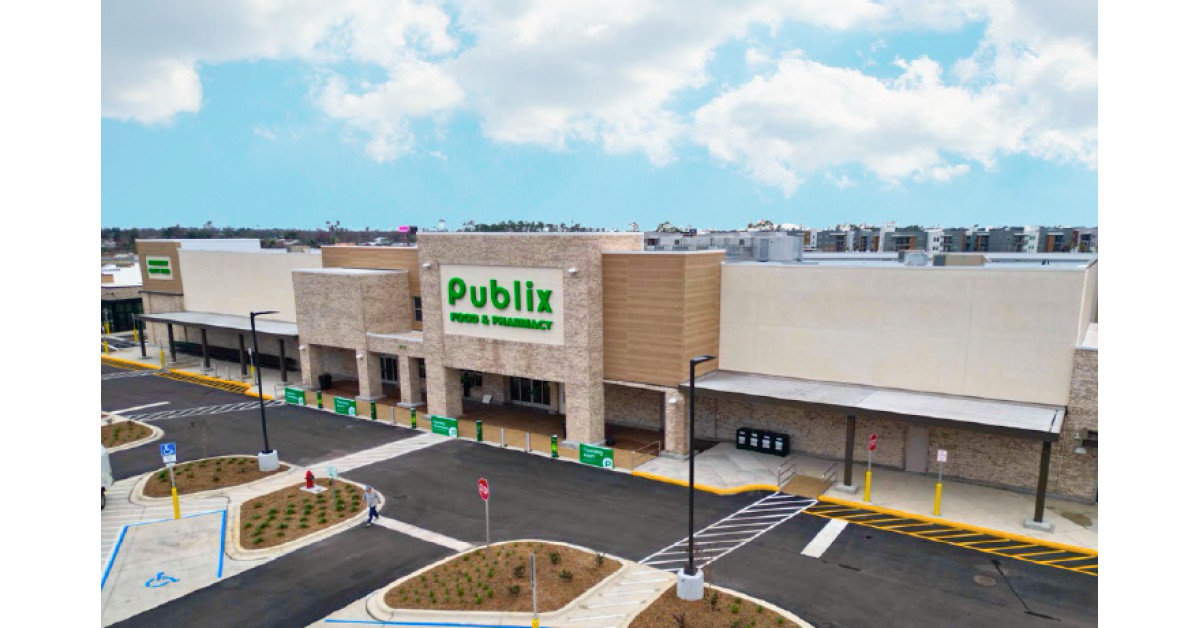
NX3 Commercial Group brokered the $23.5 million sale of the 68,550-square-foot, Publix-anchored SweetBay Town Center in Panama City, Florida, equating to roughly $343 per square foot. The newly built, 100%-leased retail center has a weighted average lease term exceeding 18 years, with Publix retaining more than 19 years on its lease and contributing 53% of property income. The asset benefits from its location serving a planned 3,200-home community and nearby $414 million FSU medical-campus development, supporting its long-term retail demand outlook.
Analysis
This is a weak read-through for public equities but a potentially useful private-market valuation datapoint for grocery-anchored retail. Without disclosed NOI, cap rate, rent escalators, tenant reimbursements, or financing terms, the transaction cannot establish whether retail cap rates are compressing or merely reflect a premium paid for new construction and unusually long contractual duration. The key implication is that institutional demand remains concentrated in high-quality, necessity-based assets rather than broad-based across strip retail.
For public REITs, the relevant beneficiaries are Regency Centers (REG), Kimco (KIM) and Federal Realty (FRT), whose grocery-anchored portfolios could see incremental NAV support if comparable cap-rate evidence is corroborated in 3Q/4Q transaction commentary. The more important second-order risk is geographic and tenant concentration: new housing and medical development support future shop-space demand, but initial retail absorption can lag residential completions, while a single grocer contributes disproportionate cash flow. That risk belongs with private-market buyers, not Publix’s vendors or Starbucks (SBUX), for which one site is financially immaterial.
JLL's advisory role is not material to earnings, but the deal contributes to a broader recovery in property-sales activity if debt availability improves. A sustained pickup would be more meaningful for JLL than the specific commission: capital-markets revenue has high operating leverage after fixed compensation costs. Over the next 1-3 months, monitor JLL’s transaction-volume commentary and retail-property cap-rate disclosures; over 6-18 months, the structural question is whether lower policy rates translate into a reopening of retail acquisition financing rather than isolated all-cash trophy transactions.
Contrarian view: market participants may overinterpret a fully leased, newly built, long-WALT asset as evidence that all retail real estate has repriced. Older centers with near-term lease rollover, weaker anchors, deferred capex, or secondary trade areas remain exposed to refinancing spreads and tenant-credit deterioration. The thesis is falsified if public grocery-anchored REITs report falling leasing spreads, rising bad debt, or no sequential improvement in asset-sale cap rates despite lower benchmark yields.
AllMind Terminal
AI-powered research, real-time alerts, and portfolio analytics for institutional investors.
Request TrialMarket Sentiment
Overall Sentiment
mildly positive
Sentiment Score
0.30
Ticker Sentiment
Key Decisions for Investors
- No standalone SBUX trade: the location-level contribution is de minimis versus consolidated revenue and does not alter traffic, unit-growth, or margin assumptions.
- Place REG and KIM on an acquisition/NAV watchlist for the next two earnings cycles; add only if management reports retail dispositions or acquisitions at cap rates supportive of NAV estimates and positive blended leasing spreads. Risk/reward is unfavorable if 10-year Treasury yields rise above recent highs, re-widening property financing spreads.
- Maintain a tactical long JLL only if quarterly capital-markets revenue and management pipeline commentary confirm broad transaction-volume recovery, not isolated premium asset sales. A practical invalidation trigger is renewed year-over-year declines in advisory revenue or reduced 2027 transaction guidance.
- Avoid extrapolating this sale into a broad long retail-REIT basket; pair any REG/KIM exposure with an underweight in weaker secondary-market shopping-center owners or highly levered net-lease vehicles where refinancing costs, rather than asset demand, drive equity outcomes.
More News
- Christian Ulbrich says working from the office is ‘core’. Just make sure it is a beautiful place to be as well
- SoftBank completes final phase of $30 billion investment in OpenAI
- Amazon seeks to offload $8 billion of Nvidia chips to investors, FT reports
- Amazon seeks to offload $8 bln of Nvidia chips to investors- FT
- More aggressive China stimulus unlikely for now, BofA says
- Broadcom to lend Anthropic up to $42 billion to lease its chips, filing says