
Disrupting Government's Inbox: Jon Kokot Targets Unanswered Constituent Messages
Source: PR Newswire
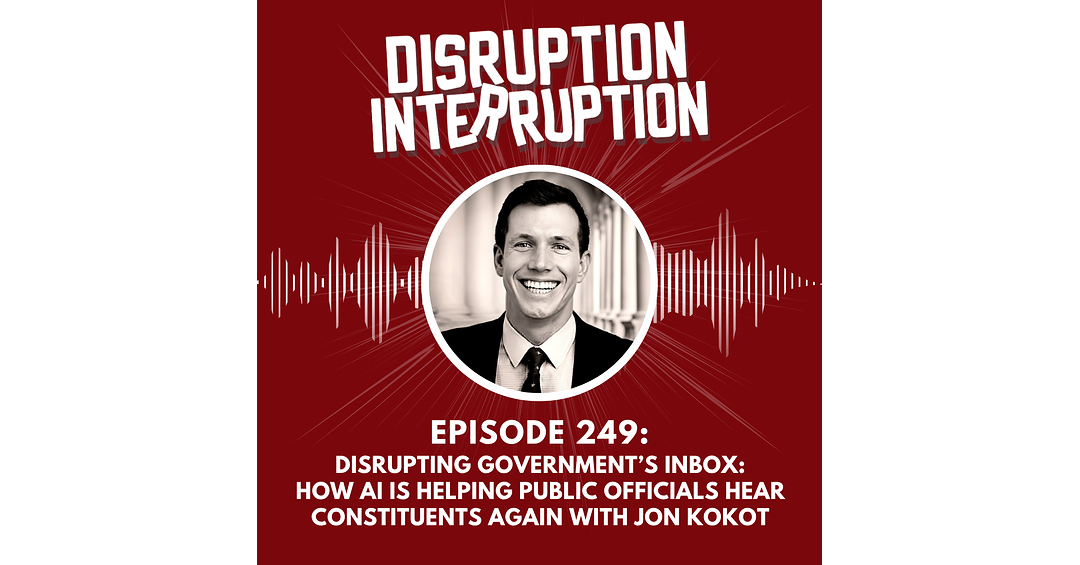
Civic is deploying AI-based constituent-communications tools to address an estimated 80 million annual contacts received by Congress, with some government offices reportedly facing backlogs of up to 300,000 unanswered emails. Its platform centralizes messages from email and web forms, categorizes issues with AI, and supports geographic issue mapping; a New York City local office is using it for 311 requests and U.S. House offices are testing it in beta. The announcement signals early adoption of AI workflow automation in government, but provides no revenue, contract-value, or financial-performance details.
Analysis
This is not a read-through to CXW: the company has no apparent exposure to constituent-workflow software, and the neutral ticker score is appropriate. The investable implication is instead a modest validation of a broader public-sector AI procurement category, where incumbents with FedRAMP posture, procurement relationships, and existing government data integrations should capture most budget before a venture-backed point solution can scale. TYL, MSFT and PLTR are better liquid proxies; CRM and NICE could participate where agencies prioritize case-management or contact-center modernization.
Near term, this is insufficient to alter earnings estimates for any public name. The relevant 1-3 month catalyst is whether congressional or municipal pilots convert into funded contracts, which would signal that agencies can move AI workloads containing politically sensitive constituent data through security, records-retention, and procurement review. Over 6-18 months, automated intake may reduce demand for outsourced manual contact-center work while increasing spend on identity, data-governance, cloud hosting and auditability; this favors platforms over standalone drafting tools. The principal falsifier is a public-sector AI error, privacy incident, or records-retention challenge, which would lengthen sales cycles and reinforce incumbent-only procurement.
Contrarian view: headline-level AI enthusiasm overstates the immediate addressable revenue. Government correspondence is fragmented, but budgets are decentralized and implementation requires integration with legacy case systems; the economic buyer is unlikely to pay materially for classification alone. Durable value accrues only if a vendor owns workflow routing, compliance logs and service-outcome data, making early pilot announcements weak evidence of a scalable revenue inflection.
AllMind Terminal
AI-powered research, real-time alerts, and portfolio analytics for institutional investors.
Request TrialMarket Sentiment
Overall Sentiment
mildly positive
Sentiment Score
0.28
Key Decisions for Investors
- No action in CXW; treat any price move attributed to this item as unrelated and avoid forcing a thematic linkage.
- Maintain a 6-12 month watchlist long bias in TYL versus CRM: Tyler's municipal installed base and workflow integration offer cleaner conversion potential if local-government AI budgets broaden. Initiate only after evidence of AI-driven bookings or raised FY guidance; exit on flat-to-down public-sector backlog growth.
- Use PLTR as the higher-beta public-sector AI proxy only on contract-validation catalysts, not podcast or pilot news. Size modestly and define risk at the next quarterly commercial/government revenue guide; a failure to sustain government growth would undermine the premium multiple.
- Monitor municipal and congressional procurement notices, FedRAMP authorizations, and disclosed pilot-to-paid conversion rates over the next 90 days. A meaningful trade signal requires named contract value, implementation scope, and renewal economics; absent those data, remain neutral on the theme.
More News
- US to send third aircraft carrier towards Iran: US official to Al Jazeera
- Trump says US may ask Europe to release diesel reserves
- Trump launches midterms campaign blitz amid record low approval ratings
- Can Trump Oust Powell From the Fed Board? What to Know
- Nvidia Faces Questions Over China AI Chip Smuggling Cases
- ‘They’ll be hit very hard’: Trump sends roughly 9,000 troops and a third aircraft carrier to the Middle East after warning strikes on Iran