
MIT Technology Review Unveils 2026 List of 10 Climate Tech Companies to Watch
Source: PR Newswire
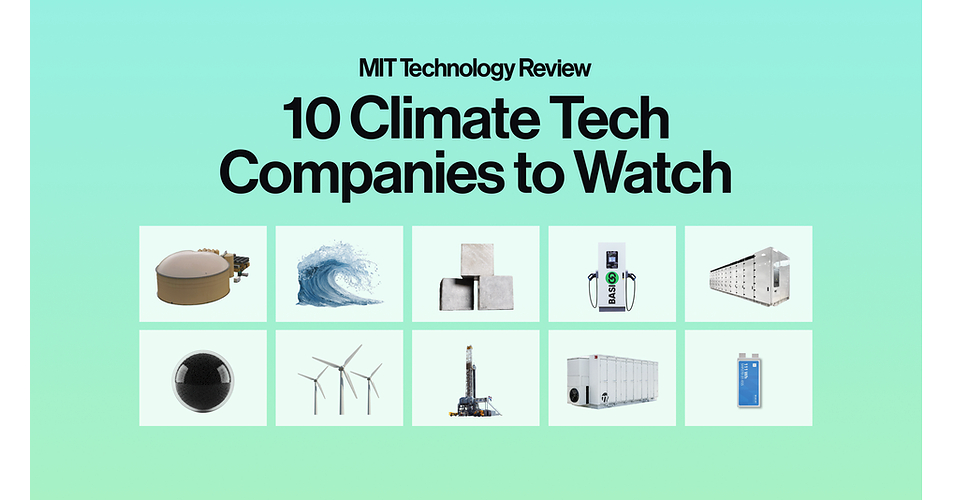
MIT Technology Review published its 2026 list of 10 Climate Tech Companies to Watch, featuring businesses developing solutions across energy storage, nuclear power, transportation and climate-risk protection. The list includes Energy Dome’s grid-scale energy storage systems, WeLion’s semi-solid-state EV batteries and WaveSave’s portable rubber dam; it highlights innovation but provides no financial results or market-moving company announcements.
Analysis
The investable signal is weak: editorial recognition may improve visibility and fundraising access for private climate-tech firms, but it does not establish orders, project economics, or scalable manufacturing. The near-term risk is a sentiment-driven read-through to listed clean-energy and EV names without a corresponding change in earnings. Over 1–3 months, watch for independently verifiable customer contracts, project awards, financing terms, and deployment milestones; these would matter more than inclusion on a watch list. Over 6–18 months, successful scale-up in storage or batteries could pressure incumbent suppliers and benefit grid integrators or EV makers, but the article provides no evidence that any honoree is yet large enough to alter industry supply or pricing. Contrarian view: investors may overvalue the endorsement as validation, while the more relevant opportunity—if one emerges—is in the infrastructure and customers able to procure and deploy the technologies, not necessarily the technology developers. No directional trade is justified from this announcement alone.
AllMind Terminal
AI-powered research, real-time alerts, and portfolio analytics for institutional investors.
Request TrialMarket Sentiment
Overall Sentiment
mildly positive
Sentiment Score
0.25
Key Decisions for Investors
- No trade on the announcement; avoid treating the list as a catalyst for broad clean-energy or EV exposure.
- Place the named firms on a diligence watchlist and verify commercial traction: contracted deployments, repeat customers, unit economics, manufacturing capacity, and funding runway.
- Reassess listed-sector read-through only if subsequent contracts or deployment data affect supplier pricing, utility procurement, or EV product economics; absent that evidence, any thematic rally is vulnerable to reversal.
- Falsify a constructive read-through if follow-up disclosures show delayed projects, weak customer commitments, adverse financing terms, or inability to scale production.
More News
- Singapore's Temasek warns of the ‘biggest risk’ facing markets right now
- Australia top court rules against coal mine expansion, citing climate harm
- A 32% beat, a +6% jump: the IT solutions name our models picked in July
- What Marvell's rosy long-term guidance means for our AI chip stocks
- Malaysia 2027 budget to tackle living costs, fiscal risks as election looms
- Meta may ditch the idea of a cloud business for Muse. We think that’s a good trade