
Tesla Sell Ratings Slide as Analysts Eye Musk’s AI Ambitions
Source: Bloomberg
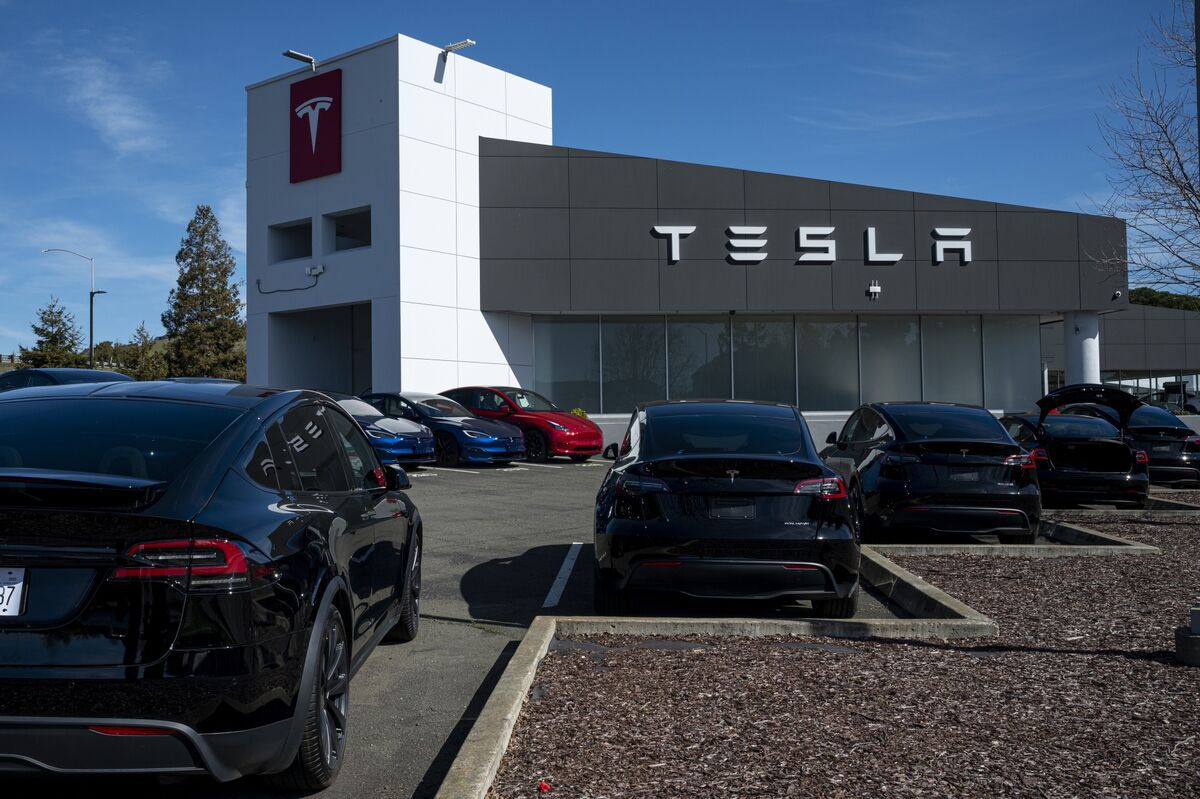
Tesla sell ratings fell to 13.1% of 61 analyst recommendations, the lowest proportion since April 2023 and down from a 2026 high of 23.3% in January. The improving analyst stance comes despite Tesla shares declining in 2026, as Wall Street increasingly focuses on Elon Musk's AI ambitions.
Analysis
The relevant signal is not a fundamental inflection but a shrinking institutional willingness to remain publicly bearish. That can reduce incremental downgrade pressure and support a reflexive rebound if short interest or underweight positioning is still elevated, but it does not establish that automotive earnings estimates have bottomed. In the next 1-3 months, TSLA’s multiple will be driven more by evidence that AI spending can become monetizable than by consensus-rating changes alone.
AI optionality creates an asymmetric valuation framework: credible milestones in autonomy, robotaxi deployment, inference capacity, or third-party software revenue could expand the addressable-market narrative far faster than conventional auto peers can replicate it. Conversely, this framing raises the hurdle for execution; sustained vehicle gross-margin pressure, incremental price cuts, or rising AI capex without disclosed unit economics would expose the stock to a dual de-rating in both auto earnings and AI credibility. The key structural risk over 6-18 months is that investors capitalize aspirational AI revenue while free cash flow is absorbed by compute and manufacturing investment.
Consensus is likely underweighting the distinction between fewer Sell ratings and genuinely constructive estimates. Rating migration is often lagging and can be contrarian-negative when it follows a drawdown without accompanying delivery, margin, or free-cash-flow revisions. A durable rerating requires verification through gross-margin stabilization excluding credits, improving auto FCF conversion, and measurable autonomy economics—not narrative updates alone.
AllMind Terminal
AI-powered research, real-time alerts, and portfolio analytics for institutional investors.
Request TrialMarket Sentiment
Overall Sentiment
mildly positive
Sentiment Score
0.15
Ticker Sentiment
Key Decisions for Investors
- Do not treat the rating trend as a standalone long catalyst. Maintain neutral exposure until the next earnings release confirms both auto gross-margin stabilization and a credible AI-capex/monetization framework; absent those data, upside is sentiment-driven rather than underwritten.
- For tactical upside exposure over 1-3 months, prefer a defined-risk TSLA call spread rather than outright equity, entered only after a technical reclaim of the post-earnings high. Target at least 2:1 payoff; exit if management cuts volume or margin expectations, or if AI capex rises without a revenue timeline.
- Use a relative-value expression rather than a broad EV-sector long: long TSLA / short RIVN only if TSLA demonstrates improving cash generation while RIVN’s funding needs or gross-margin trajectory deteriorate. The thesis is monetizable AI optionality plus balance-sheet durability, not a generalized EV-demand recovery.
- Set an earnings watch item for automotive gross margin ex-credits, free cash flow after AI-related capex, and any quantified autonomy revenue metric. A sequential decline in margin and FCF alongside higher compute spending falsifies the near-term rerating thesis and would favor reducing exposure.
More News
- Robotaxi operators will face fines for blocking first responders
- SpaceX set to launch Google AI chips into orbit in push toward space-based data centers
- Tesla September registrations rise across Europe, extending recovery
- UK’s Nest pension picks Wellington in £3.5 billion emerging market active equity shift
- One year later, Tesla and Musk are still don’t have a good definition of ‘abundance’
- SpaceX sends 4 astronauts to the International Space Station on a record-fast 8-hour trip