
PayPal's Takeover Story Ended, But Its Turnaround Story Didn't
Source: marketbeat.com
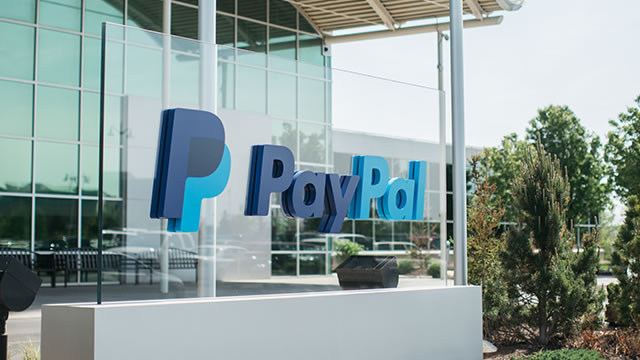
PayPal shares surged in July after Stripe and Advent International reportedly offered to acquire the payments company, following months of deal speculation. PayPal then delivered better-than-expected Q2 2026 earnings roughly two weeks later, complicating investor expectations around whether the proposed transaction will proceed. PYPL closed at $53.18 on September 8, down 3.24% for the session.
Analysis
The relevant question is not whether operating momentum improved, but whether it changes the buyer's willingness to pay versus the board's reservation price. A stronger standalone earnings path raises the cost of a take-private while also making underwriting easier for a financial sponsor; the outcome depends on whether the improvement is durable transaction-margin expansion rather than expense timing or reserve normalization. Until bid price, financing commitments, and exclusivity status are disclosed, PYPL is not a conventional merger-arbitrage position—its downside is the standalone multiple investors assign if talks end.
A Stripe-led combination would likely sharpen competitive pressure on SMB payment acceptance and checkout, with the greatest medium-term read-through to Block (XYZ) and Adyen (ADYEY), where merchant-acquisition costs and pricing discipline matter more than headline volume growth. Conversely, a failed process could be modestly constructive for listed payment peers if PYPL responds by prioritizing buybacks, cost control, and rational pricing rather than buying growth. The 1-3 month catalysts are a formal proposal, financing disclosure, board commentary, and evidence in the next earnings release that branded checkout conversion and transaction margin—not merely adjusted EPS—are improving.
Contrarian view: the market may be overemphasizing the binary deal outcome and underweighting the strategic signal that a bidder has identified value in PYPL's installed base and cash generation. But sponsor involvement creates an important ceiling: if rates, leveraged-loan spreads, or required equity checks move adversely, improved fundamentals can paradoxically cause negotiations to fail because the seller seeks a higher price just as financing capacity contracts. A sustained deterioration in transaction margin, a lower full-year outlook, or credit-spread widening would invalidate a standalone-upside thesis over the next 6-18 months.
AllMind Terminal
AI-powered research, real-time alerts, and portfolio analytics for institutional investors.
Request TrialMarket Sentiment
Overall Sentiment
mildly positive
Sentiment Score
0.15
Ticker Sentiment
Key Decisions for Investors
- Do not initiate a full merger-arbitrage position before definitive terms are public. Set an event alert for a filed proposal or financing package; only evaluate long PYPL if the implied gross spread to a disclosed cash consideration is at least 12% and the closing path is under 12 months.
- For existing PYPL exposure, retain a small catalyst position through the next earnings report but cap sizing at 50% of normal single-name risk until branded-checkout growth and transaction-margin durability are independently validated. A guide-down or transaction-margin miss is the exit trigger, regardless of continued deal speculation.
- Consider a 1-3 month relative-value watch: long PYPL versus short a diversified payments basket such as IPAY only if formal bidder engagement is confirmed. This isolates takeover/strategic-optionality from broad fintech multiple risk; abandon the trade on a public withdrawal or no-progress disclosure.
- Monitor leveraged-loan and high-yield spreads as a deal-probability indicator. A material spread widening alongside no new financing commitment should shift positioning from deal optionality toward downside protection, as private-equity underwriting risk rises faster than PYPL's operating improvement can offset it.
More News
- Peter Thiel says Apple has done 'nothing new' after Steve Jobs
- Here’s the ‘core economic flaw’ in the AI bull case as stock and bond trades unravel, according to a top economist
- How Pepsi fell behind in the cola wars—and then lost KFC
- 5 big analyst AI moves: ’Uniquely catalyst-rich’ months ahead for SpaceX
- Braskem creditors, shareholders near deal on $11bn debt restructuring
- Brookfield to open Qatar office as it expands Middle East operations
From AllMind Research
- Anthropic IPO Preview: Valuation, Timing, and What to Watch
- Shein After the IPO: Venue, Valuation, and What Must Be Proved
- What AI Research Tools Should a Small Hedge Fund Buy First?
- The Great Divergence: North American Banking at the Crossroads of Monetary Policy and Agentic AI (Q4 2025 Bank Earnings)
- AI for M&A Target Screening: From Universe to Deal File