
Pusan National University Study Reveals Why Mg Alloy Ballistic Performance Depends on Impact Direction
Source: PR Newswire
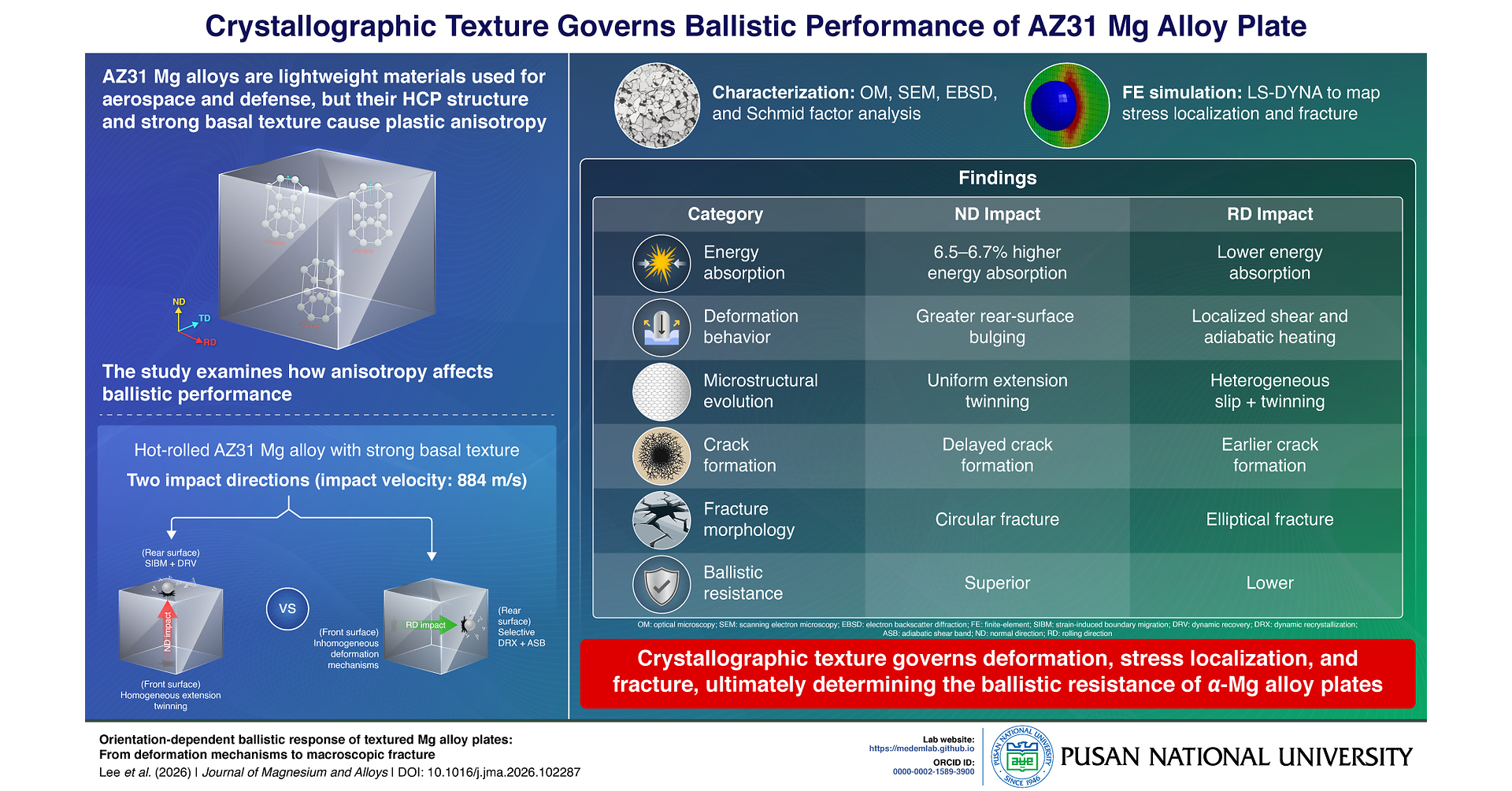
Pusan National University researchers found that hot-rolled AZ31 magnesium alloy plates impacted along the normal direction absorbed 6.5–6.7% more energy than plates impacted along the rolling direction at approximately 884 m/s. Impact direction also changed failure behavior: normal-direction impacts produced more symmetric fracture or bulging, while rolling-direction impacts caused localized shear bands and asymmetric fractures. The findings suggest plate orientation could improve ballistic protection without adding weight, though performance under real-world impact conditions requires further study.
Analysis
The investable implication is a possible design-efficiency gain, not evidence of near-term alloy demand. If orientation-aware design survives testing on joints, curved panels, varied projectile types, and production-scale parts, it could improve the weight-versus-protection tradeoff in selected structures. That is a conditional, multi-year qualification opportunity for magnesium components and could marginally pressure heavier aluminum or steel designs in applications where corrosion, joining, repairability, and lifecycle cost are manageable. The study does not establish a commercial specification, certification path, or customer order; the reported advantage should not be extrapolated to other alloys or field conditions.
The key second-order constraint is system geometry: components cannot always be oriented to the expected impact direction, and multidirectional threats may erase the benefit or shift failure to seams and attachments. Real-world validation and qualification therefore matter more than the laboratory result. In the next 1–3 months, publication and follow-on testing are likely more relevant than earnings catalysts; any structural effect is years away. The contrarian read is that “free” performance may be technically real but economically small until manufacturers demonstrate repeatable protection across impact angles without costly redesign. No direct public-market trade is supported by the supplied information. Reassess if independent testing, defense procurement specifications, or disclosed production programs validate adoption; the thesis weakens if multi-angle testing removes the advantage or joining/corrosion requirements offset weight savings.
AllMind Terminal
AI-powered research, real-time alerts, and portfolio analytics for institutional investors.
Request TrialMarket Sentiment
Overall Sentiment
mildly positive
Sentiment Score
0.25
Key Decisions for Investors
- No immediate position: the study is a research signal without a named commercial supplier, customer, or procurement commitment.
- Put magnesium-component qualification on a 6–18 month monitoring list; look for independent ballistic replication, multi-angle and joint-level results, and evidence of manufacturable texture control.
- If a supplier or defense contractor later discloses a program, verify that the qualified component uses the tested alloy and processing route before attributing revenue or margin upside; do not extrapolate AZ31 plate results to other magnesium products.
- Falsification/watch item: deprioritize the adoption thesis if representative testing shows the directional advantage disappears under varied impact angles, or if certification, corrosion, joining, or repair constraints prevent weight savings at the system level.
More News
- Singapore's Temasek warns of the ‘biggest risk’ facing markets right now
- A 32% beat, a +6% jump: the IT solutions name our models picked in July
- What Marvell's rosy long-term guidance means for our AI chip stocks
- Malaysia 2027 budget to tackle living costs, fiscal risks as election looms
- Meta may ditch the idea of a cloud business for Muse. We think that’s a good trade
- Google teams with nuclear power giant to give reactors a tune-up
From AllMind Research
- Anthropic IPO Preview: Valuation, Timing, and What to Watch
- Shein After the IPO: Venue, Valuation, and What Must Be Proved
- What AI Research Tools Should a Small Hedge Fund Buy First?
- Selecting an AI Research Platform for Institutional Investors
- Weekly Update: New Reporting Features and More Sources for Document Search