
No Runway Required: Electra Takes Off and Lands Ultra Short Airplane at Manhattan Heliport
Source: PR Newswire
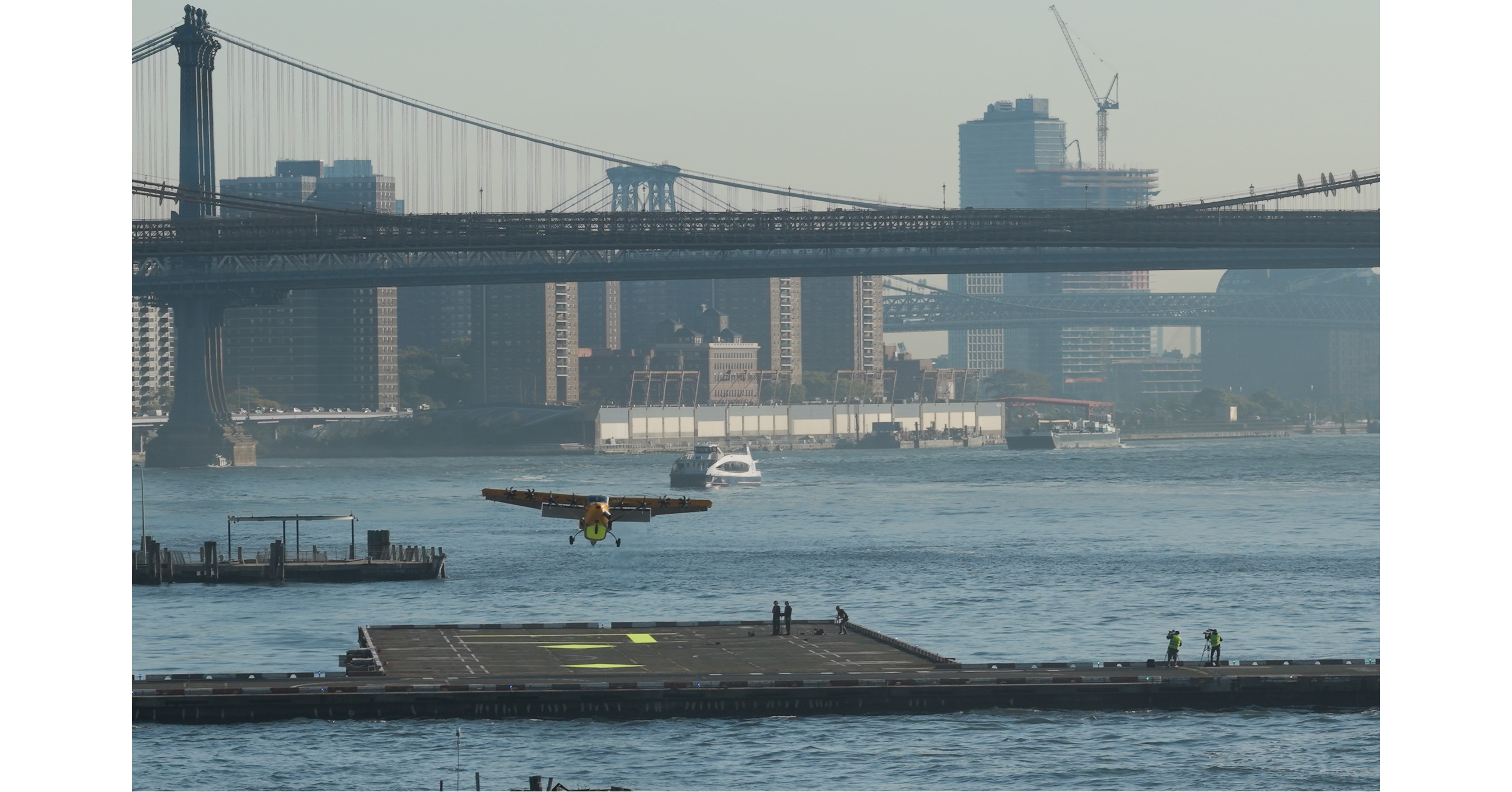
Electra said its hybrid-electric Ultra Short aircraft successfully took off and landed at Downtown Skyport in Lower Manhattan, which the company describes as the first landing there by a fixed-wing aircraft without vertical-takeoff capability. The aircraft can operate in 150 feet and use existing heliports and other compact sites; Electra estimates time savings of about 3 hours 45 minutes to Boston, 3 hours 30 minutes to Washington, D.C., and 45 minutes to Philadelphia. The demonstration advances Electra's Direct Aviation concept, while the EL9 remains on a path toward certification, production and service.
Analysis
The investable signal is infrastructure optionality, not near-term aircraft revenue. A fixed-wing aircraft using a heliport could expand the addressable network without runway construction, but a demonstration by the EL2 does not establish EL9 certification, dispatch reliability, unit economics, or passenger demand. Electra is private, and its performance and cost comparisons are company claims; the stated customer interest and letters of intent should not be treated as firm orders or backlog.
Over days, the event may lift advanced-air-mobility sentiment but does not support a fundamental re-rating of Honeywell Aerospace (HONA), Lockheed Martin (LMT), or Safran (SAF). They are strategic investors, yet the article provides no evidence of material revenue, order, or earnings exposure. Over 1–3 months, the useful catalysts are FAA pilot-program outcomes, certification milestones, and documented operator commitments. Over 6–18 months, commercial viability depends on certification, safety case, community approvals, insurance, and sufficient route frequency to compete with driving and conventional short-haul service.
Second-order winners could include heliport/FBO operators and regional communities if existing sites gain utilization; incumbent helicopter shuttle operators may face substitution, while airports and airlines could either lose short-haul traffic or gain feeder connectivity. The contrarian point: runway access is only one constraint. Ground transfers, weather, noise, payload economics, and fleet utilization may erase advertised door-to-door time savings. Treat the demonstration as de-risking access feasibility—not the business model.
AllMind Terminal
AI-powered research, real-time alerts, and portfolio analytics for institutional investors.
Request TrialMarket Sentiment
Overall Sentiment
moderately positive
Sentiment Score
0.55
Key Decisions for Investors
- No trade in HONA, LMT, or SAF on this announcement alone: their investor relationship creates potential optionality, but materiality is unsubstantiated. Revisit only with disclosed program revenue, orders, or guidance impact.
- Track FAA certification and pilot-program milestones, plus evidence of firm aircraft orders and repeatable commercial operations; do not underwrite the 2,200+ letters of intent as backlog.
- Watch heliport/FBO utilization, local operating approvals, and route-level passenger economics as the key 6–18 month validation points. A certification delay, restrictive noise rules, or weak repeat demand would falsify the adoption thesis.
More News
- BofA raises Lockheed Martin stock price target on strong outlook
- Morgan Stanley upgrades Lockheed Martin stock rating on F-35 deal
- Stocks making the biggest moves midday: Lockheed Martin, JetBlue, CoreWeave, Surgery Partners & more
- FIRE SALE | InvestingPro for less than $8/month (all features included in the app)
- CFO pay jumps 66% at major industrial spinoffs
- A shock in Brazil sends stocks plunging, while neoclouds take another hit