
Huawei presenta una soluzione innovativa di telepresenza immersiva in grado di offrire esperienze coinvolgenti e servizi intelligenti
Source: PR Newswire
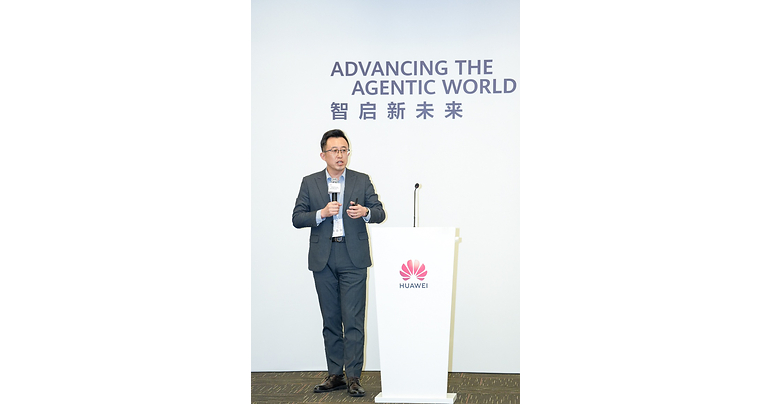
Huawei unveiled an immersive telepresence system at HUAWEI CONNECT 2026, featuring the CloudLink Camera 610 AI, AI-based noise separation, stereo sound localization and modular IdeaPresence displays supporting 1.07 billion colors. The company also expanded open SDK access across AI, media processing, whiteboards and audio/video to support partner-built OpenHarmony meeting, cloud collaboration and smart-classroom applications. The launch reinforces Huawei's enterprise collaboration and AI ecosystem strategy, though no pricing, revenue contribution or customer-contract figures were disclosed.
Analysis
This is strategically more relevant as an enterprise-stack bundling signal than as a standalone hardware launch. Huawei can use meeting-room endpoints, operating-system APIs and security features to deepen account control in China and sanctioned markets, raising switching costs for customers that currently mix Zoom (ZM), Cisco (CSCO), Microsoft (MSFT) Teams Rooms and Logitech (LOGI) peripherals. The near-term revenue impact is unlikely to register for listed global peers, but procurement losses can emerge first in large education, telecom and government deployments where local integration and data-residency requirements dominate product choice.
The second-order pressure is on room-hardware vendors rather than cloud-collaboration leaders: LOGI, HP Inc. (HPQ) and audio/video specialists face the most direct risk if Huawei subsidizes endpoints to seed its OpenHarmony ecosystem. Conversely, MSFT retains an advantage where customers require global identity, compliance and workflow integration; a more closed geopolitical technology environment could actually reinforce its position outside China. Security claims should be discounted until third-party certification and material overseas customer wins establish that the platform meets multinational procurement standards.
Over the next 1-3 months, this is not a standalone tradable catalyst because there are no disclosed pricing, backlog, customer-contract or unit-volume data. Over 6-18 months, watch whether OpenHarmony-enabled deployments move from showcase installations into standardized procurement frameworks; that would imply recurring software, support and ecosystem economics rather than one-off conference-room capex. A meaningful competitive thesis is falsified if Huawei’s collaboration products remain concentrated in domestic affiliated customers or if enterprise buyers continue to deploy Teams/Zoom as the primary control plane despite Huawei hardware adoption.
AllMind Terminal
AI-powered research, real-time alerts, and portfolio analytics for institutional investors.
Request TrialMarket Sentiment
Overall Sentiment
moderately positive
Sentiment Score
0.42
Key Decisions for Investors
- No directional trade on the announcement alone; create a watch item for LOGI and HPQ ahead of the next two earnings cycles, focusing on China/Asia-Pacific conferencing-peripheral revenue, channel inventory and gross-margin commentary.
- Maintain any existing long MSFT versus short LOGI as a 6-12 month quality pair only if enterprise collaboration spending remains resilient: MSFT captures software/AI monetization while LOGI bears greater endpoint price competition. Reassess if LOGI reports sustained enterprise-video growth or MSFT Teams paid-seat growth decelerates materially.
- Monitor ZM’s international enterprise retention and hardware-partner commentary over the next 2-3 quarters. A disclosed Huawei displacement at multinational accounts would be a negative read-through, but absent verifiable contract losses, avoid treating this product release as a short catalyst.
- For China technology exposure, track public tenders and OpenHarmony developer adoption rather than press-release product specifications. Escalate the competitive risk only if multi-year government, education or telecom framework awards demonstrate repeatable deployment economics.
More News
- Trump & Xi to Meet Amidst Friction on Wars, Tech, Trade
- Here are the 3 big things we're watching in the stock market this week
- Tech leads shares higher in Asia, oil eases
- Yuan hits fresh multi-year peak as PBOC eases curb ahead of Trump-Xi summit
- China slows humanoid robot IPO rush as hype outruns reality
- The economy has undergone a structural transformation that ended the low-cost era. ‘The regime change in inflation and interest rates is the outcome’
From AllMind Research
- Anthropic IPO Preview: Valuation, Timing, and What to Watch
- Shein After the IPO: Venue, Valuation, and What Must Be Proved
- What AI Research Tools Should a Small Hedge Fund Buy First?
- Can ChatGPT or Claude Replace a Research Platform?
- How the 2026 Milan-Cortina Winter Olympics Will Reshape Company Revenues and Stock Performance