
Global Product Placement Spending Grew 12.7% in 2025 to $37.2B & Pacing for Faster Growth Again in 2026, Driven by TV, Film, Music & Digital Media
Source: PRWeb
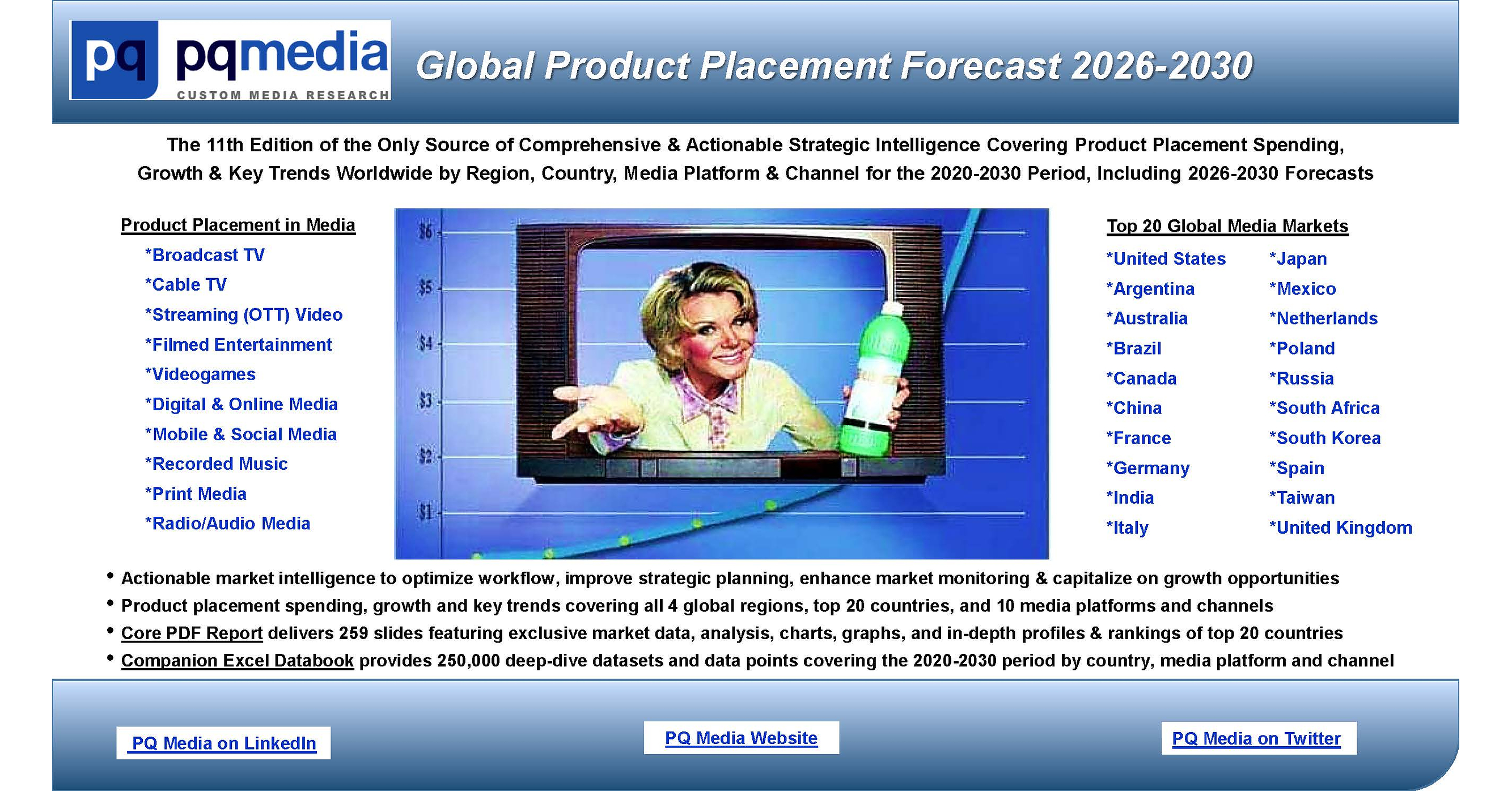
Global product placement spending rose 12.7% in 2025 to $37.16 billion, accelerating from 12.1% growth in 2024; PQ Media forecasts a further 12.8% increase to $41.92 billion in 2026. US spending, 56.5% of the global market, increased 13.2% to $21.01 billion, while music was the fastest-growing category at 13.8%. Streaming content, micro-dramas and AI-supported placements are helping drive growth, though industry professionals cited fewer new productions and titles in several media as potential constraints.
Analysis
The investable angle is not the headline growth rate; it is who captures the brand budget. Product-placement spending is not equivalent to revenue recognized by Netflix (NFLX): fees may accrue to producers, agencies or talent, and the release does not quantify Netflix’s share. Treat the forecast as a demand signal, not an earnings upgrade.
If brands increasingly fund integrations to offset production costs, streamers with global reach and a steady slate could gain negotiating leverage versus smaller publishers. But fewer new titles constrain the supply of premium integration slots; that scarcity can support pricing while limiting volume. Virtual placements and AI-enabled integrations offer a possible 6–18 month workaround by monetizing existing content, though rights, brand safety and audience acceptance could limit adoption. Integrations also risk making programming feel overly commercial, weakening engagement if execution is poor.
Near term, the release alone is unlikely to establish a durable NFLX catalyst. The key validation is whether Netflix discloses material placement-related revenue or production-cost offsets, rather than merely more brand partnerships. The contrarian risk is that the broad spending forecast masks concentration in a few hit titles and markets: category growth could remain strong while platform-level economics disappoint. Any thesis should be falsified by no evidence of incremental monetization in upcoming disclosures, weaker content engagement, or a slowdown in the branded-content pipeline.
AllMind Terminal
AI-powered research, real-time alerts, and portfolio analytics for institutional investors.
Request TrialMarket Sentiment
Overall Sentiment
moderately positive
Sentiment Score
0.35
Ticker Sentiment
Key Decisions for Investors
- No trade on the PQ Media release alone. Keep NFLX on watch; it is a positive monetization signal, but the source does not establish how much spend reaches Netflix or changes earnings.
- Over the next 1–3 months, check Netflix disclosures and management commentary for placement revenue, production-cost offsets, or evidence of repeat brand demand. Upgrade the thesis only if the economic capture is explicit and recurring.
- For a 6–18 month catalyst watch, track virtual/AI placements in existing content: successful library monetization could reduce dependence on adding new production slots. Reassess if rights, brand-safety concerns, or audience response constrain rollout.
- Falsifier: upcoming results show no measurable placement-related contribution alongside weaker engagement or content economics. Until platform-level capture is verified, avoid expressing this as a standalone long or a relative-value trade.
More News
- Why Paramount-Warner merger has sparked fears about press freedom
- Will AI kill the Asian entertainment industry, or reinvent it?
- Elon Musk blames Indian 'oligarchs' for stalling Starlink launch
- Former world No. 1 Jon Rahm's lawyer tells court Spaniard is done with LIV Golf after three seasons
- Levi Strauss hikes profit guidance after tariff refunds, but its sales outlook is less optimistic
- Weston Family, Fairfax Financial’s Watsa Acquire Boots in $8.9 Billion Deal