
Data Center Risk Recast as Location Trumps Hyperscaler Status
Source: Bloomberg
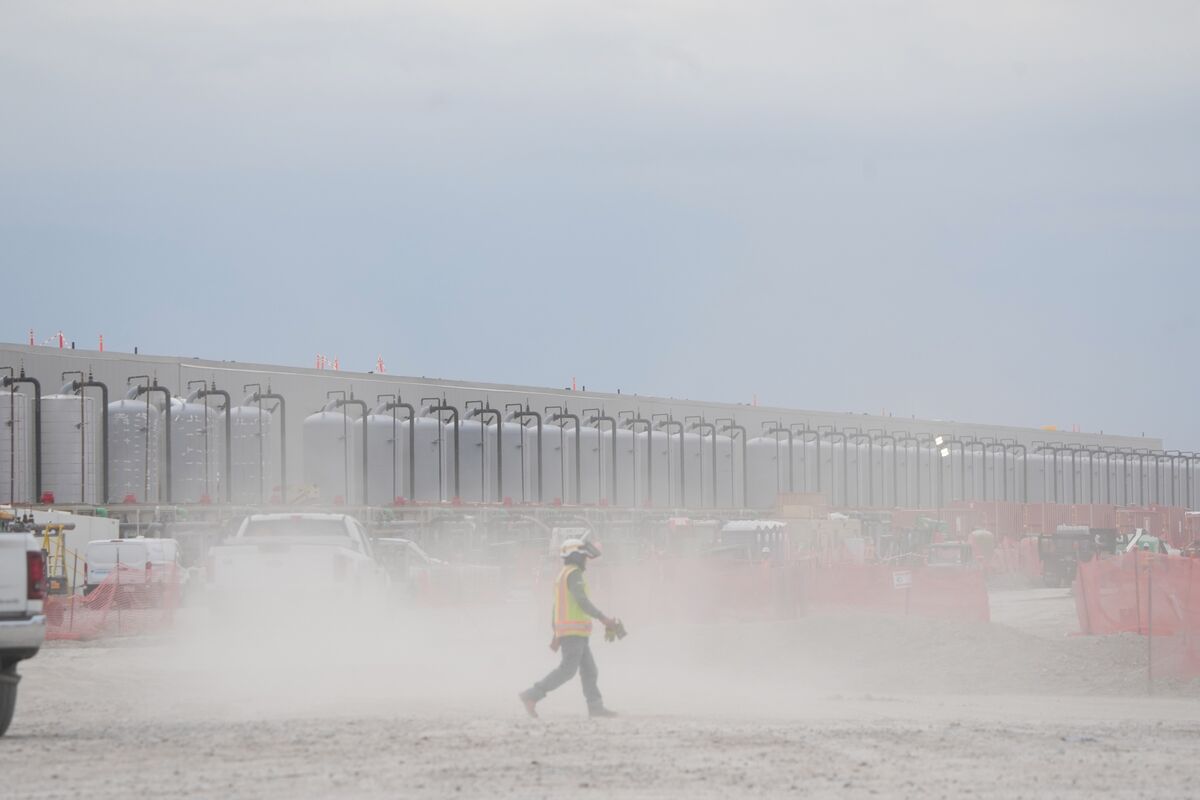
The newsletter flags intensifying challenges for the world’s largest data center developers as “the data center backlash” spreads in the US, implying tougher operating conditions ahead. It also points to shifting capital dynamics—Dubai’s top property developer is reportedly moving away from IPO plans, while bargain hunters focus on Europe’s secondary credit market. A study on AI infrastructure assets is highlighted as potentially changing investor thinking, but near-term sentiment is cautious given the growing headwinds for data centers.
Analysis
The market is still pricing AI infrastructure too much like a demand story and not enough like a utility-constraint story. Once power, water, and permitting become the binding inputs, the winners are the assets that are already plugged into dense demand corridors with contracted capacity; everything else becomes an expensive option on future approvals. That favors stabilized colocation and incumbent networked assets, while punishing greenfield developers whose equity value depends on flawless execution and cheap capital.
The second-order effect is financing, not just operations: if lenders believe delivery risk is rising, they will haircut project IRRs and tighten terms, which slows construction just when headline demand looks strongest. Over the next 1-3 months, I would expect multiple compression in levered developers with long-dated pipelines and little pre-leasing; over 6-18 months, the bigger shift is that "AI growth" gets re-priced into a scarcity premium for power access rather than generic MW announcements.
The contrarian point is that consensus may be underestimating how local opposition and interconnect queues create regional winners and losers inside the same theme. If a developer can show signed utility capacity, entitlements, and tenant commitments, the market may be forced to treat it more like a contracted infrastructure asset than a speculative growth name. Absent that proof, the bounce in AI-infra sentiment looks fragile and any rally is vulnerable to a financing or permitting headline.
AllMind Terminal
AI-powered research, real-time alerts, and portfolio analytics for institutional investors.
Request TrialMarket Sentiment
Overall Sentiment
mildly negative
Sentiment Score
-0.25
Ticker Sentiment
Key Decisions for Investors
- Short WWRL on rallies over the next 1-3 months if it remains a development-led story with limited contracted power visibility; the cleanest thesis is multiple compression as execution risk becomes the bottleneck. Invalidation: signed interconnects, pre-leasing, or de-risked financing terms that materially reduce funding risk.
- Pair trade: long EQIX or DLR versus short WWRL for 6-12 months to isolate the difference between contracted, operating capacity and speculative buildout. Risk/reward improves if the spread widens on any permitting or community-backlash headline.
- Buy put spreads on WWRL into earnings or project-update events if the market is implicitly assuming smooth delivery. Use 3-6 month tenor; the payoff is best if management has to discuss timing slippage, capex inflation, or financing needs.
- Add to monitoring list: PWR, ETN, and VRT as second-order beneficiaries if grid, electrical, and cooling bottlenecks persist. These names capture the bottleneck spend even if hyperscaler demand rotates away from unproven developers.
More News
- Indonesian stocks plunge to six-year low as MSCI downgrade fears mount
- Putin reportedly suggests summit with Trump and Xi to decide fate of Ukraine
- Ukraine launches over 1,000 drones at Russia, setting oil facilities ablaze
- China's CXMT sees shares drop over 6% as investors look past chipmaker's profit turnaround
- Australia’s Cleanaway agrees to $6.5 bln EQT buyout bid; shares surge
- India’s Finance Minister blames easy exits and excess liquidity for equity market's underperformance