
Making Every Kilowatt-Hour Count: Sungrow Brings Its Full-Scenario Home Energy Solutions to a Changing Benelux Market
Source: PR Newswire
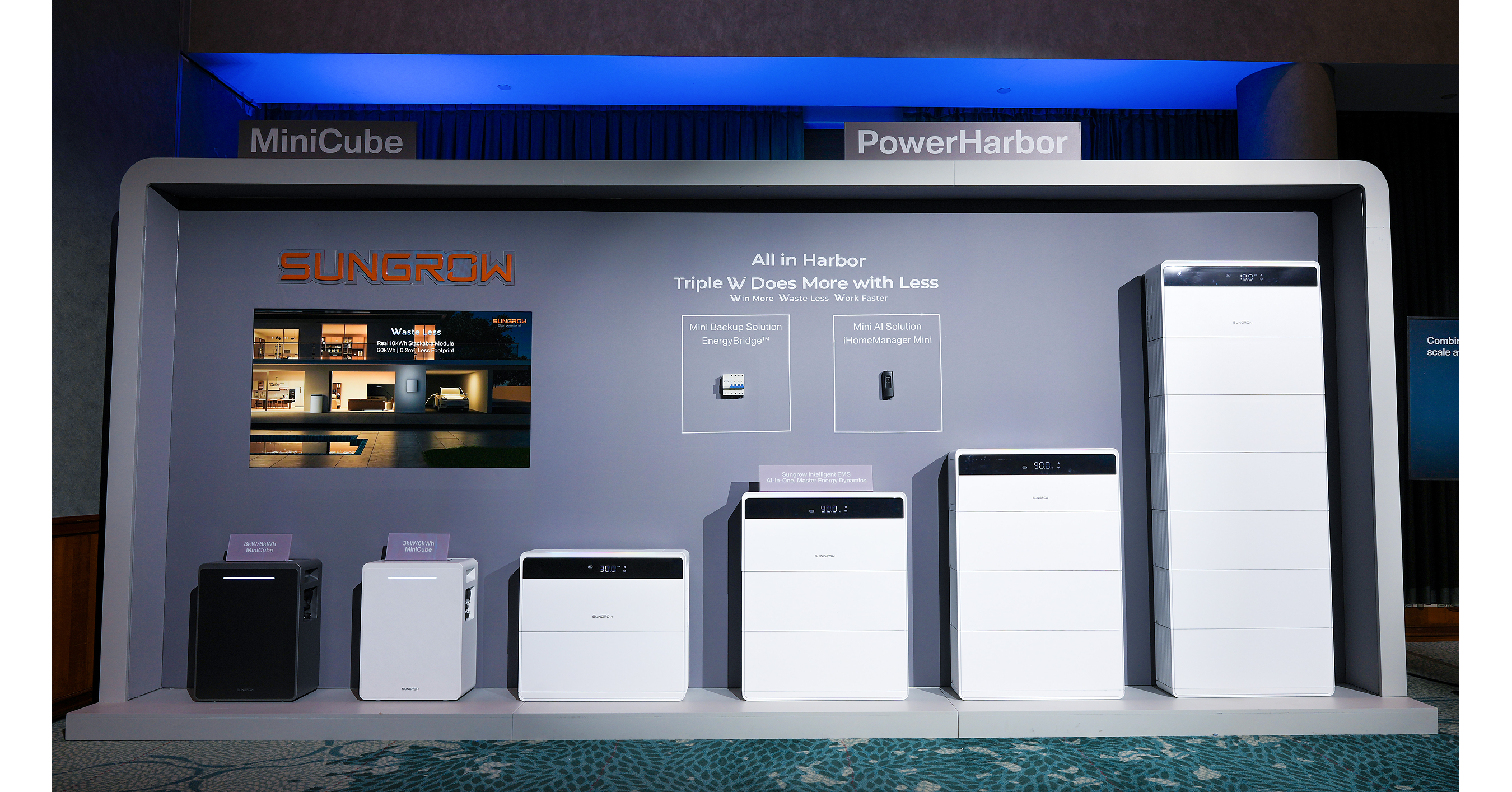
Sungrow introduced its PowerHarbor all-in-one residential energy-storage system to the Benelux market as the Netherlands prepares to end net metering on January 1, 2027. The system supports up to 160% PV-to-battery charging, a 0.66P discharge rate and up to 150% three-phase unbalanced output on 10–12 kW models, targeting higher solar self-consumption and dynamic-tariff optimization. The company also showcased commercial PowerKeeper storage and MiniCube, a 3.68 kW, 5–10 kWh compact storage product for smaller homes.
Analysis
The Dutch policy reset shifts residential solar economics from hardware attachment rates toward software-led capture of intraday spreads, avoided imports and flexibility revenues. This is directionally supportive for integrated storage vendors, but it is more threatening to premium standalone inverter franchises: SEDG and ENPH must defend attachment and gross margin against lower-cost, vertically integrated Asian systems that bundle inverter, battery, backup and energy-management functionality. The key near-term constraint is not end demand but installer capacity; products that reduce labor minutes per installation can win channel share even if end-market battery payback remains uneven.
For the next 1-3 months, this is not independently verifiable revenue evidence for any listed company and should not move estimates. The actionable read-through is to monitor Dutch distributor inventory, quoted install lead times, and battery attachment rates after the January policy change; a rapid increase in installations would likely benefit battery-cell and inverter supply chains before it translates into reported revenue. TSLA Energy, CATL-linked battery suppliers and SMA Solar (S92.DE) have potential category exposure, but local channel access and pricing discipline matter more than product specifications.
The consensus risk is assuming removal of export compensation creates an immediate, broad residential-storage boom. Dynamic tariffs can reduce realized arbitrage economics as adoption scales, while Dutch grid operators or regulators may alter export fees, flexibility-market participation rules, or connection standards. A weak power-price-spread environment, falling retail electricity prices, or elevated financing costs would delay payback and turn the market into a price-led competition, pressuring incumbent gross margins rather than expanding sector profits.
Over 6-18 months, the more durable value pool is likely aggregation and energy-management control rather than battery hardware. Vendors or utilities able to enroll distributed systems into VPPs can monetize grid services and reduce customer acquisition costs, whereas equipment-only providers risk commoditization. Watch whether retailers and aggregators capture dispatch rights; that would favor integrated energy platforms and potentially cap hardware vendors' ability to retain the flexibility revenue upside.
AllMind Terminal
AI-powered research, real-time alerts, and portfolio analytics for institutional investors.
Request TrialMarket Sentiment
Overall Sentiment
moderately positive
Sentiment Score
0.42
Key Decisions for Investors
- No immediate directional trade on the launch; treat it as a channel-data alert. Reassess after January 2027 using Dutch residential battery attachment rates, distributor inventory turns and installer lead times; a sustained >20% year-over-year attachment-rate acceleration would support a broader storage-equipment thesis.
- Maintain a relative-value bias against premium distributed-solar hardware: short SEDG versus long TSLA only if SEDG guides to further European gross-margin pressure or channel inventory normalization stalls. Thesis horizon: 1-2 earnings cycles; invalidate if SEDG demonstrates European storage attach-rate gains without incremental discounting.
- Monitor SMA Solar (S92.DE) for a tactical long only if European residential inverter orders stabilize and management indicates storage-led mix improvement; use a 3-6 month horizon. The missing confirmation is order intake by geography and realized pricing, so this is a watch item rather than a recommendation today.
- For power-market exposure, monitor Dutch day-ahead intraday volatility and retail tariff spreads rather than solar-installation headlines. Narrowing spreads for two consecutive quarters would falsify the residential-arbitrage demand thesis and argue against longs in storage-exposed hardware.
More News
- China's AI chip blitz arms Xi with a message for Trump: 'You can't choke us off'
- Oil falls on report Asia will import highest volume of crude since start of Iran war
- Japan's 10-year bond yield hits 30-year high following sell-off in Treasurys
- US Debt Selloff Spans Most Maturities: Evening Briefing Americas
- Meta announces new lightweight virtual reality glasses to one-up Apple’s Vision Pro
- Trump evalúa prohibir exportaciones de diésel de EE.UU.