
EVIDENT Expands Its Pramana Digital Pathology Portfolio to Support Small and Medium-Sized Labs
Source: PR Newswire
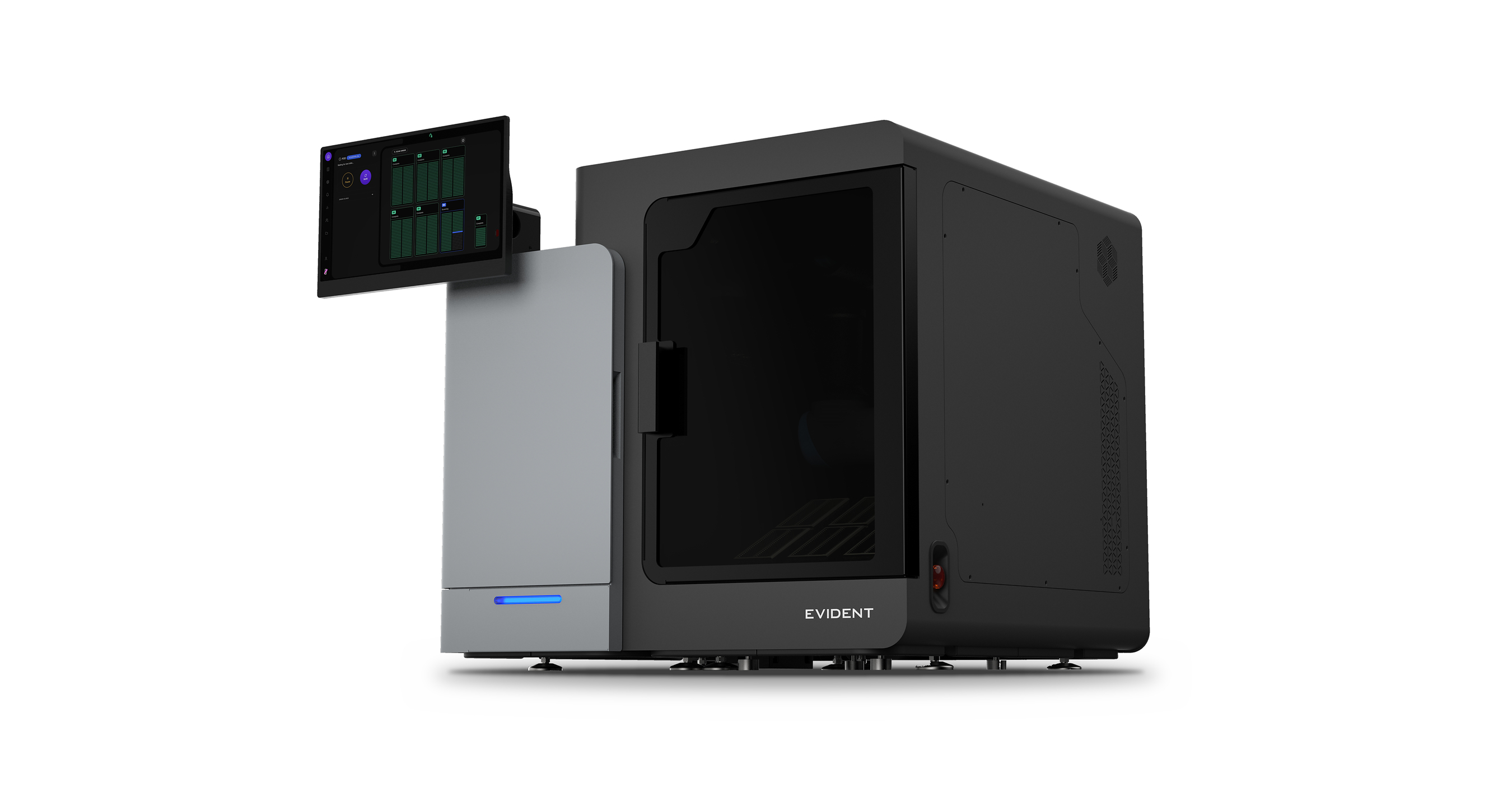
Evident launched the Pramana POD benchtop whole slide imaging scanner, extending its autonomous digital pathology portfolio to small and medium-sized laboratories. The system offers true 40X imaging at up to 25 slides per hour under defined conditions, with automated image-quality assessment and workflow features. It is labeled for research use only, not diagnostic procedures; clinical availability is subject to regulatory authorization.
Analysis
The investment signal is limited: a smaller benchtop form factor may lower the adoption hurdle for labs that cannot justify or accommodate larger systems, but it does not establish material near-term revenue. The more consequential pathway is installed-base formation: if autonomous image QA proves reliable in routine workflows, it could pull through image-management, storage, integration, and service spending. Those benefits are conditional; workflow compatibility, validation across specimen types, and measurable labor or turnaround-time savings are not demonstrated here.
The key constraint is clinical deployment. The product is labeled research use only, so do not underwrite diagnostic volume or clinical replacement economics without evidence of relevant regulatory authorization and customer adoption. That also makes performance claims—particularly throughput under defined conditions—less informative than real-world uptime, rescans, integration costs, and total cost per usable slide.
Over the next 1–3 months, this is more likely a competitive/pricing signal than an earnings catalyst. If the entry-tier system gains traction, established WSI vendors such as Leica Biosystems and Hamamatsu Photonics could face pressure to offer lower-cost configurations; labs may also redirect budgets toward scanners and away from other digital-pathology infrastructure. Over 6–18 months, successful deployment could broaden the addressable lab base, but adoption remains gated by workflow change and regulatory status. Contrarian angle: smaller labs may still defer purchases if software integration and validation costs dominate scanner cost. With no company identities or tickers supplied, there is no grounded direct-equity trade; verify commercial availability, customer wins, regulatory status, and independent workflow-performance data before changing exposure.
AllMind Terminal
AI-powered research, real-time alerts, and portfolio analytics for institutional investors.
Request TrialMarket Sentiment
Overall Sentiment
mildly positive
Sentiment Score
0.25
Key Decisions for Investors
- No immediate directional trade: the launch alone does not substantiate a material earnings revision, and no tradable company identity is provided.
- Set a 1–3 month watch item for evidence of paid deployments, repeat orders, and realized throughput/quality performance; treat company-reported interest or technical specifications as insufficient without customer validation.
- For a 6–18 month thesis, monitor regulatory authorization for diagnostic use, integration requirements, and total cost per usable slide. Reconsider the adoption case if validation or integration costs erase the claimed labor and delay savings.
- Track pricing and product responses from Leica Biosystems and Hamamatsu Photonics; a broad discounting response without evidence of category growth would weaken the sector-economics case.
More News
- AI rapidly improving, could vastly boost U.S. GDP, Anthropic's Clark tells policymakers
- Nasdaq Index: AI Selloff Deepens as Chips and CoreWeave Break
- Christine Lagarde: IMFC Statement
- Semiconductor market to remain solid ‘at least through next year,’ South Korea finance minister says
- Alphabet’s chief investment officer responds to Jefferies warning that the most likely outcome of the AI boom is massive U.S. capital destruction
- A 44-minute call and a memo: How Alexandr Wang won Mark Zuckerberg’s trust—and a $100 billion-plus AI bet
From AllMind Research
- Anthropic IPO Preview: Valuation, Timing, and What to Watch
- Shein After the IPO: Venue, Valuation, and What Must Be Proved
- What AI Research Tools Should a Small Hedge Fund Buy First?
- Document Search Enhancements, AI Enhancements, AI Actions, & Chat Export
- AI Vendor Landscape for Institutional Investment Teams