
Amazon logistics automation offers long-term margin gains, Jefferies says
Source: proactiveinvestors.com
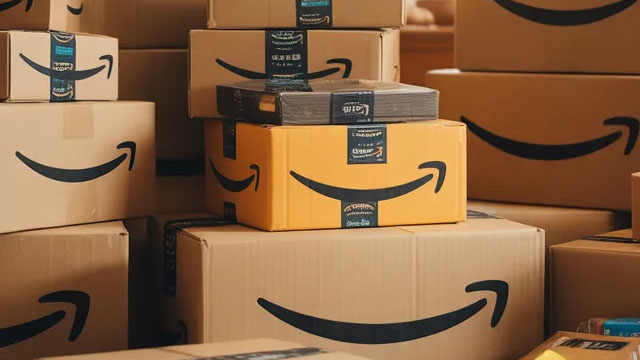
Jefferies says Amazon’s warehouse automation and expanding logistics network could strengthen retail margins over the long term. Automation may help reduce exposure to labor shortages and wage inflation, though immediate cost savings are expected to be limited.
Analysis
The investment case is less about near-term labor savings than about whether automation and network density improve the cost per package over time. In the next 1–3 months, the key signal is not deployment claims but measurable progress in North American retail operating margin, fulfillment cost per unit, and capex intensity. Over 6–18 months, higher utilization and lower sensitivity to wage inflation could support margins; conversely, depreciation, maintenance, and underused capacity may absorb savings before they reach earnings.
A larger delivery network could improve Amazon’s bargaining position and, if third-party volumes are economically attractive, put pressure on UPS and FedEx at the margin. That outcome is conditional: serving external shippers requires competitive service and pricing, and added capacity could instead raise fixed costs if utilization disappoints. The contrarian risk is that investors capitalize automation as a structural margin unlock before the financial evidence arrives; automation can reduce labor exposure without lowering total cost.
The thesis weakens if fulfillment costs or capex rise without corresponding retail-margin improvement, or if Amazon’s delivery expansion fails to attract durable third-party volume. Treat the broker view as a mechanism to monitor, not proof of realized savings.
AllMind Terminal
AI-powered research, real-time alerts, and portfolio analytics for institutional investors.
Request TrialMarket Sentiment
Overall Sentiment
mildly positive
Sentiment Score
0.25
Ticker Sentiment
Key Decisions for Investors
- No immediate trade on the commentary alone. Consider AMZN exposure on weakness only if upcoming results show retail-margin improvement alongside controlled capex; verify fulfillment cost trends and delivery-network utilization.
- Watch UPS and FedEx for evidence that Amazon is winning third-party parcel volume through price or service. Avoid a short solely on network-expansion headlines; the competitive effect depends on external volume and utilization.
- Set a thesis-failure alert if fulfillment costs and capital spending continue to rise while retail margins do not improve over the next several reporting periods, or if management indicates weaker delivery utilization.
More News
- The U.S. market has never been more focused on one single bet—but AI’s payoff will likely take decades
- SpaceX gives the AI trade a shot in the arm. What it means for our stocks
- SpaceX is ripping higher after strong earnings. Analysts see more gains ahead
- +48%, +39%, +22%: Our AI just called these blue-chip breakouts
- The AI boom is nearly $5 trillion short of paying for itself, Gartner says
- OpenAI to bring AI models to Google's cloud, in further expansion beyond Microsoft