
Russian Hybrid Warfare Stirs Alarm in Europe
Source: Bloomberg
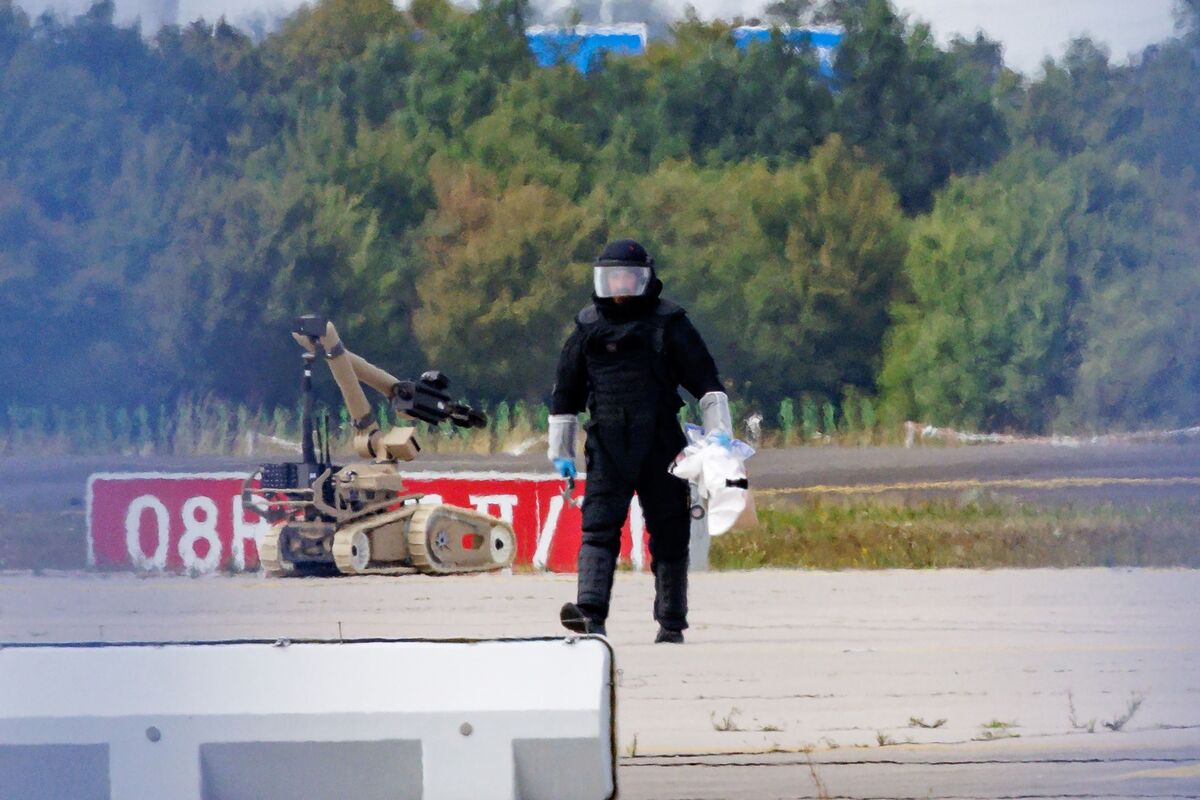
European governments view the past two months as a watershed period for suspected Russian hybrid-warfare activity on their territory, heightening geopolitical and security risks. The article indicates that, despite escalating tensions and alarm in Europe, there is little evidence Moscow is successfully achieving its intended objectives.
Analysis
The investable transmission is a sustained repricing of European resilience spending rather than a one-day geopolitical beta trade. Incremental budgets should favor short-cycle air defense, counter-drone, electronic warfare, secure communications and critical-infrastructure monitoring; Rheinmetall (RHM.DE), Saab (SAAB-B.ST), Thales (HO.PA), Leonardo (LDO.IM) and BAE Systems (BA.L) have more direct European procurement exposure than US primes. The second-order beneficiary is cybersecurity: recurring managed detection and identity-security spend can rise before large defense contracts convert, favoring Palo Alto Networks (PANW), CrowdStrike (CRWD) and Fortinet (FTNT), although their valuation sensitivity to rates remains material.
The near-term risk is that the market already capitalizes a multi-year European defense supercycle, leaving shares vulnerable to any ceasefire narrative or evidence that incidents do not translate into appropriations. Over 1-3 months, the key catalyst is not rhetoric but supplemental national budgets, procurement acceleration, and contract awards; absent those, defense multiples can compress even if threat perceptions remain elevated. Over 6-18 months, repeated disruption would also raise loss ratios and reinsurance costs for European commercial insurers, particularly in cyber and infrastructure lines, but exposure disclosures are too uneven for a clean single-name short today.
Consensus may overemphasize kinetic-defense platforms and underprice operational bottlenecks: Europe needs interoperable sensors, encrypted networks, munitions replenishment and trained operators. That supports Thales and Saab relative to the more crowded armored-vehicle narrative at Rheinmetall. Conversely, broad European equity weakness is not assured: fiscal-defense outlays can cushion industrial activity, making a wholesale short of European cyclicals a poor expression of the threat thesis.
AllMind Terminal
AI-powered research, real-time alerts, and portfolio analytics for institutional investors.
Request TrialMarket Sentiment
Overall Sentiment
mildly negative
Sentiment Score
-0.25
Key Decisions for Investors
- Initiate a 3-6 month relative-value basket: long HO.PA and SAAB-B.ST / short RHM.DE in equal beta-adjusted euros. Thesis is greater upside from air-defense, radar and secure-communications mix versus a more fully priced land-systems leader; target 10-15% relative return, stop on a material European ceasefire agreement or a 10% adverse relative move.
- Add a modest 3-month long PANW or CRWD exposure only on evidence of public-sector/critical-infrastructure bookings or raised security guidance; use defined-risk call spreads rather than outright stock given elevated software multiples. Falsify if billings guidance weakens or 10-year yields rise sharply enough to pressure long-duration software.
- Avoid shorting European insurers until company disclosures quantify cyber and infrastructure accumulation. Set an alert around Munich Re (MUV2.DE), Hannover Re (HNR1.DE) and Zurich Insurance (ZURN.SW) for reserve strengthening, higher cyber exclusions, or reinsurance-rate repricing; those would create a more defensible 6-12 month relative short versus European defense.
- Treat any immediate defense-sector spike on unverified incident reporting as an entry-timing risk, not confirmation. Increase exposure only after budget authorization or contract backlog data validate that threat escalation is converting into revenue.
More News
- Bank of Japan raises interest rates to 31-year high, flags concerns over inflation
- Italy to deploy warships to protect shipping through Bab al-Mandeb
- UN mission finds evidence of U.S. war crimes in Iran; Washington rejects report
- Oil prices fall as Saudi supply hopes outweigh fresh Houthi strikes
- Oil prices fall for 3rd day as supply concerns ease, diplomacy in focus
- Oil Traders Stymied by Iran War Stalemate: Evening Briefing Americas
From AllMind Research
- Anthropic IPO Preview: Valuation, Timing, and What to Watch
- Shein After the IPO: Venue, Valuation, and What Must Be Proved
- What AI Research Tools Should a Small Hedge Fund Buy First?
- How to Evaluate Consensus Estimates Platforms With AI
- Weekly Update: Adding Live MBO Level 3 Data - Liquidity Heatmap, OFI Charts, and More