
Ready for Rebate: Plenful's Rebate Intelligence Solution Protects Critical 340B Savings from Claim to Reconciliation
Source: PR Newswire
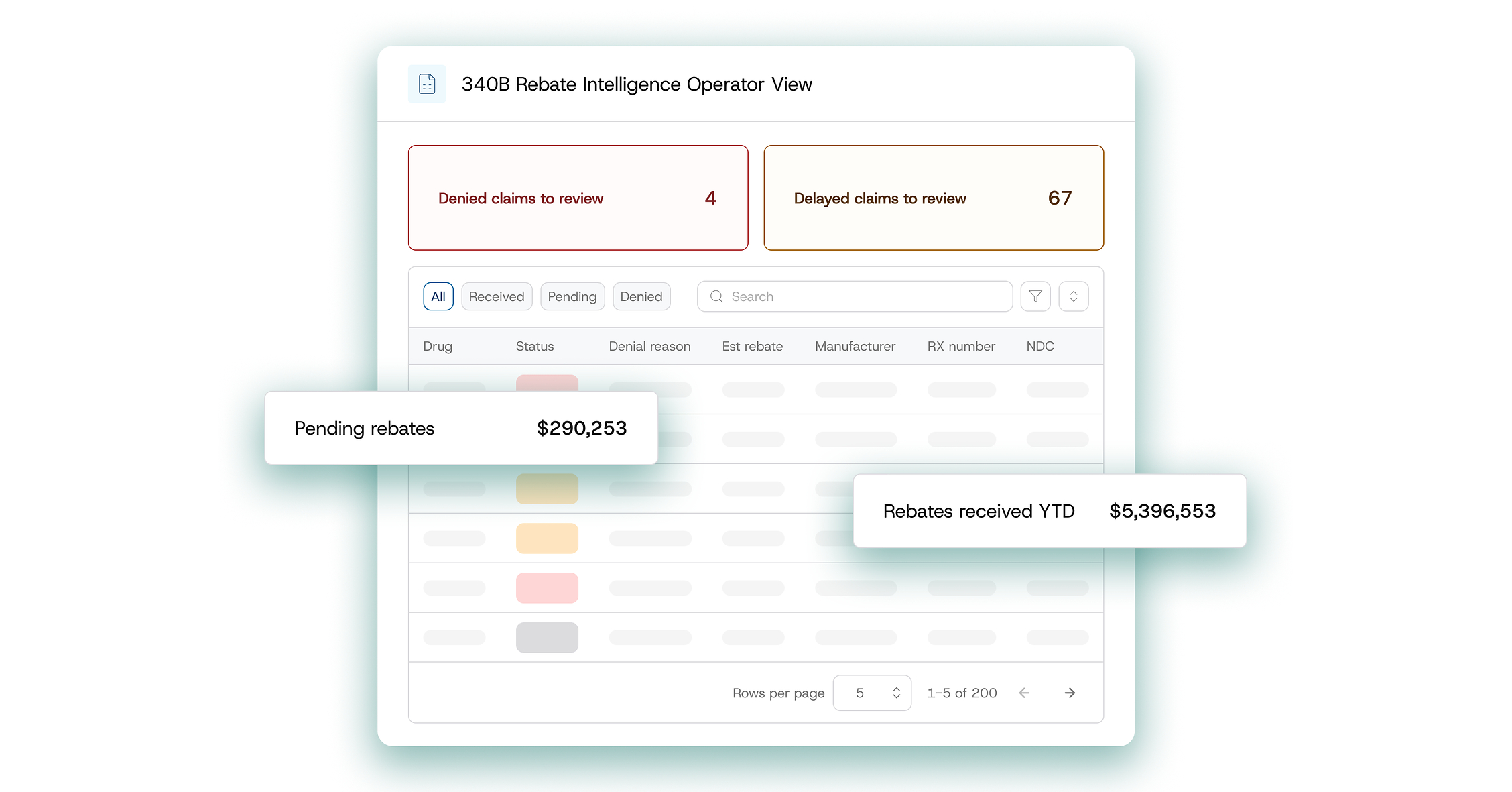
Plenful announced Rebate Intelligence, an automation product for HRSA’s revised 340B Rebate Model Pilot, which is scheduled to go live January 1, 2027; more than 30 health systems have contracted to use it. The pilot covers an estimated $5.5 billion in annual 340B drug purchases, with about $2.75 billion in savings at stake based on a typical 50% discount. The product automates rebate claims, submissions and reconciliation, though the announcement provides no financial results or market reaction.
Analysis
The key economic exposure is not the software feature itself but the shift in timing and execution risk: covered entities must fund higher drug acquisition costs before recovering eligible savings. Even if rebates are ultimately paid, delays, incomplete claims, or denials can increase working-capital needs and make 340B cash realization less predictable. That raises the value of reliable reconciliation, but does not establish material revenue for Plenful: the 30 contracts lack disclosed pricing, implementation costs, renewal terms, and conversion to recurring revenue. Treat the company’s reported customer uptake and MFP refund findings as commercial signals, not independently verified proof of ROI.
Near term, the January 2027 launch creates implementation and data-quality risk; 1–3 months after launch, submission acceptance, payment timing, and denial rates should determine whether this is a durable software budget or a one-off compliance purchase. Over 6–18 months, successful automation could support adjacent pharmacy workflow sales, while standardized tools and payer/manufacturer processes could also commoditize the feature. Manufacturers may face more operational rebate reconciliation and timing variability, but the exposure is concentrated in the pilot’s scope, not a sector-wide read-through.
The contrarian angle is that automation can reduce labor without solving the principal balance-sheet risk: reimbursement timing and policy design. With Plenful absent from the supplied ticker map and no disclosed contract economics, there is no clean public-equity expression. Reassess after verified launch data; a delayed or revised HRSA rollout would undermine urgency, while strong paid-claim recovery and short payment lags would validate adoption.
AllMind Terminal
AI-powered research, real-time alerts, and portfolio analytics for institutional investors.
Request TrialMarket Sentiment
Overall Sentiment
mildly positive
Sentiment Score
0.30
Key Decisions for Investors
- No immediate sector trade: the signal is operationally meaningful but too narrow and commercially unquantified to justify a broad healthcare or software position.
- Set a January 2027–Q1 2027 diligence alert for HRSA implementation status, claim acceptance and denial rates, rebate payment lags, and covered-entity working-capital impact; these are better indicators than customer-count claims.
- Before underwriting Plenful or comparable pharmacy-automation exposure, verify contract value, implementation burden, renewal/conversion rates, and whether customers pay for this module incrementally or receive it within existing software agreements.
- Falsification: a material HRSA delay or redesign reduces near-term demand; conversely, persistent payment delays or high denial rates despite automation would weaken the claim that software alone protects savings and could intensify covered-entity cash-flow concerns.
More News
- Singapore's Temasek warns of the ‘biggest risk’ facing markets right now
- Australia top court rules against coal mine expansion, citing climate harm
- GIC Private Ltd, Medline 10% owner, sells over $721m in shares
- A 32% beat, a +6% jump: the IT solutions name our models picked in July
- Paramount's hard-fought takeover of Warner Bros. Discovery closes Tuesday. Here's how we got here
- Nvidia Is on the Verge of a $6 Trillion Market Value
From AllMind Research
- Anthropic IPO Preview: Valuation, Timing, and What to Watch
- Shein After the IPO: Venue, Valuation, and What Must Be Proved
- What AI Research Tools Should a Small Hedge Fund Buy First?
- Weekly Update: Unstructured Data Search, Ask AI, and Advanced Futures Data
- Best AI Stock Research Tools for Professional Investors