
AI Takes Center Stage From Oracle to the White House
Source: youtube.com
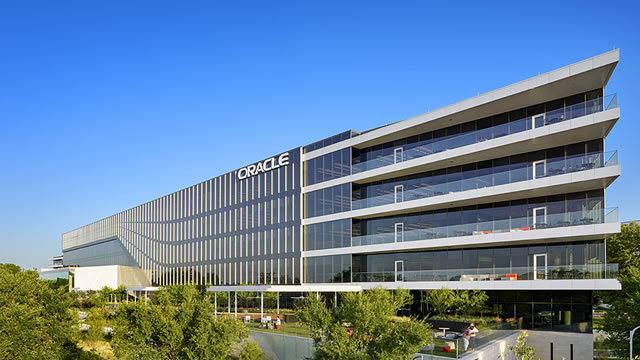
Oracle is seeking to limit exposure to mounting costs and regulatory/local-opposition risks at a major New Mexico data-center project. Separately, Meta launched a palm-sized device for its AI assistant, Muse, while President Trump and Chinese President Xi Jinping are set to discuss AI at the White House. The developments underscore intensifying competition in AI alongside growing infrastructure, regulatory and geopolitical risks.
Analysis
ORCL's data-center buildout is increasingly exposed to a mismatch between contracted AI capacity demand and the permitting, power-delivery, and community-acceptance timeline required to monetize it. The key equity risk is not merely capex escalation: a delayed campus can leave Oracle carrying construction commitments and power-related fixed costs before revenue recognition, reducing cloud gross-margin conversion and pressuring the premium multiple attached to its AI backlog. This is most relevant over the next 1-3 quarters, when investors will look for evidence that remaining performance obligations are converting into OCI revenue rather than being deferred by infrastructure bottlenecks.
The second-order beneficiary is hyperscale capacity with already-secured power and permitted sites. MSFT, AMZN, GOOGL, and private-data-center operators may gain negotiating leverage with AI customers if Oracle cannot bring incremental capacity online on schedule; suppliers with diversified exposure, including VRT and ETN, are relatively insulated unless project delays become sector-wide. Conversely, a broader regulatory backlash toward large-load facilities would raise the cost of new capacity across the industry, favoring incumbents with existing energized campuses over companies dependent on greenfield expansion.
META's small-form-factor AI device is strategically more important as a distribution and inference-data asset than as a near-term hardware revenue driver. A successful device could deepen daily assistant engagement and improve ad targeting or commerce conversion over 6-18 months, but it likely increases Reality Labs losses and faces privacy scrutiny if always-available interaction is central to the product. Consensus may over-credit standalone device sales while underestimating that Meta's strongest monetization path is using the device to protect consumer attention from AI-native interfaces rather than building a profitable new hardware category.
The Trump-Xi AI discussion is a near-term headline risk rather than a tradable fundamental catalyst absent concrete changes to export controls, semiconductor access, or data rules. Any easing in U.S.-China technology restrictions would be more material for NVDA, AMD, and semiconductor equipment than for META or ORCL; renewed restrictions would reinforce the value of domestic compute capacity but also intensify power-grid and permitting constraints.
AllMind Terminal
AI-powered research, real-time alerts, and portfolio analytics for institutional investors.
Request TrialMarket Sentiment
Overall Sentiment
mildly negative
Sentiment Score
-0.15
Ticker Sentiment
Key Decisions for Investors
- Maintain ORCL as underweight versus MSFT for the next 1-3 months; use a long MSFT/short ORCL pair rather than an outright short. The thesis is backlog-conversion and cloud-margin divergence, with invalidation if Oracle reports OCI growth acceleration alongside unchanged or improved capex and delivery timing.
- Establish a watch trigger, not a new position, for ORCL: reassess long exposure only after independently verifiable evidence of energized capacity, regulatory resolution, and OCI guidance sufficient to offset incremental fixed-cost absorption. A further cut to cloud margin outlook or disclosed project deferral would support the relative short.
- Remain selectively long META on a 6-18 month horizon, but do not underwrite meaningful device revenue. Add only on hardware-related margin concerns if core ad pricing and AI-driven engagement metrics remain intact; trim if Reality Labs spending accelerates without measurable assistant adoption or advertising-conversion benefit.
- Prefer VRT and ETN over greenfield data-center developers as a hedged way to express sustained AI infrastructure demand. Limit exposure if permitting delays broaden into canceled projects rather than timing shifts; quarterly order growth and backlog conversion are the key falsification metrics.
More News
- Oracle Japan shares surge 7% after record fiscal first quarter, bucking selloff of U.S. parent
- Trump, Xi to Meet in Washington; Meta Unveils Muse AI Device
- Nscale wants a $35 billion valuation. Nvidia is helping foot the bill
- MSCI CEO: Investors Are Putting Money Everywhere
- The U.S. and China are quietly talking AI guardrails—even as Trump publicly rejects them
- Meta nears first new high in a year as Muse success showcases winning AI strategy
From AllMind Research
- Anthropic IPO Preview: Valuation, Timing, and What to Watch
- Shein After the IPO: Venue, Valuation, and What Must Be Proved
- What AI Research Tools Should a Small Hedge Fund Buy First?
- The Great Divergence: North American Banking at the Crossroads of Monetary Policy and Agentic AI (Q4 2025 Bank Earnings)
- AI for M&A Target Screening: From Universe to Deal File