
Italy Should Tax Banks Like Spain, Says Vice Premier Salvini
Source: Bloomberg
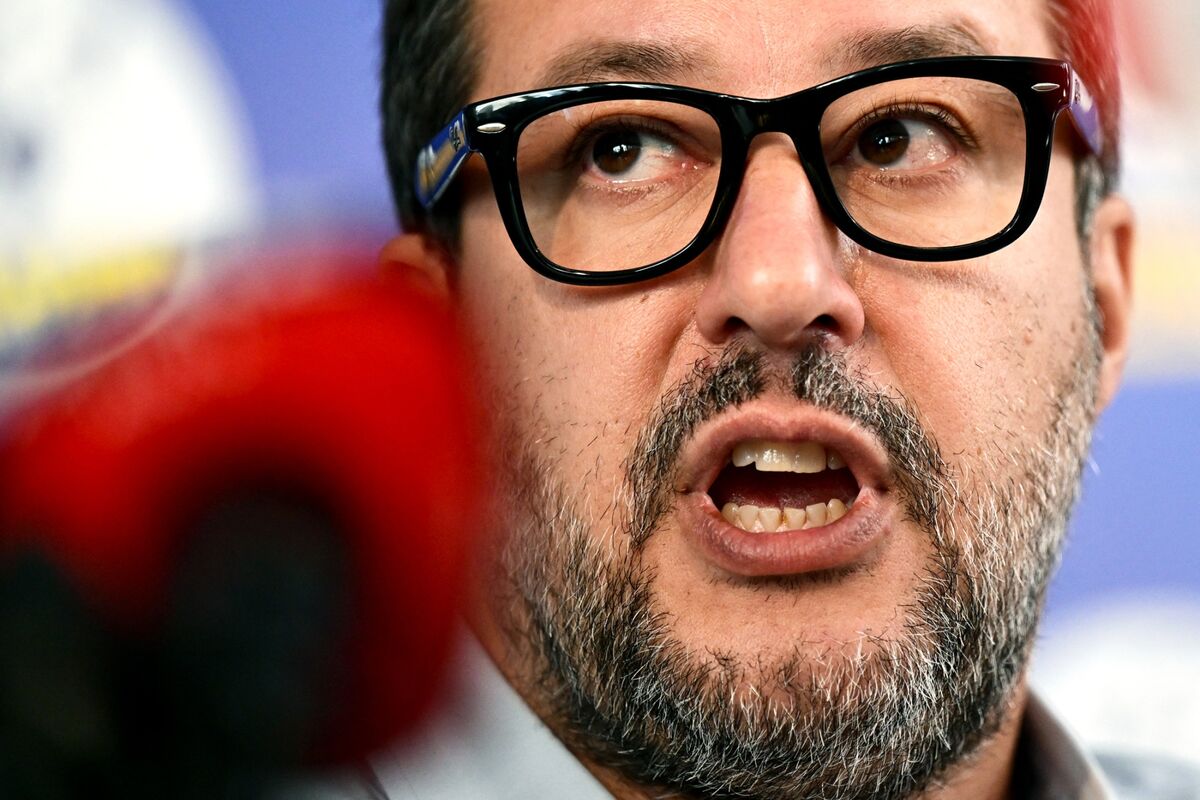
Italy’s right-wing Vice Premier Matteo Salvini endorsed Spain’s move to tax banks’ profits, interest income/expenses, and fees, calling it “absolutely intelligent.” He said Italy will “propose in the budget” similar measures, implying a potential new bank-tax framework even though no rate or timeline was specified. Likely limited immediate impact, but it could pressure bank profitability and shape expectations for Italian fiscal/banking policy.
Analysis
Italian banks are the obvious first-order loser, but the bigger market mechanism is valuation overhang: once fiscal extraction becomes a repeatable policy tool, investors start discounting a higher “political tax” on excess returns, which compresses P/B multiples even if the levy itself is modest. That matters most for UCG.MI and ISP.MI, where the market has been paying for sustained capital return; any move that slows buybacks/dividends can hit the equity case more than the earnings hit alone.
Second-order effects could be broader than banking P&L. If the levy is framed on net interest income, fees, and expenses, banks may try to offset it by widening spreads to borrowers or raising charges, which can bleed into mortgage and SME credit demand with a 1-3 quarter lag. A more subtle spillover is to the sovereign-bank link: if bank capital accumulation slows, domestic banks have less capacity to absorb BTP supply, nudging Italy’s funding premium wider in a risk-off tape.
The key risk is that this is likely more noise than durable policy unless the budget details show a recurring formula or a meaningful cap on deductibility. The trade is strongest only if the levy is large enough to cut 2025-26 ROE meaningfully or to force dividend revisions; otherwise, the sector can shrug it off after initial headline volatility. The contrarian view is that consensus may underprice policy repetition risk: one-off windfall taxes in Europe have a habit of becoming templates whenever fiscal pressure rises, and that can matter more than the current rate itself over 6-18 months.
AllMind Terminal
AI-powered research, real-time alerts, and portfolio analytics for institutional investors.
Request TrialMarket Sentiment
Overall Sentiment
neutral
Sentiment Score
-0.05
Key Decisions for Investors
- Short a basket of Italian banks (UCG.MI, ISP.MI, BAMI.MI) versus long Euro Stoxx Banks or a broader European bank proxy after the budget language is published; target 3-5% relative underperformance if the levy is recurring or levy size exceeds low-single-digit EPS.
- If the market sells off on vague headlines, wait for the draft budget before adding risk; the cleaner entry is on any bounce that assumes a token one-off tax, because the real downside is multiple compression if policy language signals precedent.
- Use downside options on UCG.MI or ISP.MI into the budget event if implied vol remains cheap; prefer 1-3 month put spreads to capture headline-to-text mismatch with defined risk.
- Watch Italy bank CDS and BTP-Bund spreads for confirmation; if both widen after the proposal, reduce any long-only exposure to domestic banks because the thesis shifts from tax drag to broader sovereign-bank contagion.
More News
- Jio’s Record $3.2 Billion IPO Puts India’s Market Muscle to the Test
- Philip R. Lane: Euro liquidity lines and the international monetary system
- Capital One's strong quarter and progressing Discover integration are rewarded on Wall Street
- Why is Contemporary Amperex Technology stock sliding today?
- France curfews calm unrest as Macron faces criticism over Gulf trip
- UnitedHealthcare and Humana are ending Medicare Advantage plans for nearly 1 million people