
Sustaining Its Role as a Driver of the People's Economy, BRI Posts IDR 31.2 Trillion Net Profit in Q2 2026
Source: PR Newswire
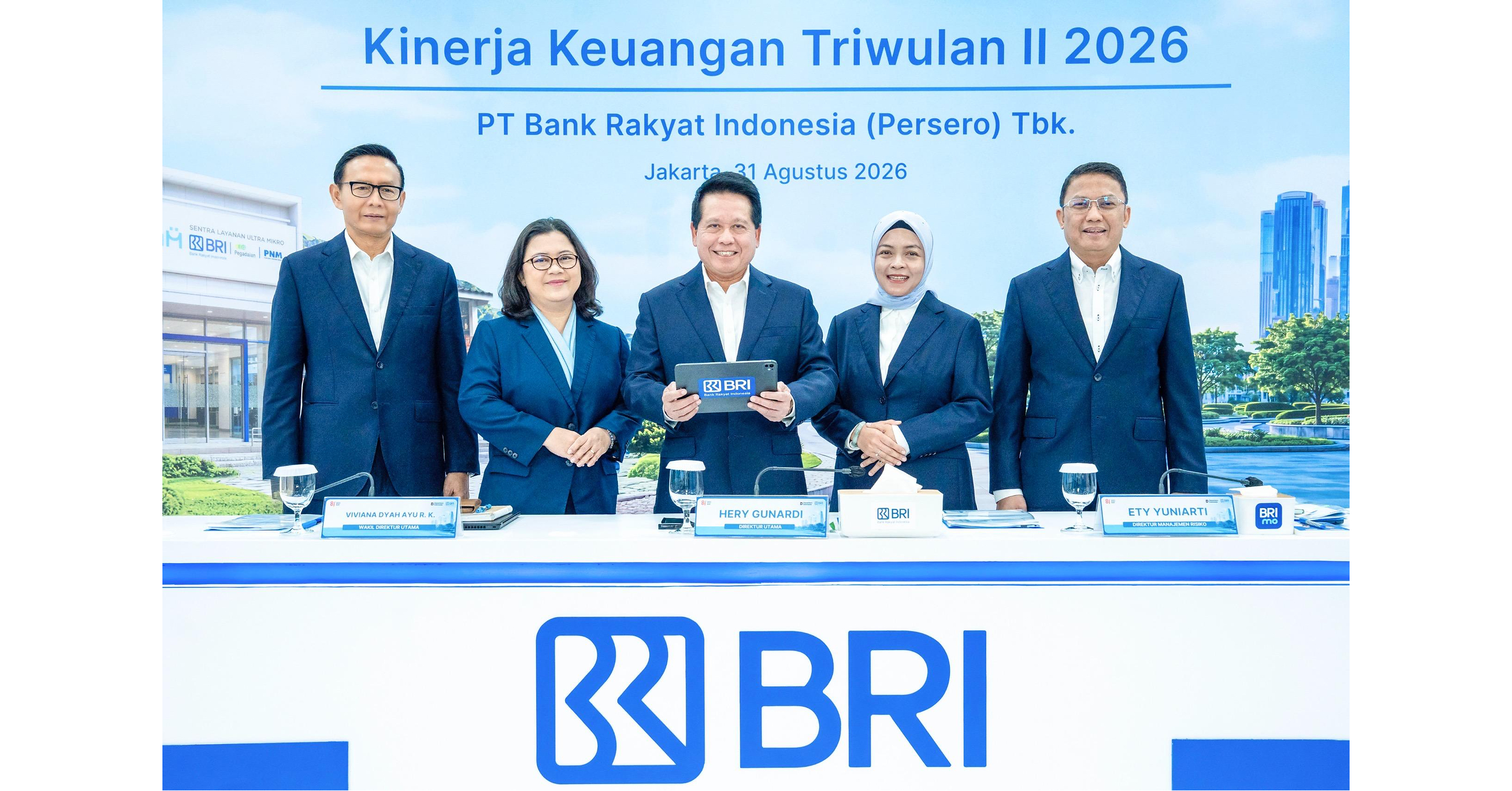
PT Bank Rakyat Indonesia reported Q2 2026 net profit of IDR 31.2 trillion, up 17.5% year over year, supported by 16.2% loan and financing growth to IDR 1,646 trillion. Consolidated assets rose 11.7% to IDR 2,352 trillion, while net interest income increased 9.9% to IDR 80.5 trillion and pre-provision operating profit grew 12.8% to IDR 65.7 trillion. Fundamentals improved as cost of funds fell 60bps to 2.4%, the cost-to-income ratio declined 270bps to 39.2%, and NPLs edged down to 2.9%; MSME lending reached IDR 1,235.4 trillion, or 75.1% of the portfolio.
Analysis
The key underwriting question is whether BRI can preserve its funding advantage while loan growth continues to outrun deposit gathering. A widening loan-to-deposit gap typically raises wholesale-funding and deposit-repricing sensitivity with a 1-3 quarter lag; the reported cost-of-funds improvement may therefore be less durable than the current earnings run-rate implies. The near-term multiple catalyst is evidence that low-cost CASA deposits, rather than time deposits or institutional funding, are driving the funding mix.
BRI's MSME concentration is both its differentiator and its principal late-cycle risk. Government-supported KUR origination can sustain volumes and fee ecosystems, but it also makes reported asset quality vulnerable to a delayed normalization in micro-borrower cash flows, particularly if Indonesian consumption, food prices, or local employment soften. Watch special-mention loans, restructured micro balances, and provisioning coverage rather than the headline NPL ratio; deterioration in those leading indicators would pressure credit-cost guidance before charge-offs become visible.
Relative to BMRI, BBCA and BBNI, BBRI should command an earnings premium only if operating leverage and credit-cost improvement survive a normalization in liquidity conditions. Consensus may be too focused on current profitability and insufficiently discounts the trade-off between faster lending, deposit competition and MSME seasoning. Over 6-18 months, successful digital distribution and cross-selling into its village/merchant network could lower acquisition costs and defend returns, but this needs verification through fee-income growth and declining cost-to-serve rather than management transformation claims.
AllMind Terminal
AI-powered research, real-time alerts, and portfolio analytics for institutional investors.
Request TrialMarket Sentiment
Overall Sentiment
moderately positive
Sentiment Score
0.62
Ticker Sentiment
Key Decisions for Investors
- Maintain a tactical long in IDX:BBRI for the next 1-3 months only if the next monthly/quarterly disclosure shows deposit growth re-accelerating and CASA mix stable or improving; the upside case is earnings-estimate and ROE-driven multiple expansion. Reduce if funding costs rise sequentially or loan growth remains materially ahead of deposits for a second consecutive quarter.
- Express the quality-versus-growth debate as long BBRI / short BBNI over a 3-6 month horizon, sized market-neutral. BBRI has greater upside if micro-credit operating leverage remains intact; exit the spread if BBRI special-mention loans or cost of credit worsen while BBNI's funding costs remain better contained.
- Do not chase an outright breakout without valuation data. Set an alert for the next earnings release: initiate or add only if management raises sustainable return targets while credit-cost guidance is maintained; a guidance increase in credit cost, weaker provision coverage, or a sharp deposit-rate increase falsifies the bullish thesis.
- For a defensive alternative, rotate part of BBRI exposure into BBCA if domestic liquidity tightens. BBCA's stronger deposit franchise should be relatively insulated from deposit competition, while BBRI's higher MSME beta would be the likely source of relative underperformance in a consumer slowdown.
More News
- History shows financial calamities occur when rates rise rapidly like this: 'Something always breaks'
- Oracle Japan shares surge 7% after record fiscal first quarter, bucking selloff of U.S. parent
- Akamai secures $11.6B cloud deal with Anthropic for AI workloads
- Costco makes progress on a key membership metric. Here's our new price target on the stock
- UAE bars Iranian airlines as US sanctions squeeze Iran’s aviation sector
- Here’s the Tesla Semi… again
From AllMind Research
- Anthropic IPO Preview: Valuation, Timing, and What to Watch
- Shein After the IPO: Venue, Valuation, and What Must Be Proved
- What AI Research Tools Should a Small Hedge Fund Buy First?
- The Great Divergence: North American Banking at the Crossroads of Monetary Policy and Agentic AI (Q4 2025 Bank Earnings)
- AI for M&A Target Screening: From Universe to Deal File