
RoboParty dévoile le RP1, un robot humanoïde open source full-stack haute performance, lors du salon IROS
Source: PR Newswire
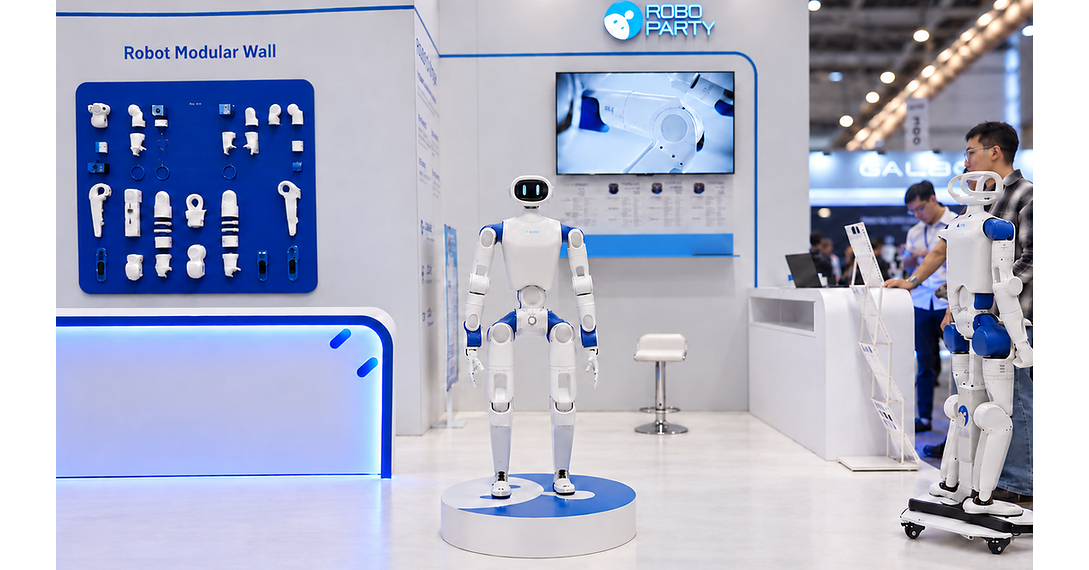
RoboParty unveiled the RP1 humanoid robot at IROS 2026 on September 28, describing it as a high-performance, full-stack open-source platform. The robot demonstrated balance recovery after pushes and kicks and has maximum joint torque of up to 160 N·m. RoboParty plans to release control systems, simulation environments, SDKs, training tools and PartyOS progressively, with further open-source roadmap details due in October 2026 and larger hardware and software launches plus a serial-production program later in Q4.
Analysis
The investable question is whether open access creates a durable hardware and deployment business—or gives competitors a low-cost route to imitate the stack. If the promised software and hardware releases are usable and reproducible, they could lower adoption friction and expand the developer pool; that may benefit the ecosystem while shifting value capture away from proprietary control software toward actuators, reliable components, integration, and field service. That is a conditional mechanism, not evidence of commercial demand. Conversely, publishing a broad stack can accelerate iteration but also expose design choices and make differentiation harder.
The demonstration is weak evidence for industrial readiness: balance recovery under pushes does not establish payload handling, uptime, safety, maintenance burden, or performance in customer workflows. The Q4 production program is therefore the key near-term credibility test, not the GitHub community count. Verify release completeness, independent replication, production capacity, pricing, customer orders, and unit economics; none is established here.
Over days, the announcement is unlikely to support a fundamental trade in listed securities: RoboParty is not mapped to a public ticker, and no listed supplier relationship is specified. Over 1–3 months, roadmap delivery and credible production evidence could improve the company’s financing and partnership prospects. Over 6–18 months, open-source adoption could broaden the market but increase price competition and compress returns for undifferentiated humanoid platforms. The contrarian risk is treating developer interest as a proxy for paying deployments; the counter-risk is underestimating how an open platform can become a de facto development standard.
AllMind Terminal
AI-powered research, real-time alerts, and portfolio analytics for institutional investors.
Request TrialMarket Sentiment
Overall Sentiment
mildly positive
Sentiment Score
0.25
Key Decisions for Investors
- No direct trade: the source provides no mapped public security, verified commercial orders, or named listed supplier exposure. Do not manufacture a listed proxy from the announcement.
- Set a Q4 watch item for the promised releases and production program. Upgrade the thesis only if third parties can reproduce performance and the company discloses customer deployments, pricing, throughput, and service requirements.
- For any future listed-company exposure, assess whether revenue accrues to differentiated actuators, controls, or integration versus commoditized components; require evidence of a contract or measurable demand linkage before taking a position.
- Falsify the adoption thesis if promised releases are materially delayed or incomplete, independent developers cannot reproduce the demonstrations, or production/customer evidence fails to appear. Treat developer counts and a single trade-show demo as engagement signals, not revenue evidence.
More News
- US stock market hits all-time high as investors bet big on AI
- Singapore's Temasek warns of the ‘biggest risk’ facing markets right now
- A 32% beat, a +6% jump: the IT solutions name our models picked in July
- Nvidia Is on the Verge of a $6 Trillion Market Value
- What Marvell's rosy long-term guidance means for our AI chip stocks
- U.S. stock futures steady after tech rally lifts S&P 500, Nasdaq to records