
Delta Cuts Profit Outlook as Surging Fuel Costs Tighten Grip
Source: youtube.com
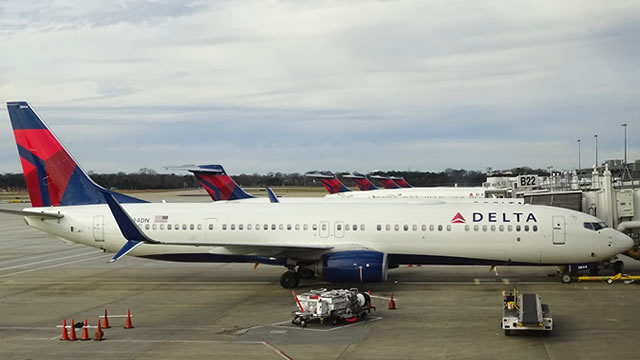
Delta Air Lines reduced its full-year earnings outlook as jet fuel prices remain elevated, pointing to mounting cost pressure. The article says smaller airlines may be less equipped to absorb the rising costs; it provides no revised earnings figures or market reaction.
Analysis
The key transmission is not fuel cost alone but whether airlines can pass it through before demand softens. If fares and ancillary revenue lag fuel, near-term margin estimates can keep moving lower; if capacity is cut faster than demand, the same pressure may eventually support pricing and favor scaled carriers. Delta’s outlook change raises sector sensitivity to fuel and fare-yield data, but does not by itself establish the size of its exposure or a durable competitive advantage over smaller airlines.
Over the next few weeks, watch jet-fuel prices and crack spreads alongside fare trends, unit revenue, and capacity plans—not crude in isolation. Over 1–3 months, earnings revisions and evidence of successful fare pass-through are the key catalysts. Over 6–18 months, sustained cost pressure could accelerate capacity exits and consolidation, potentially benefiting survivors; a demand slowdown would undermine that offset. The contrarian risk is that investors extrapolate cost pressure while overlooking eventual capacity discipline, or, conversely, assume pass-through that consumers will not accept. No valuation, hedge, or fare data here supports a high-conviction directional call.
AllMind Terminal
AI-powered research, real-time alerts, and portfolio analytics for institutional investors.
Request TrialMarket Sentiment
Overall Sentiment
mildly negative
Sentiment Score
-0.30
Ticker Sentiment
Key Decisions for Investors
- Keep airline-sector exposure cautious rather than treating this as a standalone Delta short; reassess after the next fare-yield and capacity updates.
- Conditional relative-value watch: consider long DAL versus short JETS only if Delta’s unit-revenue trends hold up better than the sector while fuel remains elevated. JETS includes airline exposure that may overlap with DAL, so size for imperfect hedging and verify current holdings.
- Do not add to the bearish thesis solely on crude moves. Track jet-fuel crack spreads, fare realization, and capacity reductions; sustained fare weakness despite elevated fuel would strengthen the downside case.
- Falsifiers: a material decline in jet-fuel costs, stable or improving unit revenue despite fuel pressure, or evidence that industry capacity cuts restore pricing would weaken the bearish view; further guidance reductions tied to fuel or fares would strengthen it.
More News
- Rising fuel costs slashed Delta’s profit outlook despite strong demand
- OpenAI's revenue scare, Delta earnings, what investors think of a Starbucks-Chipotle deal and more in Morning Squawk
- Delta Air Lines cuts 2026 forecast on fuel surge, but CEO says demand is still strong
- Delta Cuts Profit Outlook as Surging Fuel Costs Tighten Grip
- ‘I drive a Tesla’: After Elon Musk said he’d lose his job, Delta CEO Ed Bastian says there’s ‘no tit for tat’ as airline unveils earnings miss
- Premarket movers: Humana rallies; SpaceX deal sends telco stocks down