
Arasan furthers MIPI I3C® compliance with its participation at the I3C® interop in Taipei
Source: PR Newswire
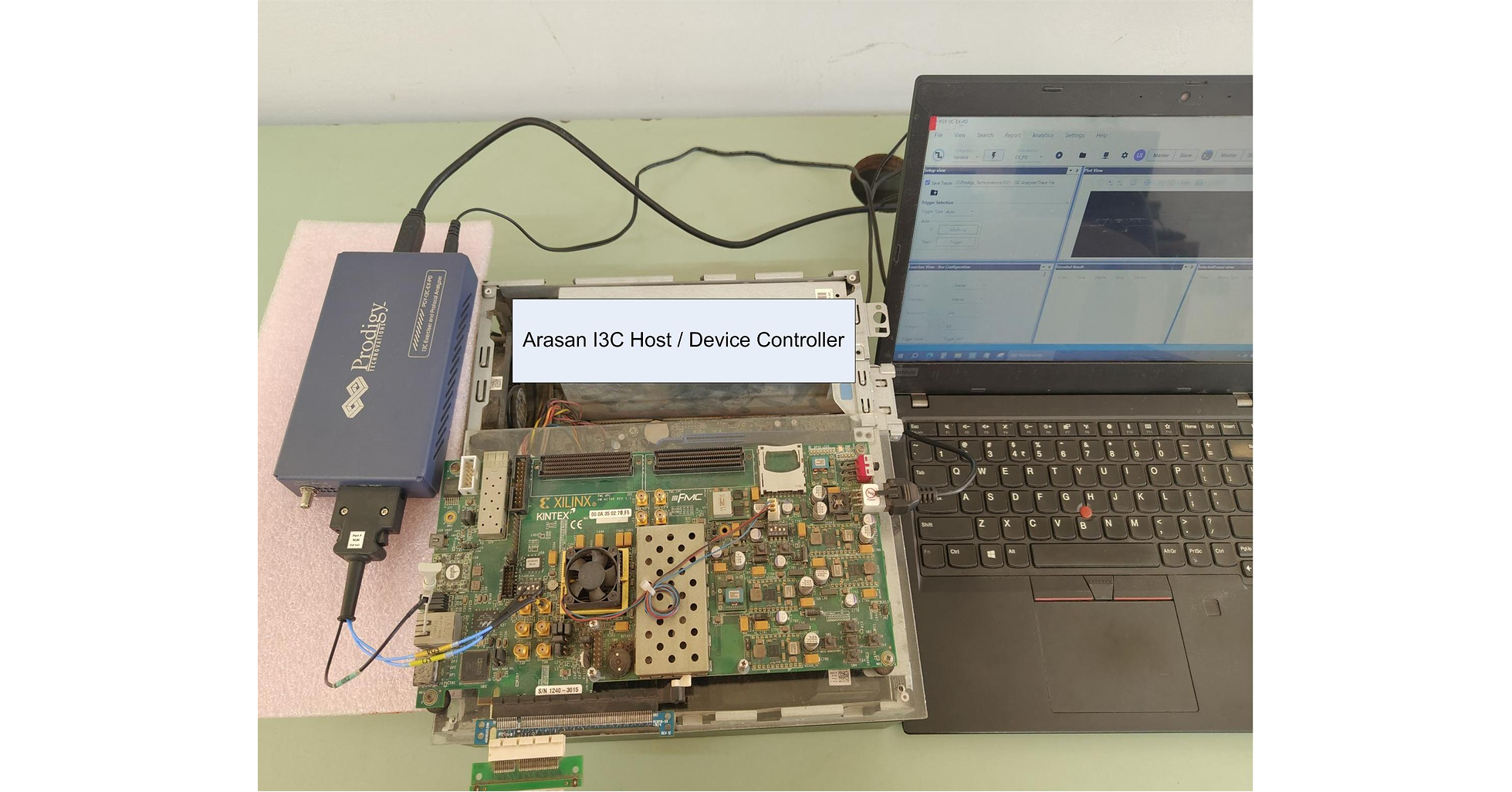
Arasan Chip Systems will participate in the MIPI I3C interoperability session in Taipei on October 19-20, 2026, testing its I3C Host, Dual Mode and Device IP, proprietary software stack, and HCI v1.2-compliant Linux stack. The company said its I3C IP has been licensed by more than 25 companies and is in production across multiple SoCs. The event supports product-compliance validation and industry relationships but is unlikely to have material near-term market impact.
Analysis
This is a qualification/credibility event rather than a revenue catalyst. For private IP vendors, interoperability participation can reduce design-win friction, but it does not establish incremental licensing volume, pricing power, or royalty conversion; the relevant financial signal would be a disclosed Tier-1 SoC win or evidence that I3C attach rates are rising in premium mobile, automotive, or camera-heavy edge devices.
The more investable second-order angle is standardization: common host-controller interfaces lower software integration costs and can modestly accelerate replacement of legacy sensor-control buses in complex devices. That benefits semiconductor content suppliers with broad sensor, connectivity, and application-processor exposure—especially Qualcomm (QCOM), MediaTek (2454 TT), NXP (NXPI), and Renesas (RNE)—only if OEM bill-of-material savings or higher sensor counts translate into platform demand. It is not material enough to alter near-term estimates for these companies.
Near term, no public-equity catalyst is apparent because Arasan is privately held and the announcement contains no customer, contract, or financial disclosure. Over 6-18 months, monitor Android flagship and automotive SoC reference designs for I3C adoption alongside camera/sensor proliferation; a meaningful shift would favor suppliers of sensor hubs and connectivity silicon more than pure interface-IP economics. The contrarian view is that open-standard interoperability commoditizes the underlying IP layer, potentially limiting royalty pricing even as unit adoption grows.
The thesis becomes actionable only if a listed semiconductor vendor cites I3C-enabled design wins, attaches a revenue opportunity to sensor expansion, or signals material engineering-cost savings. Absent that evidence, the news should not drive positioning.
AllMind Terminal
AI-powered research, real-time alerts, and portfolio analytics for institutional investors.
Request TrialMarket Sentiment
Overall Sentiment
mildly positive
Sentiment Score
0.20
Key Decisions for Investors
- No directional trade on this release; treat it as a low-impact industry datapoint rather than an earnings-revision catalyst.
- Set a 6-12 month watch alert on QCOM, NXPI, RNE, and 2454 TT for earnings-call references to I3C, sensor-hub content, or camera/control-interface design wins. Upgrade only if management quantifies incremental content or raises segment guidance.
- For existing QCOM/NXPI longs, do not underwrite valuation expansion from interface-standard adoption; require corroboration through handset/auto unit trends and segment-margin guidance.
- Watch semiconductor IP vendors with public exposure, including Synopsys (SNPS) and Cadence (CDNS), for evidence that standards-driven integration is expanding IP bundle attach rates. A disclosed material interface-IP backlog contribution would be the trigger; otherwise, competitive commoditization is the more likely outcome.
More News
- Here’s the ‘core economic flaw’ in the AI bull case as stock and bond trades unravel, according to a top economist
- Biotech stocks are surging. How investors can play the new drug innovation boom
- Braskem creditors, shareholders near deal on $11bn debt restructuring
- Instacart reportedly discussed selling itself with DoorDash and Uber
- Nvidia's role as AI financier faces first big test as neoclouds take market hit
- Trump set to announce plan by Audi to build a U.S. factory in Georgia, source says
From AllMind Research
- Anthropic IPO Preview: Valuation, Timing, and What to Watch
- Shein After the IPO: Venue, Valuation, and What Must Be Proved
- What AI Research Tools Should a Small Hedge Fund Buy First?
- AI Tools for CFA Charterholders: An Evidence Standard
- Weekly Update: Unstructured Data Search, Ask AI, and Advanced Futures Data